
Last updated: July 2026 · Written by the team at Badminton House
Quick Answer: University Badminton in Canada
Start with the Badminton Canada pathway: the national university/college crown is decided at the YONEX Canadian University College Championships, not through a U SPORTS national badminton championship.
National
Best starting point: the YONEX Canadian University College Championships are run by Badminton Canada and include a team event followed by individual events.
Varsity
For campus varsity play, look at conference routes: OUA runs a pool-play-then-playoffs championship, while RSEQ fields badminton as a co-ed conference sport in Quebec.
College
For college athletes, the CCAA route matters too: the CCAA holds its own badminton national championship for college-level competitors.
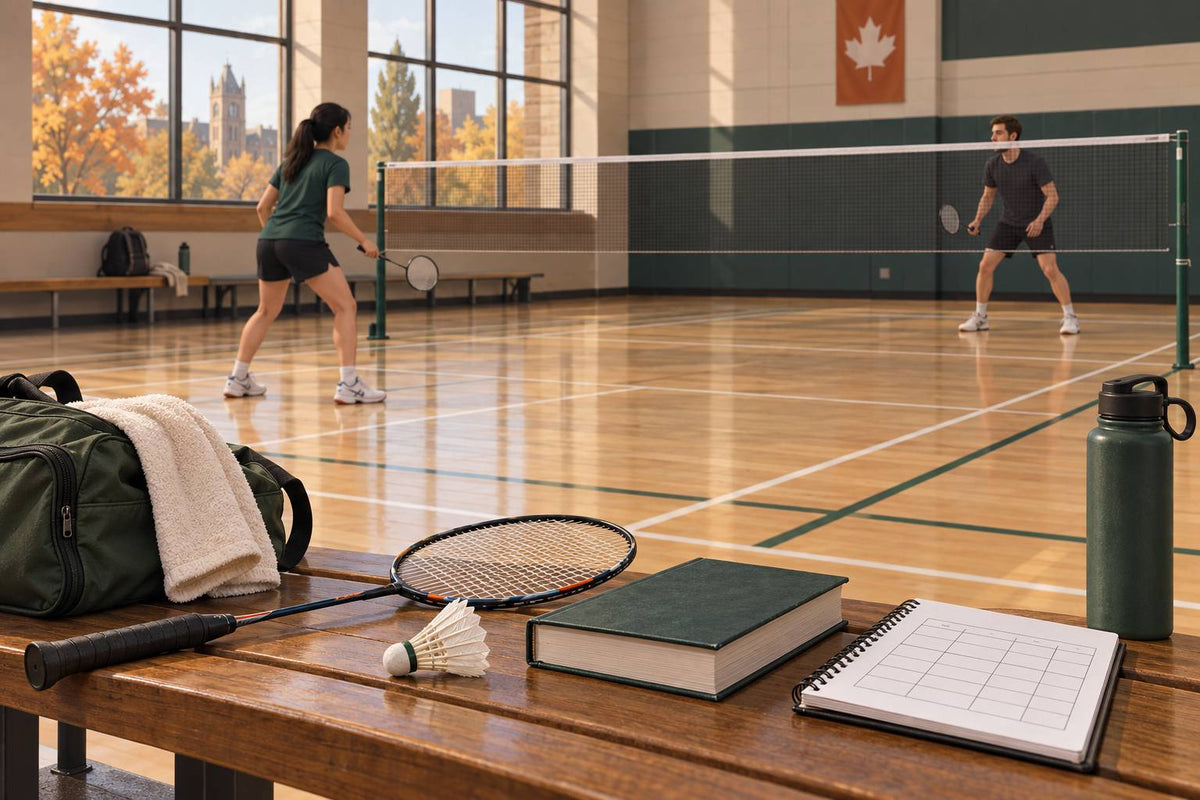
University badminton in Canada can be confusing because it does not fit neatly into the same national structure as many campus sports. If you searched for university badminton Canada expecting one simple U SPORTS pathway, the key detail is this: the national university and college title is decided at the YONEX Canadian University College Championships, run by Badminton Canada — not as a U SPORTS national championship.
That does not mean campus badminton is small or informal. Ontario schools compete through OUA varsity badminton, Quebec schools can appear through RSEQ structures, college athletes have the CCAA route, and top student-athletes can connect into wider Canadian pathways such as FISU selection and elite national competition. This guide breaks down how those pieces fit together and where campus badminton actually lives in Canada.
Preparing for varsity, college, or club team play? Start with reliable indoor court shoes from our badminton footwear collection — Badminton House ships Canada-wide.
In This Guide
- Who Runs University Badminton in Canada?
- How Does Varsity Badminton Work? OUA, RSEQ, and Conference Play
- The YONEX Canadian University College Championships
- College Badminton in Canada: The CCAA Route
- Beyond Campus: FISU and Elite Canadian Pathways
- Gear Checklist for Competitive Students
- How Do You Choose a Racket for Varsity-Style Play?
- Which University Badminton Route Should You Choose?
Who Runs University Badminton in Canada?

The first thing to clear up: badminton is not currently a U SPORTS national championship sport. That can be confusing, because U SPORTS is the national sport governing body for Canadian university sport and includes four regional conferences: Ontario University Athletics, Réseau du sport étudiant du Québec, Canada West, and Atlantic University Sport.
For badminton, the national university and college title is decided through the YONEX Canadian University College Championships, which are run by Badminton Canada, the national governing body for badminton in Canada. In other words: U SPORTS is the broader university sport framework, but the Canadian university/college badminton crown is handled through Badminton Canada rather than a U SPORTS national championship.
Quick distinction for student-athletes. If you are trying to make a campus badminton team, look first at your school and conference pathway; if you are tracking the national title, follow Badminton Canada’s YONEX Canadian University College Championships.
| Body or pathway | Role in Canadian badminton | What it means for players |
|---|---|---|
| U SPORTS | National sport governing body for Canadian universities, with OUA, RSEQ, Canada West, and AUS as regional conferences. | Important for understanding university sport in Canada, but badminton does not currently have a U SPORTS national championship. |
| Badminton Canada | National governing body for badminton in Canada. | Runs the YONEX Canadian University College Championships, where the national university/college badminton title is decided. |
| OUA and RSEQ | Conference-level varsity badminton exists in Ontario and Quebec. | These are key routes for many university players before national university/college competition. |
| CCAA | Canadian Collegiate Athletic Association pathway for organized college sport. | College badminton players have a separate national route through CCAA badminton competition. |
A practical way to think about university badminton in Canada is this: your campus team may compete in a conference structure such as the OUA or RSEQ, the national university/college title is organized by Badminton Canada, and college athletes may also follow the CCAA route. That structure is different from sports that sit directly inside a U SPORTS national championship calendar.
How Does Varsity Badminton Work? OUA, RSEQ, and Conference Play
At the varsity conference level, university badminton in Canada is best understood as a team event first. Players are not just chasing individual wins; every court contributes to the team score, and that can change lineup choices, doubles pairings, and even how aggressively a player manages a third game.
In Ontario, the OUA badminton championship uses a pool-play stage followed by playoff rounds, placement matches, and medal matches. The team ties are co-ed and include singles, doubles, and mixed doubles matches, so a complete roster matters more than having one or two standout players.
Why team scoring matters
The 2026 OUA results show how close varsity badminton can get. Toronto defeated Waterloo 6-3 in the OUA conference gold medal match, while Western advanced from a 5-5 quarterfinal tie against Ottawa because Western had won more games in the tie, 13-11. In other words: even when match wins are level, games won can decide who moves on.
That scoring structure affects how student-athletes prepare. A singles specialist may still need to be comfortable covering mixed doubles in a team tie. A doubles pair may need to protect game differential, not just chase the match win. Coaches also have to think about depth: the fifth, sixth, or seventh match on the tie sheet can be the one that decides a medal-round spot.
| Conference layer | What it looks like | Player takeaway |
|---|---|---|
| OUA | Pool play, then playoff rounds, placement matches, and medal matches. Ties are co-ed and include singles, doubles, and mixed doubles. | Train for your main event, but be ready to contribute in a team format where every game can matter. |
| RSEQ | Quebec also fields badminton as a co-ed conference sport, with some schools competing in badminton through RSEQ structures while other sports at the same institution may sit under different university-sport umbrellas. | If you are studying in Quebec, check your school’s athletics department for the exact badminton pathway and division. |
| National follow-on | Strong conference teams can move into the Badminton Canada-run Canadian University College Championships, which is separate from a U SPORTS national championship model. | Conference performance is part of the wider university badminton Canada pathway, but the national badminton title is handled through Badminton Canada’s event structure. |
Building a student-athlete kit? Start with non-marking court shoes, a dependable racket setup, and practice shuttles. Browse badminton footwear, rackets, and shuttlecocks at Badminton House.
If you are new to formal team play, it also helps to understand standard match scoring before your first tryout or invitational. See our badminton rules and scoring guide for the 21-point system, and our singles vs doubles strategy guide for the tactical differences that show up in varsity ties.
The YONEX Canadian University College Championships

The national university and college badminton spotlight is the YONEX Canadian University College Championships, a Badminton Canada event that brings campus teams together after their conference and provincial seasons.
In 2025, the championship was hosted at Université Laval and featured 15 teams from across the country. Toronto won national gold by defeating Waterloo in the championship final.
Why this event matters
For varsity-level players, this is where campus badminton feels most like a national team competition: school pride first, then individual titles after the team event wraps up.
How the championship format works
The event uses a team event followed by individual championships. That means athletes may need to manage two different competitive demands in the same championship window: playing for their school in team ties, then switching into individual draw mode for singles, doubles, or mixed doubles.
| Stage | What it looks like | 2025 example |
|---|---|---|
| Team round-robin | Schools play group matches to determine advancement and seeding. | Toronto went 3-0 in round-robin play with wins over Montreal, TMU, and UQAM. |
| Bracket rounds | Advancing teams move into elimination or placement rounds. | Toronto earned a bye to the semifinals, defeated Western, then beat Waterloo in the final. |
| Individual championships | After the team competition, players compete for individual event medals. | The championship structure includes individual events after the team event. |
The scale can be significant. The 2019 Yonex Canadian University & College Team/Individual Championships were held in Drummondville, Quebec from March 22–24, 2019, with venues at CEGEP de Drummondville and Centre Communautaire Pierre-Lemaire. The individual event included 120 student-athletes from more than 20 schools.
What student-athletes should prepare for
A two-part championship format rewards players who can stay organized. You may have team matches where every rally contributes to the school result, followed by individual matches where recovery, spare gear, and clean routines matter even more.
- Bring match-ready shoes: non-marking court shoes are essential for indoor badminton footwork. If you are replacing worn footwear before a championship block, check the live badminton footwear collection; the Babolat Shadow Tour Men’s Badminton Shoes in orange is a non-marking option worth a look.
- Plan your racket and strings early: do not wait until travel week to test a new setup. If you need a restring before playoffs or nationals, see the Badminton House stringing service and our guide to how often to restring a badminton racket.
- Pack for both team and individual play: extra grips, socks, warm-up layers, snacks, and backup shuttles become more important when the event schedule stretches across multiple rounds. Use our badminton tournament bag checklist before you leave campus.
Shop Badminton Rackets for Competitive Play
Compare weight, balance, and feel before your next varsity season
College Badminton in Canada: The CCAA Route
If you are playing at a Canadian college, polytechnic, or institute, the key acronym is CCAA. The Canadian Collegiate Athletic Association is the organized sport body on the college side of Canadian campus sport, while U SPORTS covers the majority of degree-granting universities.
That distinction matters because college badminton has its own national pathway. The CCAA holds its own badminton nationals; at the 2026 CCAA Badminton Nationals on March 8, 2026, athletes from NAIT, SAIT, Humber, and TKU won gold.
One detail that can confuse players: some institutions are members of both U SPORTS and the CCAA for different sports. So do not judge your badminton pathway only by the school name. Check which association your badminton team competes in, which conference or provincial structure it uses, and whether the season goal is a CCAA national championship or a Badminton Canada university/college event.
| If you are... | Start by checking | Why it matters |
|---|---|---|
| A university student-athlete | Your varsity athletics department and conference schedule | Your season may run through conference play such as OUA or RSEQ before broader university/college championship opportunities. |
| A college student-athlete | Your school’s CCAA badminton pathway | The CCAA has its own badminton nationals, so your competitive target may be separate from university varsity structures. |
College season gear note. If your program requires non-marking indoor court shoes, check our badminton footwear before tryouts. The Babolat Shadow Tour Men’s Badminton Shoes – Orange is a non-marking indoor option worth checking out.
For team managers or captains ordering for a college squad, it is also worth planning consumables early: grips, strings, and practice shuttles disappear quickly once the season begins. Our school and team equipment guide is a practical starting point for building a badminton kit list without overbuying.
Beyond Campus: FISU and Elite Canadian Pathways
University badminton in Canada is not just a campus activity. For strong student-athletes, varsity and university-college competition can connect into national-team opportunities, international student sport, and the broader Canadian high-performance pathway.
Pathway note: Canadian university players can earn spots on Team Canada for the FISU World University Games. If you are ready to start competing beyond campus, read our first badminton tournament guide for Canada.
FISU: the university-to-international bridge
The FISU World University Games are one of the clearest examples of why university badminton can matter beyond school pride. Canadian university players have earned Team Canada spots for the 2025 FISU World University Games in Germany after success at provincial and national university competition.
That matters for students because it gives varsity badminton a bigger purpose: every league match, championship tie, and national university event can become part of a competitive résumé. If your goal is to keep progressing after high school, campus badminton can sit alongside club training, provincial tournaments, and national events rather than replacing them.
Victor Lai shows the pathway is real
Victor Lai is the standout Canadian example of a student-athlete pushing well beyond the campus level. While balancing badminton with university studies in Toronto, Lai defeated 2021 world champion Loh Kean Yew and became Canada’s first-ever medallist at the badminton World Championships, returning to Toronto’s York University as a history-maker for Canada.
Most university players will not follow that exact path, and that is okay. The practical takeaway is simpler: if you are serious about badminton, do not treat university competition as a ceiling. Use it as one layer of your development — a place to sharpen match routines, learn team-event pressure, build doubles chemistry, and stay connected to competitive play while studying.
- If you are new to competition: start with club, local, or provincial events that fit your level, then build experience before targeting higher-level draws.
- If you are already on a varsity roster: track your results, ask coaches about national university-college events, and keep training outside the school season.
- If you want a high-performance pathway: combine campus badminton with stronger club training, tournament travel, and consistent recovery habits.
Gear Checklist for Competitive Students
For university and college badminton, the best gear setup is not the most complicated one. Start with reliable indoor shoes, then build around a racket you can control under pressure and enough shuttles for consistent training.
Shoes first. Non-marking court shoes are essential for student-athletes who need support and grip through lunges, split steps, defensive recoveries, and repeated match play. Browse current options in badminton footwear.
| Priority | What to choose | Why it matters for students |
|---|---|---|
| 1. Court shoes | Non-marking badminton shoes. The Babolat Shadow Tour Men's Badminton Shoes – Orange is a budget-conscious, non-marking option. | Shoes affect your grip, stopping, landing, and confidence more than most students realize. If you are upgrading only one item before tryouts or a tournament weekend, make it shoes. |
| 2. Match racket | Choose a racket that fits your role and level from the live badminton rackets collection. | Varsity-style play exposes weaknesses quickly: a racket that feels great in warm-up still needs to hold up in fast doubles exchanges, long singles rallies, and late-game pressure. |
| 3. Training shuttles | Keep practice shuttles ready for drills, warm-ups, and extra reps. Check current options in shuttlecocks. | Students improve fastest when they can repeat the same movement pattern many times: serves, returns, net kills, clears, lifts, and defensive blocks. |
| 4. Maintenance plan | Check your strings, grip, and shoe outsole before important matches. For deeper maintenance habits, see our badminton gear maintenance checklist. | Small issues become bigger distractions when you are playing a full school schedule, travelling, or balancing exams with training. |
Badminton House ships Canada-wide.
How Do You Choose a Racket for Varsity-Style Play?

For university badminton in Canada, choose your racket around your role on court, not just the most expensive model or the player you follow online. Varsity and college matches can move quickly between singles, doubles, and mixed doubles demands, so the best racket is the one that helps you repeat your strengths under pressure.
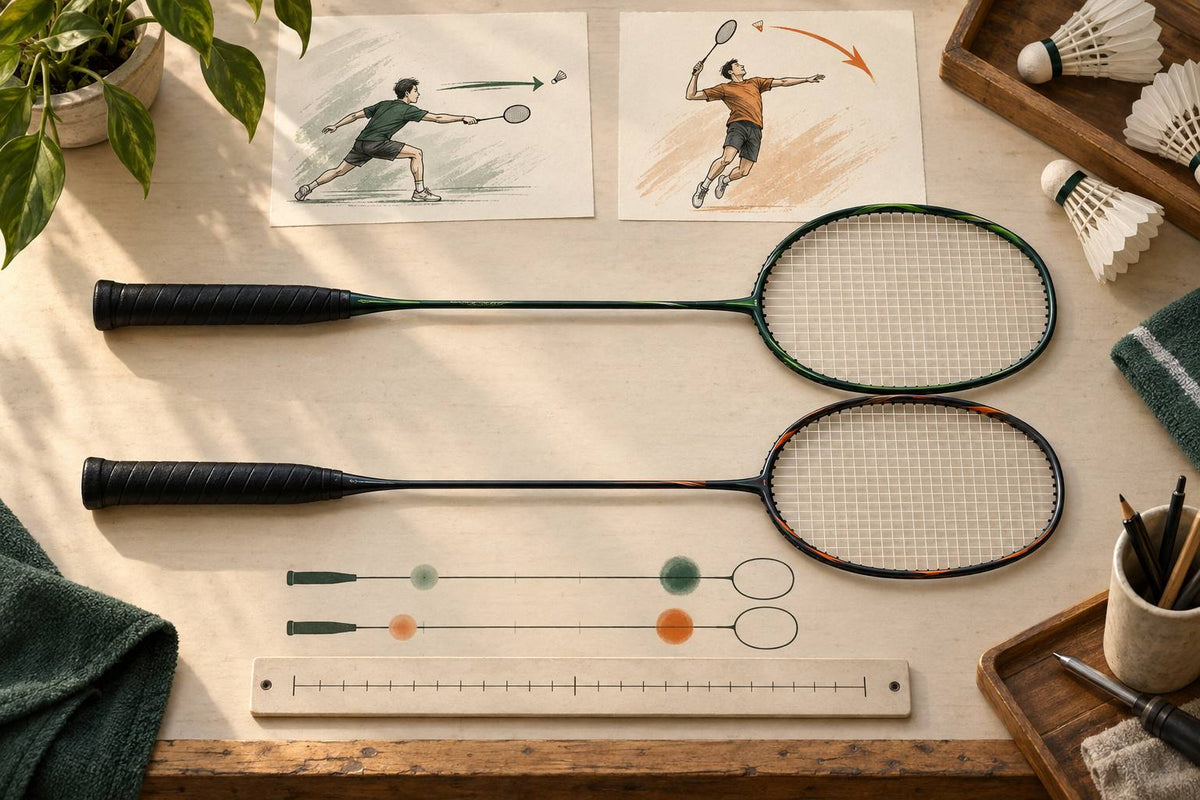
A simple way to narrow the choice is Yonex’s three-series framework: Astrox for power and head-heavy attacking play, Nanoflare for speed and head-light handling, and Arcsaber for control and even-balance feel. That framework is useful even when your exact preferred model is unavailable, because it helps you describe what you need clearly.
| Yonex series | Typical feel | Best fit for competitive students |
|---|---|---|
| Astrox | Power-focused, head-heavy | Back-court doubles players, singles attackers, and students who want more weight behind clears and smashes. |
| Nanoflare | Speed-focused, head-light | Fast doubles defenders, front-court players, and anyone who wins points through drives, interceptions, and quick racket recovery. |
| Arcsaber | Control-focused, even balance | All-round singles and doubles players who want placement, counter-attack control, and a neutral feel across different events. |
Start with your court role. If you are usually asked to pressure from the rear court, look at power-oriented frames. If your value is defence, flat exchanges, and front-court control, speed and handling matter more. If you move between singles, doubles, and mixed, an even-balance control racket is often the safest conversation to start with.
Do not treat the flagships as the only good choices
Several high-demand Yonex rackets can be hard to find in a given season, including the Yonex Astrox 100VA Game Grayish Beige and Yonex Astrox 100 ZZ Kurenai, Dark Navy. Both sit in the Astrox power family, and that variability is a reminder to shop by playing style first and by exact model second.
Check the live badminton rackets collection for current availability before planning your season setup. If the model you want is unavailable, use the series language above when asking for help: power/head-heavy, speed/head-light, or control/even balance. That is much more useful than saying you need a varsity racket.
Pair the racket with the right string setup
A competitive student’s racket choice is only half the setup. String tension changes the power-versus-control feel of the racket, and students who train often may need restringing more regularly than casual players. If you are upgrading for tryouts, conference play, or the Canadian University College Championships pathway, plan the racket and string job together.
Badminton House offers a badminton stringing service, and the team can help you avoid a mismatch such as putting a control-oriented string setup on a racket you bought mainly for easy power. For a deeper primer before you book, see our badminton string tension guide and racket selection guide.
Shop Badminton Rackets in Canada
Ships across Canada · Need help choosing? Ask our player-run team
Which University Badminton Route Should You Choose?
If you are trying to map your badminton pathway as a Canadian student, start with the type of school and competition structure you are actually in. The national university/college title is handled through Badminton Canada, while conference and college routes sit in different systems.
| Choose this route | If this describes you | What to expect | Best next move |
|---|---|---|---|
| OUA or RSEQ varsity badminton | You attend a university that competes in a conference where badminton is offered, such as OUA in Ontario or RSEQ in Quebec. | Conference play can include pool play, playoffs, placement matches, and co-ed team ties across singles, doubles, and mixed doubles. | Check your campus athletics page for tryout dates, roster rules, and whether badminton is varsity, club, or intramural at your school. |
| Badminton Canada university/college nationals | Your team is chasing the national university/college crown rather than a U SPORTS national badminton championship. | The YONEX Canadian University College Championships are run by Badminton Canada and include a team event followed by individual events. | Ask your coach or athletics department how your school qualifies and how team selection works for the national event. |
| CCAA college badminton | You are at a college program that competes through the Canadian Collegiate Athletic Association route. | The CCAA holds its own national badminton championship, separate from the university conference pathway. | Follow your college athletics department and the CCAA badminton calendar for championship information. |
| FISU or elite pathway | You are already competing at a level where provincial, national, or international selection is part of the conversation. | Canadian university players can be part of Team Canada at the FISU World University Games, and student-athletes can remain connected to elite badminton while studying. | Coordinate with your university coach, provincial pathway, and national event calendar so school, training, and selection windows do not collide. |
For most students, the practical starting point is simple: confirm whether your school competes in varsity conference play, CCAA college badminton, or campus club/intramural badminton, then build your season plan around that structure.
If your route includes tryouts, conference weekends, or national travel, prioritize non-marking court shoes before adding extra rackets. Badminton House carries the Babolat Shadow Tour Men’s Badminton Shoes – Orange, a non-marking option for student-athletes who need support and grip on court.
Get new badminton guides by email
Join the Badminton House list for occasional emails with new guides, technique tips and news from our club in Moncton.
By subscribing, you agree to receive Badminton House emails and can unsubscribe anytime.
Getting ready for tryouts, nationals, or your first serious club season? Choose gear the same way you choose your training plan: match it to your role, your body, and the pace you are facing. We play badminton too, so if you are unsure about racket weight, shoe support, strings, or shuttle choice, contact us and we will help you narrow it down.
Ships across Canada · Canadian badminton specialty shop · Player-run gear advice

Leave a comment
This site is protected by hCaptcha and the hCaptcha Privacy Policy and Terms of Service apply.