
Last updated: July 2026 · Written by the team at Badminton House
Quick Answer: Badminton Change of Pace
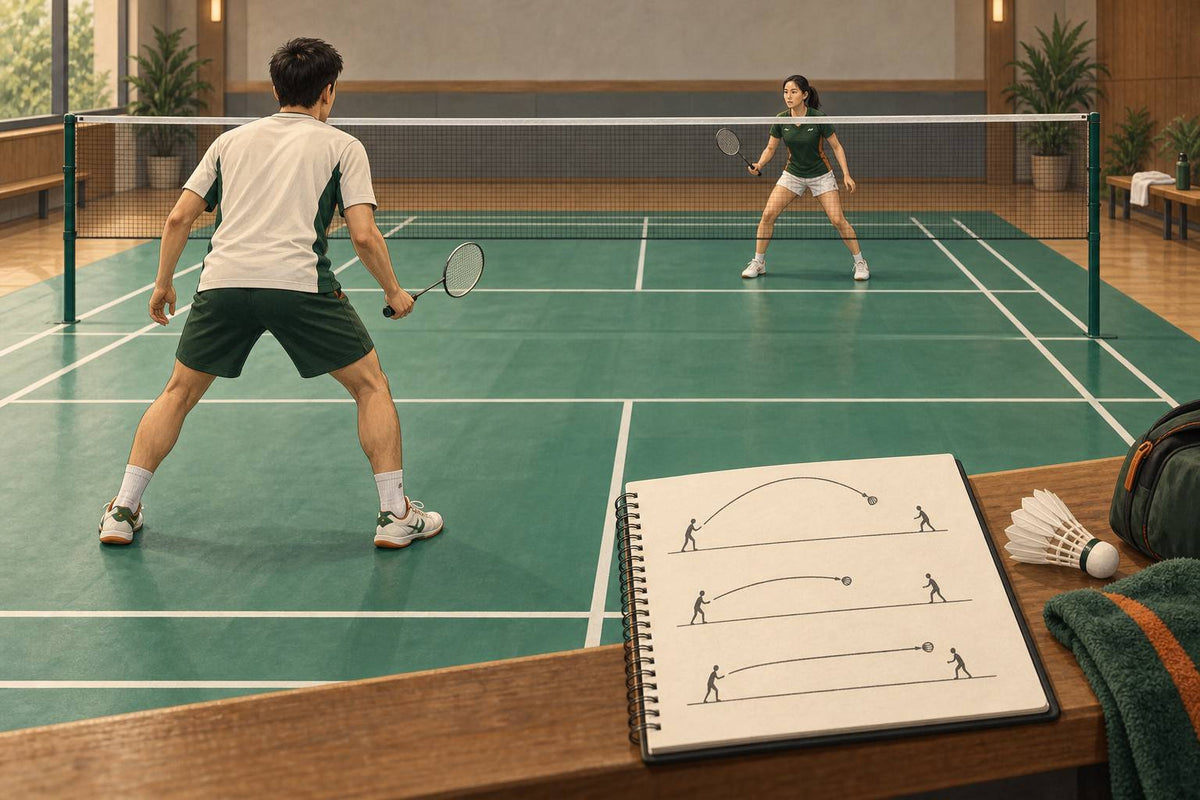
For most rallies, the best badminton change of pace is to reach the shuttle early, vary the tempo unexpectedly, and attack only after the pace change creates a weak reply.
Default
Mix tempo: combine fast flat pressure with slower lifts, high clears, and drops so your opponent cannot settle into one rhythm.
Slow
Use high, deep clears and controlled lifts against an aggressive attacker to deny the pace they want and draw errors from impatience.
Fast
Accelerate when your opponent is late, fatigued, or struggling with timing, but remember that playing fast means moving early, not just hitting harder.
If you keep losing rallies because every shot comes back on your opponent’s terms, the problem may not be your smash power. It may be that the rally has settled into a rhythm your opponent likes: same speed, same height, same recovery time, same decisions.
Badminton change of pace is the skill of deliberately speeding up or slowing down the rally so your opponent has to re-time the shuttle. That can mean a high deep clear after fast flat exchanges, a soft drop instead of another smash, or an early push that turns defence into pressure. The point is not to play randomly; it is to control tempo until a weaker reply appears.
For Canadian club, league, and tournament players, this is one of the most practical tactics to add because it works even when you are not the hardest hitter on court. If you can recover early, vary height and speed, and stay patient, you can make an aggressive attacker overhit or make a steady retriever move out of rhythm.
Tempo control starts with getting to the shuttle early. Good indoor court shoes help your split step, braking, and recovery between slow and fast phases of the rally. Browse badminton footwear from Badminton House, which ships within Canada.
In This Guide
- What Does Change of Pace Mean in Badminton?
- The Three Tempo Tools: Clear, Drop, and Flat Shots
- How to Slow Down an Aggressive Attacker
- How to Break a Retriever’s Rhythm
- Simple Rally Patterns to Practise Tempo Control
- When Should You Accelerate or Decelerate?
- Stay Patient Until the Weak Reply Appears
- Which Change of Pace Should You Choose?
What Does Change of Pace Mean in Badminton?
Badminton change of pace is not just “hit harder, then hit softer.” It is the skill of controlling how much time your opponent has before the next shot. In a rally, both players gradually settle into a natural rhythm based on their movement speed, shot quality, and comfort level. If that rhythm stays the same, your opponent starts timing the shuttle more easily.
The tactical goal is to disturb that timing. You can inject pace with a flatter shot, earlier interception, or faster movement to the shuttle. You can also reduce pace with a higher clear, softer drop, or slower lift that makes the opponent wait. Both changes can be effective because they force your opponent to recalibrate their footwork, stroke timing, and decision-making in the middle of the point.
That is why constant hard hitting is often less effective than controlled variation. A player who smashes every loose shuttle may feel aggressive, but if the opponent adjusts to that tempo, the attack becomes predictable. A well-timed slowdown can be just as damaging as a fast shot because it can cause a mistimed swing, a late contact point, or a short reply that gives you the real attacking chance.
- Changing pace means changing time: give the opponent less time with early, flat, fast shots, or give them awkward waiting time with height and softness.
- Changing pace means breaking rhythm: once the rally has a pattern, a sudden speed-up or slowdown makes timing harder.
- Changing pace means setting up the point: the winner usually comes after the tempo change has created a weaker reply.
For Canadian club players, this matters a lot in singles because gym conditions, opponent style, and your own fitness all affect tempo. Playing “fast” does not only mean smashing and driving; it also means moving early enough to reach the shuttle sooner, so your opponent has less recovery time. If you want the broader singles framework around court positioning, shot selection, and patience, read Badminton Singles Strategy for Beginners in Canada.
The Three Tempo Tools: Clear, Drop, and Flat Shots

Once you understand badminton change of pace, the next step is choosing the right shot to change the rally’s speed. You do not need a trick shot. Most tempo control comes from three ordinary choices: the clear or lift to slow the rally, the drop to remove speed suddenly, and the flat shot to take time away.
| Tempo tool | What it does | Best use |
|---|---|---|
| High deep clear or lift | Adds height and time, pulling the opponent away from the front court. | Use it when an attacker wants a fast, flat rally and you need to reset the point. |
| Very high clear | Increases the opponent’s waiting time. If the ceiling allows it, the steep vertical drop can make timing the return harder. | Use occasionally, not automatically, to disturb timing after several normal-height clears. |
| Drop shot | Takes pace out of the rally and forces the opponent to move forward instead of loading up from the rear court. | Use after showing clear or smash preparation. For technique details, see our badminton drop shot guide. |
| Fast flat shot | Cuts reaction time and keeps the shuttle travelling through the opponent’s hitting zone quickly. | Use when the opponent is late, off balance, or expecting another slow lift or drop. |
The important point is contrast. A fast flat exchange followed by a slower lift changes the opponent’s timing. A high deep clear followed by a tight drop changes both depth and speed. A drop after the opponent is bracing for power can be more damaging than another smash because it removes the pace they are preparing to use.
That is exactly why a drop can be a finishing choice, not just a defensive one. In their Rio 2016 Olympic semi-final, Lee Chong Wei finally beat Lin Dan 22-20 in the deciding game, and match reports described the winning shot as a drop rather than another smash — taking the pace out of the rally at the biggest moment. The lesson for club players is simple: if your opponent is leaning back and waiting for power, the slower shot may be the shot that finally opens the court.
Small gear note: tempo control is easier when you recover early. Proper indoor court shoes help with the starts, stops, and directional changes that let you reach the shuttle sooner. Browse badminton footwear; the Babolat Shadow Tour Men’s Badminton Shoes – Orange is a non-marking indoor court shoe with lateral support, built for exactly that kind of starting and stopping.
How to Slow Down an Aggressive Attacker
Some opponents want the rally to feel rushed. Younger and faster players especially can find their best rhythm when every exchange is played at high pace. If you keep feeding that rhythm with flat drives, rushed blocks, and half-lifts, you are often helping them play the match they want.
The answer is not to become passive. It is to play a touch slower than their preferred tempo, absorb their pressure, and make them restart the attack from deeper positions. Your goal is to deny pace long enough that they overhit, mistime, or give you a weaker reply to counter-attack.
The anti-attacker tempo plan
- Lift and clear higher than usual: high, deep clears to the back court are the best tactic when you want to slow the pace.
- Recover before attacking: use the extra shuttle flight time to reset your base and prepare for the next smash, drop, or clear.
- Make them wait: the longer vertical drop of a very high clear can make the return harder to time cleanly, especially if the hall height allows it.
- Counter only the weak reply: do not force the winner from a bad position; let the pace change create the opening first.
Use height and depth to take away their favourite rhythm
Against a strong attacker, a flat lift often becomes a gift. It arrives quickly, sits in their hitting zone, and lets them keep the rally moving at their speed. A high, deep lift or clear does the opposite: it sends the shuttle to the rear court, adds waiting time, and forces them to generate their own next attack from farther back.
That small delay matters. Many aggressive players thrive when they can chain together fast shots: smash, block, drive, kill. When you lift higher and deeper, you break that chain. They may still attack, but they are attacking from a less comfortable rhythm instead of stepping forward into another fast exchange.
"Slowing an attacker down is not surrendering the rally — it is making them attack on your timing instead of theirs."
Absorb first, counter second
The hard part is emotional. When an attacker pressures you, the instinct is to hit back harder or play the first risky winner you see. That usually gives them exactly what they want: a faster rally with less thinking time.
Instead, treat the first few shots as a defensive reset. Block securely, lift high and deep when you are late, and avoid loose mid-court replies. If you can keep the shuttle in play without feeding their preferred pace, frustration starts to build. A player who is not getting the tempo they want is more likely to make an unforced error or send you a shorter clear, loose drop, or predictable smash direction.
| Attacker’s pressure | Slower-tempo reply | Why it works |
|---|---|---|
| Fast smash from the rear court | Controlled block or high lift, depending on your balance | You avoid a rushed drive battle and make them rebuild the attack. |
| Flat drive exchange | Lift deep to the back court when you are under pressure | You remove the repeated fast contact that helps quick attackers find rhythm. |
| Attacker creeping forward | High, deep clear over their recovery position | Depth pushes them back and makes the next attack less immediate. |
| Repeated jump-smash pressure | Lift high enough to buy recovery time, then look for the short follow-up | Constant high tempo is physically demanding, so longer rallies can expose impatience or fatigue. |
Do not confuse slower tempo with slow feet
Taking pace off the rally does not mean moving slowly. In singles especially, speed often comes from movement: reaching the shuttle earlier gives you more shot choices and gives your opponent less time to recover. To slow an attacker down, you still need quick recovery steps, a stable base, and balanced contact.
If you are late to every shuttle, your “high clear” can turn into a short lift. That is why footwork and court grip matter. For a refresher, see our badminton footwork basics guide. If your current shoes are sliding or built for running rather than indoor court movement, our badminton shoes vs running shoes guide explains why non-marking court shoes are a safer choice for lateral recovery.
For Canadian players checking current footwear options, the Babolat Shadow Tour Men’s Badminton Shoes – Orange is a non-marking indoor court shoe with lateral midfoot support. Good shoes will not make the tactical decision for you, but they help you recover early enough to choose the high clear, the lift, or the counter-attack instead of being forced into a panic shot.
Know when the slowdown is working
A successful slowdown usually shows up in small signs before it shows up on the scoreboard. The attacker starts reaching a little early or a little late. Their smash loses angle. They try to force a winner from too far behind the shuttle. They look annoyed that the rally is not giving them the fast exchanges they prefer.
That is the moment to stay disciplined. Keep the lift deep, keep your recovery calm, and wait for the weak reply. When the clear drops short, the smash becomes predictable, or the net reply sits up, then you accelerate. The best change-of-pace points are not won by defending forever; they are won by slowing the attacker just long enough to make your next attack the easier one.
How to Break a Retriever’s Rhythm

A retriever is a different problem from an attacker. An attacker wants pace so they can hit through you. A defender or retriever wants the rally to stretch, absorb your pressure, settle into their rhythm, and wait for you to get impatient.
That means more speed is not always the answer. Against strong defenders, placement matters more than pace. If you keep smashing or driving from neutral positions, you may only give them the rhythm they enjoy: block, lift, recover, repeat. Your job is to make their recovery pattern uncomfortable before you try to finish.
Key idea: do not try to blast through a patient defender too early. Move them with angle and depth first, then use the change of pace when a space finally opens.
Use depth first, then take pace off
One reliable pattern is to push the defender deep into one rear corner, then open the opposite front court with a soft cross-drop. The deep shot makes them commit backward and sideways; the soft cross-drop changes both direction and tempo, forcing them to restart their movement instead of gliding through the rally.
| Step | Your shot | Why it works |
|---|---|---|
| 1 | Clear, lift, or punch deep to one rear corner | Makes the defender cover depth before they can think about counter-attacking. |
| 2 | Repeat pressure to the same deep side if the reply is neutral | Builds a movement habit and tests whether they can recover cleanly. |
| 3 | Play a soft cross-drop into the front court | Changes direction and reduces pace, making them cover the longest diagonal path. |
| 4 | Attack only if the lift is short or the net reply sits up | You are finishing the weak reply created by placement, not gambling on raw pace. |
Do not confuse patience with passivity
Breaking a retriever’s rhythm often feels slower than you want it to feel. That is normal. You are not giving up the attack; you are changing what “attack” means. A steep smash from the wrong position may feed their defence, while a controlled deep shot followed by a soft drop can force a worse reply.
The movement piece matters. After the soft cross-drop, you must recover early enough to cover the straight net reply, the lift, or the counter-drop. If your base recovery is late, the defender escapes pressure and the rally resets. For the footwork foundation behind that recovery, see Badminton Footwork Basics.
"Against strong defenders, placement matters more than pace."
Simple Rally Patterns to Practise Tempo Control
The easiest way to train badminton change of pace is to practise short, repeatable rally patterns where the speed change is planned. Do not think of pace as a separate trick from placement. The tempo change works best when it is paired with a clear location target: angle first, then depth, then shot type.
For all of these patterns, make your overhead preparation look the same before you change pace. If your clear, drop, and attacking stroke have obvious differences too early, the opponent can read the change before the shuttle leaves your racket.
| Pattern | How to practise it | What it teaches |
|---|---|---|
| High deep clear → drop | Start with a clear to the rear court, recover early, then use the same overhead shape and play a drop on the next suitable shuttle. | You create waiting time with the clear, then remove pace with the drop. The goal is not to win immediately; it is to disturb timing and draw a weaker reply. |
| Fast flat exchange → slower lift | Play a flat drive exchange, then deliberately lift to reset the rally instead of trying to keep matching speed. | You learn to stop feeding an opponent the pace they want. This is especially useful when the other player is comfortable attacking fast exchanges. |
| Angle → depth → shot type | First change the angle of the rally, then move the shuttle deeper, then change the type of shot: for example, from a wide angle to a deep clear or lift, then into a drop or flatter shot. | The opponent has to solve several problems in sequence: direction, court depth, then speed. That keeps them guessing more effectively than simply hitting harder. |
A simple way to run the drill
- Choose one tempo change at a time. Do not mix every option in the same rally at first. Practise clear-to-drop, drive-to-lift, or angle-depth-shot type as separate patterns.
- Recover before the change. Pace control only works if you are balanced enough to choose the next shot. If you are late, the change becomes a survival shot instead of a tactic.
- Keep the stroke shape quiet. On overhead shots, show the same preparation for as long as possible before choosing the clear, drop, or faster shot.
- Watch the reply, not just your shot. The success signal is a late contact, short lift, loose block, or mistimed return that gives you the next attack.
Footwork makes tempo control possible. If you are reaching the shuttle late, start with movement quality before adding deception. See our badminton footwork basics guide, and if your court shoes are holding you back, the Babolat Shadow Tour Men’s Badminton Shoes – Orange is a non-marking indoor option worth checking out.
Once the pattern feels controlled, make it less predictable. Your training partner should not always know whether the next overhead will be a clear, drop, or flatter shot. That is where the pattern becomes match-ready: the same preparation creates a different pace, and the opponent has to react after the shuttle is already moving.
When Should You Accelerate or Decelerate?
Good badminton change of pace is not random. You are making a tempo decision based on what is happening in front of you: is your opponent late, tired, and struggling with timing, or are you the one getting rushed and pulled into their rhythm?
The key clarification: playing faster does not only mean smashing harder or driving flatter. In singles especially, speed often means faster movement, earlier contact, and taking the shuttle before your opponent has fully recovered. If you reach the shuttle earlier, you can still play a clear, drop, push, or half-smash — but the opponent has less time to reset.
That is why constant high tempo is dangerous. It can pressure the other player, but it is also physically expensive. If you try to play every rally at maximum speed, you need the conditioning to keep moving early, staying balanced, and recovering again. For most club players, the smarter plan is to accelerate in selected moments and decelerate when the rally is slipping away.
| Situation | Tempo Choice | What It Looks Like |
|---|---|---|
| Opponent is fatigued or arriving late | Accelerate | Move earlier, take the shuttle higher, and make them choose quickly. This does not have to be a smash; an early push, fast drop, or quick clear can be enough. |
| Opponent is mistiming your shots | Accelerate selectively | Keep them uncomfortable by taking time away, but avoid forcing low-percentage winners. Let the timing pressure create the weak reply. |
| You feel rushed or emotionally tilted | Decelerate | Use a higher lift or deep clear to buy recovery time, regain posture, and restart the rally on your terms. |
| Opponent is on a scoring streak | Decelerate first | Break their rhythm before trying to win the point outright. A slower rally can stop the momentum and force them to rebuild the point. |
Think of acceleration as pressure through time. Your goal is to make the opponent play the next shot before they are comfortable. That might mean stepping in to take a drop early, cutting off a loose lift, or moving quickly enough that your clear still leaves them rushed because they have not recovered to base.
Think of deceleration as control through patience. You are not giving up the attack forever; you are refusing to play at a pace that benefits the other player. Against someone who loves speed, a high deep clear, a slower lift, or a soft drop can remove the rhythm they want and make them generate all the pace themselves.
Simple match rule: accelerate when your opponent is late; decelerate when you are late. If neither player is clearly late, keep changing the rally just enough that the opponent never settles into one comfortable speed.
Footwork decides whether you can actually use this tactic. Earlier contact comes from recovering well, pushing off cleanly, and reaching the shuttle before it drops too low. If that part of your game needs work, pair this tactic with badminton footwork basics and build the conditioning to repeat it with badminton stamina training.
Gear will not make the decision for you, but stable court shoes help you practise the movement side of tempo control. The Babolat Shadow Tour Men’s Badminton Shoes – Orange is a non-marking indoor court shoe with lateral midfoot support, a practical footwear option for players working on faster recovery and earlier contact.
Stay Patient Until the Weak Reply Appears
The best badminton change of pace does not end with a forced smash on the very next shot. It ends when your opponent finally gives you the reply you were building toward: a lift that sits short, a loose block, a rushed drive, or a late defensive clear.
That is the real goal of tempo control. You are not slowing the rally just to be safe, and you are not speeding it up just to look aggressive. You are changing the rhythm until the opponent’s timing breaks, then attacking only the weak reply your pace change created.
"Patience is precision disguised as calm."
A useful rule is to treat your first attack as a question, not a conclusion. If the opponent returns it comfortably, keep working the rally: change the height, change the depth, change the shot type, then look again. If the next reply is late or off balance, that is when the finish becomes much higher percentage.
Patience checklist before you finish
- Is the opponent late? If yes, you can accelerate into the open space.
- Is the reply short? Step in and attack before they reset their base.
- Are they still balanced? Keep moving the shuttle instead of forcing the winner.
- Are you rushing because you feel impatient? Decelerate, reset the rally, and make them play one more uncomfortable shot.
This is especially important against retrievers. They often want you to get annoyed and over-hit. Instead, make your placement do the work: hold your shape, keep the shuttle moving, and wait for the shot that is genuinely attackable.
If court grip or shoe support is making those extra recovery steps harder, check the current badminton footwear options at Badminton House. For Canadian gear advice, contact Badminton House and we’ll help you choose based on how you move, where you play, and what level you’re training for. Badminton House ships within Canada.
Which Change of Pace Should You Choose?
Choose your tempo change based on what is actually happening in the rally. The goal is not to play slow or fast all the time — it is to make the opponent uncomfortable, then attack the weak reply your tempo change creates.
| Situation | Choose this pace change | What to play | Why it works |
|---|---|---|---|
| They are attacking at a pace you cannot match | Decelerate | High, deep clears and controlled lifts to the back court. | Slowing the rally helps absorb pressure and can force the attacker into your preferred tempo instead of theirs. |
| They are young, fast, and comfortable in a high-speed rhythm | Take the pace out | Slower drops, lifts, and clears that make them wait rather than react. | Fast players often settle into rhythm when the rally stays quick; removing pace can frustrate that rhythm and invite errors. |
| They are defending everything and extending rallies | Change placement before power | Push them deep into one corner, then open the front court with a soft cross-drop. | Defenders feed on impatient attacks. Precise placement and a sudden soft shot can make them commit early and expose space. |
| They look tired or late to the shuttle | Accelerate | Move faster to take the shuttle earlier, then use flatter shots or sharper changes of direction. | Playing fast is mainly about early movement, not only smashes and drives. Earlier contact gives the opponent less time to recover. |
| You are rushed or they are on a scoring streak | Decelerate to reset | Use higher lifts, deeper clears, and safer drops until your timing returns. | Slowing down can help you regain composure and disrupt the opponent’s run of rhythm. |
| The ceiling allows a very high clear | Add height | Clear significantly higher than your normal clear when the hall gives you room. | Extra height increases the opponent’s waiting time, and the steeper vertical drop can make the return harder to time. |
| Your opponent reads your overheads too easily | Disguise the change | Make your clear, drop, and attacking overhead preparation look the same, then change pace unexpectedly. | Regular but unexpected pace changes are more effective when the opponent cannot read the shot early. |
A simple rule for Canadian club play: if the opponent wants speed, make them wait; if they want long, patient defence, make them move with placement before you try to finish. If your footwork is the limiting factor, work through Badminton Footwork Basics and badminton agility ladder drills so your tempo changes come from earlier contact, not rushed hitting.
For the gear side, court shoes matter because change-of-pace badminton depends on recovering early enough to choose the next tempo. The Babolat Shadow Tour Men’s Badminton Shoes are the current topic-relevant footwear option to check at Badminton House.
Get new badminton guides by email
Join the Badminton House list for occasional emails with new guides, technique tips and news from our club in Moncton.
By subscribing, you agree to receive Badminton House emails and can unsubscribe anytime.
Change of pace is one of those tactics you feel more clearly once you try it in real rallies: hold the shuttle a fraction longer, lift a little higher, flatten the next exchange, then stay calm until the weak reply appears. We play badminton ourselves, so if you are working on tempo control and want help choosing shoes, strings, grips, or a racket setup that fits your game, contact Badminton House and we will point you in the right direction.
Ships within Canada · 14-day returns · Canadian badminton specialty shop

Leave a comment
This site is protected by hCaptcha and the hCaptcha Privacy Policy and Terms of Service apply.