
Last updated: July 2026 · Written by the team at Badminton House
Quick Answer: Badminton Cross Court Net Shot
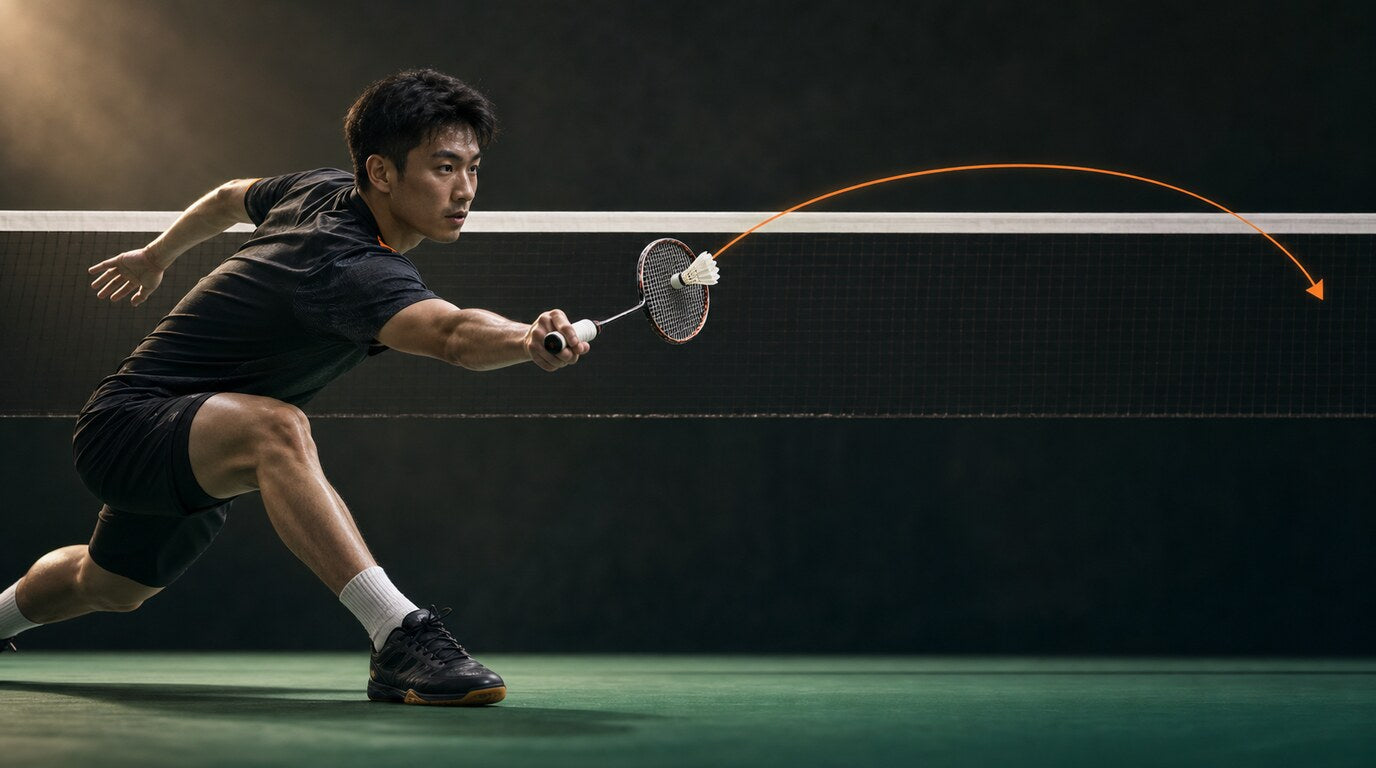
Use the badminton cross court net shot hook when you are balanced in the forecourt, can take the shuttle high, and can make your preparation look like a straight net shot until the last moment.
Hook
Best choice: play the late cross-court hook when your setup matches a straight net shot, then use a loose grip with a late inward wrist-and-finger action to send the shuttle diagonally across the net.
Straight
Choose the straight net shot when you want the safer, higher-percentage option; basic cross-court technique can be accurate, but adding deception increases the need for timing and control.
Reset
If you are late, off balance, or chasing the shuttle, play a safer stroke or clear instead of forcing the diagonal; the tighter you try to make the hook, the higher the error risk.
The badminton cross court net shot is one of those strokes that looks simple until you try it under pressure. You arrive at the forecourt, show the same preparation as a straight net shot, then at the last instant change the racket angle and send the shuttle diagonally across the net. Get the timing right and your opponent commits the wrong way; get it wrong and the shuttle sits up, tumbles into the tape, or drifts wide.
This guide breaks down the cross-court net hook for Canadian players who already have a basic net shot but want more deception. The key idea is not a big swing. It is a balanced lunge, high contact, a loose grip, and a late inward action from the wrist and fingers—adjusted slightly depending on whether you are playing the shot from the forehand or backhand side.
Dial in the feel before you force the trick shot. If your racket feels slow or hard to control at the tape, compare options in our badminton rackets collection. Badminton House offers free shipping within Canada on orders over $200.
In This Guide
- What Is the Badminton Cross Court Net Shot Hook?
- Why Does the Deception Work?
- Setup: Balance, High Contact, and a Loose Grip
- Forehand Cross-Court Net Hook Technique
- Backhand Cross-Court Net Hook Technique
- When Should You Use the Hook—and When Should You Play Safer?
- Practice Progression and Gear Notes
- Which Net Shot Should You Choose?
What Is the Badminton Cross Court Net Shot Hook?

A badminton cross court net shot is a forecourt reply that sends the shuttle diagonally across the net: from the left side of the court to the right, or from the right side to the left. Instead of lifting or playing straight back along the tramline, you guide the shuttle across the front court so your opponent has to move sideways and forward to reach it.
The hook version is the deceptive form of that shot. It begins with the same preparation as a straight net shot, then the racket face changes angle at the last moment. That late change is what “hooks” the shuttle across the net instead of sending it straight.
Simple definition. A cross-court net hook looks like a straight net reply until the final instant, then uses a late hand and finger action to send the shuttle diagonally. If you are still building the base shot, start with our general badminton net shot technique guide first.
You can play the hook from both the forehand and backhand forecourt, but the contact and racket-face control are not identical on each side. On the forehand, the shot is usually built from a loose forehand grip with a small forearm and finger action. On the backhand, the grip can shift slightly as the racket turns so the shuttle can be guided across the tape more comfortably.
The key idea is disguise. If your racket, body shape, and timing announce “cross court” too early, the opponent can start moving before you hit. If you hold the straight-net look until the last instant, the diagonal becomes much harder to read and can make the opponent commit the wrong way.
Why Does the Deception Work?

A badminton cross court net shot is not deceptive because it is powerful. At the net, the deception is mostly about hiding the shuttle’s direction and speed. The opponent is close enough to react to a big swing, so the better trick is making your racket preparation look like a normal straight net shot, then changing the racket angle at the last moment.
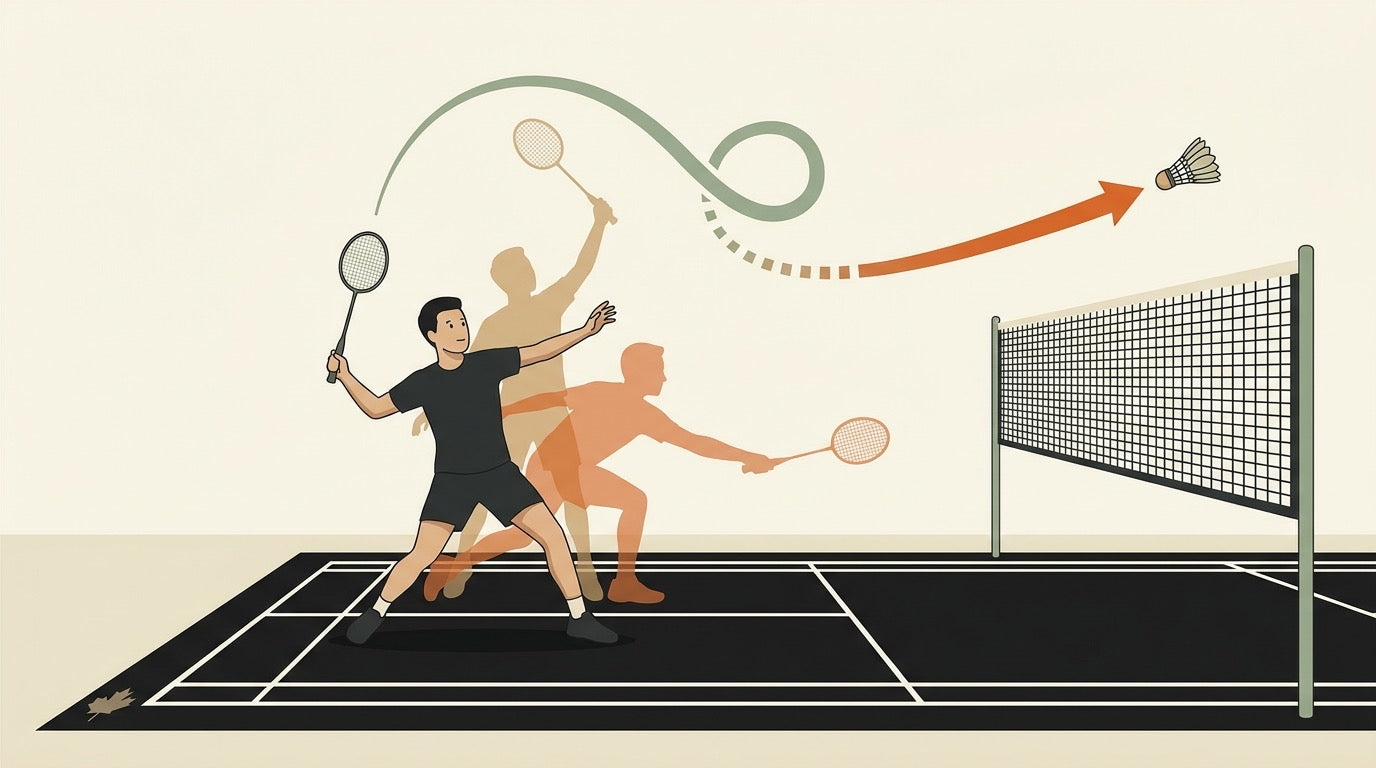
That identical preparation is the whole idea of the hook. You approach as if you are going to play the shuttle straight down the same side of the net. If the opponent believes that straight reply is coming, they may commit their weight or first step toward that side. Then your late wrist-and-finger change sends the shuttle diagonally across the net instead.
The disguise must last, but not too long. Change the racket angle too early and the opponent can read the cross-court shot. Change it too late and you risk missing clean contact.
Think of the timing as a small window, not a dramatic pause. Your racket face, body shape, and reach should still suggest a straight net shot until the shuttle is about to meet the strings. Then the hand action redirects the cork across court.
- Too early: the racket face opens toward the cross court before contact, so the opponent gets a clear read.
- Too late: the shuttle has already passed the best contact point, so the hook becomes rushed and harder to control.
- Right timing: your setup still looks straight, but the final finger-and-wrist action changes the angle just before contact.
This is also why grip pressure matters. A tight hand makes the final angle change harder to feel, and the shot can pop up too high or travel too hard. A relaxed hold gives you room to guide the shuttle instead of swiping at it. If you are still building that feel, review the basics in our badminton grip guide before adding the cross-court deception.
The best versions are subtle. You do not need to make the shuttle impossibly tight every time; often, being early enough to show straight preparation and turn the shuttle quickly across the net is enough to force a late change of direction or a weaker reply.
Setup: Balance, High Contact, and a Loose Grip
A good badminton cross court net shot starts before the racket changes direction. You need to be in the forecourt, arrive under control, and prepare as if you are about to play a straight net shot. That shared preparation is what gives the hook its disguise: the opponent sees a normal straight reply until your racket face changes late.
The first priority is balance. If you are still chasing the shuttle, leaning hard, or reaching with your hitting shoulder, the cross-court angle becomes much harder to control. In that situation, play a safer stroke instead of forcing the hook. The cross net is strongest when your lunge is stable enough that your racket hand can stay soft and precise.
Setup checklist before the hook
- Be in the forecourt: this is a net-area shot, not a recovery shot from midcourt or the rear court.
- Take the shuttle high: contact it as early and as high as possible so the shuttle can travel cleanly across the tape instead of floating upward.
- Stay balanced: land your lunge under control so the hand can guide the shuttle rather than poke at it.
- Keep a slight elbow bend: a relaxed elbow lets you pull the hand back toward the body and adjust the racket face smoothly.
- Use a loose grip: the fingers need room to guide the racket face for the late diagonal change.
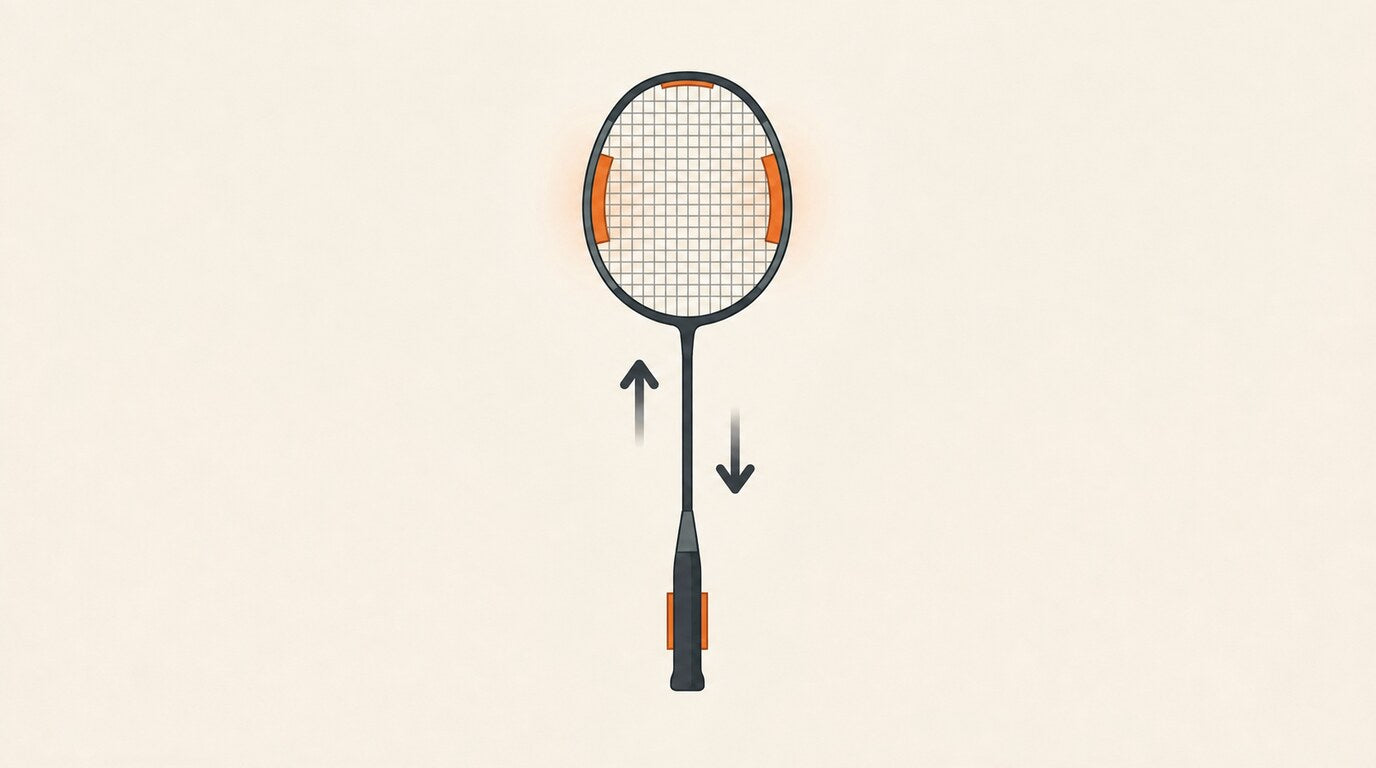
Grip pressure is a huge part of the shot. If you squeeze the handle too tightly, the racket face becomes stiff and the shuttle often goes too hard or too high over the net. A loose grip gives you better touch, lets the grip adjust during the stroke, and makes the final angle change smaller and cleaner.
Think of the hand as relaxed but ready: fingers around the handle, thumb and index finger able to fine-tune the face, and no full-arm tension. On the forehand side, start from a loose forehand grip. On the backhand side, start from a backhand grip and be ready for the grip to shift slightly as the racket turns. If your base grip positions feel uncertain, review the fundamentals in our badminton grip guide before adding the cross-court deception.
A simple cue: arrive high, pause the racket like a straight net shot, then keep the hand soft enough to change the face at the last instant. If any one of those pieces is missing, the hook becomes a low-percentage trick shot instead of a controlled attacking net option.
Forehand Cross-Court Net Hook Technique

On the forehand side, the badminton cross court net shot hook works because it starts like a straight net reply, then changes direction late. Your job is not to swing across the shuttle. Your job is to arrive balanced, show the same racket preparation as a straight net shot, then use a controlled elbow pull, forearm rotation, and small wrist-and-finger action to guide the shuttle diagonally across the tape.
Forehand hook cue
Think: show straight, pull in, turn late. If your preparation gives away the cross-court angle too early, the deception is gone.
1. Approach in a loose forehand grip
As you move into the forecourt, keep a loose forehand grip rather than squeezing the handle. A tight grip makes the racket head stiff and usually sends the shuttle too hard or too high. The forehand cross-court hook needs touch: your hand should be relaxed enough that the fingers can make the final adjustment at contact.
Keep a slight bend in the elbow and present the racket as if you are about to play a normal straight net shot. The racket face should not be dramatically opened toward the cross-court target yet. If the opponent sees the angle early, they can wait on the diagonal reply.
2. Make the preparation look straight
The first half of the stroke should look like your straight forehand net shot. Move the racket outside the line of the shuttle, keep the action compact, and avoid a big backswing. The deception comes from showing the opponent a familiar straight-net picture, then changing the racket angle at the last moment.
This is why the forehand hook pairs naturally with solid basic net-shot technique. If your straight net shot and cross-court net shot have different preparations, opponents will read the pattern. If you need to tighten the foundation first, our badminton net shot technique guide covers the basic net contact and control principles that make this deception easier.
3. Pull the elbow back and down as the shuttle crosses
As the shuttle comes over the net, start the hook by pulling your elbow back and down toward your body. This pull is subtle. It brings your hand in toward your hip and helps you control the racket face instead of swiping across the shuttle.
The timing matters: if you pull and turn too early, the opponent sees the cross-court angle; if you wait too long, you lose clean contact. Aim to make the direction change as the shuttle is crossing the net, not while you are still lunging or reaching from behind the play.
"The forehand hook is controlled by the elbow pull and racket-face turn, not by a big wristy swipe."
4. Rotate the forearm, then finish with fingers
As the elbow finishes pulling in, rotate the forearm to change the racket angle. The racket face should now guide the shuttle across the net from one forecourt side to the other. Keep the motion small and smooth; you are redirecting the shuttle, not hitting through it.
The final touch comes from a late wrist-and-finger action. Use the fingers to guide the face through contact and keep the shuttle tight enough to make your opponent move. This late action is the “hook” feeling: the shot appears straight, then the racket face turns inward and sends the shuttle diagonally.
| Phase | What to feel | What to avoid |
|---|---|---|
| Approach | Loose forehand grip, slight elbow bend, straight-net preparation. | Squeezing the handle or showing the cross-court angle too early. |
| Direction change | Elbow pulls back and down toward the body as the shuttle crosses. | Reaching across the shuttle with a long arm. |
| Contact | Forearm rotation changes the racket face; fingers guide the shuttle. | A big wrist flick that sacrifices control. |
| Finish | Compact finish with the hand coming in toward the body. | Letting the shoulder swing the whole arm across the shuttle. |
Common mistake: rotating the shoulder with the forearm
One of the easiest ways to lose control is to rotate the shoulder at the same time as the forearm. When the shoulder turns with the shot, the racket path becomes larger and harder to time. The shuttle often floats, travels too wide, or sits up for a net kill.
Keep the shoulder relaxed and quiet. Let the smaller parts do the work: elbow pull, forearm rotation, then fingers. If the motion feels like a full arm swing, reset and make it smaller.
Common mistake: using too much wrist
The forehand hook does use late wrist-and-finger action, but it should not become a wrist-only flick. Too much wrist reduces control because the racket face changes too sharply through contact. That makes the shuttle hard to keep tight to the net.
A better cue is to let the forearm set the angle and the fingers finish the touch. The wrist supports the action, but it should not dominate it. If your cross-court net shots are flying high, going into the tramlines, or landing midcourt, reduce the wrist action and focus on guiding the shuttle with a softer hand.
Gear note. A responsive racket can make delicate forecourt work feel easier, but technique comes first. If you are comparing racket weight, balance, and flex for touch shots, start with our badminton racket buying guide or browse the Badminton House racket collection.
Once the action feels clean, practise the forehand hook beside your straight net shot: same approach, same preparation, different late racket angle. That contrast is what makes the diagonal reply deceptive instead of just cross-court.
Backhand Cross-Court Net Hook Technique
The backhand version uses the same deceptive idea as the forehand hook: show a straight net shot first, then change the racket angle late. The difference is the grip change. On the backhand side, staying in a fixed backhand grip makes it harder to turn the racket face comfortably, so the thumb has to shift slightly as the racket rotates.
1. Start in a backhand grip, then let it become more bevel-like
Approach the shuttle as if you are going to play a straight backhand net shot. Start with a relaxed backhand grip, racket head up, and the shuttle in front of your body. As you begin turning the racket for the cross-court angle, move your thumb slightly onto the ridge of the handle so the grip changes toward a bevel grip.
That small thumb adjustment matters. It lets the racket face turn without forcing the wrist, which is what helps the shuttle travel diagonally across the net instead of popping up. If the backhand and bevel grip positions feel unclear, review the grip shapes in our badminton grip guide before drilling the shot at speed.
2. Pull the elbow back and down
As the shuttle crosses the tape, pull your elbow back and down toward your body. This is not a big swing. Think of it as a compact draw-back that gives your hand space to guide the shuttle across.
The elbow movement also helps keep the preparation believable. Your opponent should still see a straight net-shot shape until the final change of angle. For the broader straight-net foundation, see our badminton net shot technique guide.
3. Start the racket-head rotation with the thumb change
Once the elbow is coming back and down, let the thumb shift start the racket-head rotation. The face should turn from a straight-net angle into a diagonal cross-court angle late, not from the beginning of the stroke.
| Backhand detail | What it should feel like | Common miss |
|---|---|---|
| Loose backhand start | Looks like a straight net shot | Gripping too tightly and losing touch |
| Thumb moves onto the ridge | Racket face turns smoothly toward the diagonal | Staying locked in a backhand grip and forcing the wrist |
| Elbow pulls back and down | Compact control, not a shoulder swing | Rotating the shoulder and sending the shuttle too high |
| Slight wrist bend before contact | Shuttle leaves tight across the net | Using too much wrist and losing accuracy |
4. Bend the wrist slightly just before striking
Just before contact, bend the wrist slightly and guide the shuttle across the tape. The contact should feel short and controlled. Avoid a big wristy swipe; too much wrist makes the shuttle harder to keep tight and increases the chance of lifting it for an easy kill.
A useful cue is: elbow first, thumb turn second, wrist last. If the wrist moves too early, the opponent reads the cross-court direction. If it moves too late, the racket face will not be set in time.
Backhand hook checklist
- Prepare straight: make the opening shape look like a normal backhand straight net shot.
- Stay relaxed: the grip must be loose enough for the thumb to shift toward the bevel.
- Pull the elbow back and down: this creates space and control without a big swing.
- Turn the racket late: start the racket-head rotation as the thumb moves onto the ridge.
- Use a small wrist bend: guide the shuttle tightly across the net rather than slapping it.
If your racket feels slow during the late turn, compare weight, balance, and flex in our badminton racket selection guide, or browse badminton rackets at Badminton House. Canadian orders over $200 qualify for free shipping within Canada.
When Should You Use the Hook—and When Should You Play Safer?
The badminton cross court net shot is a pressure shot, not a default net reply. Its job is to surprise your opponent, pull them away from their base, and make them cover the longest diagonal distance at the front of the court. When the disguise works, they may commit to the straight net reply first, then have to change direction at the last second.
That last-second change is where the hook wins rallies. Even if the shuttle does not land perfectly tight, the opponent may arrive late, lift short, tumble the reply too high, or take the shuttle below net height. In singles, where one player must cover the whole court, this shot is used more often and can wrong-foot an opponent especially well.
In-rally timing cue
- Use it when you arrive early: you are balanced in the forecourt, the shuttle is high enough to control, and your preparation can still look like a straight net shot.
- Use it when the opponent is leaning: if they are waiting for the straight net reply, the diagonal hook can force a long recovery step across the front court.
- Use it after you have established the straight net shot: the deception is stronger when your opponent believes the straight reply is coming.
- Use it as a change-up, not a habit: if you play the cross-court hook too often, the opponent can start sitting on the diagonal and intercepting it.
The safer choice is usually better when your body position is poor. If you are stretching, off-balance, late to the shuttle, or chasing a tight net shot from below net height, do not force the diagonal. Play a safer straight net shot, a controlled lift, or simply clear the shuttle to reset the rally.
The same percentage thinking applies to how tight you try to make the shot. You do not always need the shuttle to skim the tape. If you are early enough to turn the shuttle quickly and send it away from the opponent’s movement, the tactical damage is often already done. Chasing the perfect tape-brushing winner raises the error risk.
"The cross-court hook is most dangerous when it looks like a straight net shot until the opponent has already committed."
For Canadian club nights and league play, think of the shot as a front-court surprise weapon: show straight, hold the shuttle, then hook only when your feet and grip are calm enough to control the angle. If you are still building that foundation, review the basics in our badminton net shot technique guide, then connect it with beginner singles strategy and badminton footwork basics.
Gear note for net control. A relaxed grip and quick racket handling matter more than forcing a winner. If you are adjusting your setup, start with our grip guide and racket choosing guide, or browse badminton rackets. Badminton House offers free shipping within Canada on orders over $200.
Practice Progression and Gear Notes
The badminton cross court net shot is not a shot to rush into full-speed rallies. Build it in layers so the disguise stays believable and the shuttle still lands with quality.
| Stage | What to practise | Key checkpoint |
|---|---|---|
| 1. Identical motion | Set up exactly like a straight net shot: same lunge, same racket presentation, same relaxed hand. | Your partner should not know whether straight or cross is coming from your preparation. |
| 2. Static change | Stand at the forecourt and alternate straight net, then cross-court hook, using a late change of racket angle. | The change happens late, but not so late that you lose clean contact. |
| 3. With movement | Start from base, move into the forecourt, and play the shot only when balanced enough to take the shuttle high. | If you are reaching or chasing, choose the safer straight net, lift, or clear instead. |
| 4. Free play | Use it in conditioned games first, then normal rallies, mixing it with straight net shots so the hook remains a surprise. | Win points through wrong-footing and pressure, not by forcing an ultra-tight winner every time. |
A useful add-on is to practise the hook together with in-to-out spin. That gives you a better balance between deception and shot quality: the opponent sees the same early shape, but the shuttle still tumbles and crosses the tape with control. If you want to clean up the base net technique first, read our badminton net shot technique guide and then bring the same touch into the cross-court version.
Gear note for the late flick. A quick, maneuverable racket can make the last-second finger and wrist action easier to control. Start with our badminton racket buying guide, then check the Canadian badminton rackets collection for current availability. Stock is limited right now, so do not treat sold-out rackets as specific recommendations; use the guide to choose the right weight, balance, and feel for your game. Badminton House offers free shipping within Canada on orders over $200.
Keep the goal simple: make your straight net shot and cross-court hook look the same until the final instant. Once the disguise is consistent, the diagonal does not need to be perfect to do its job—it just needs to make your opponent hesitate, change direction, or lift under pressure.
Which Net Shot Should You Choose?
Use this as the high-level chooser for the badminton cross court net shot: pick the shot that matches your balance, contact height, and how much disguise you can control without forcing the shuttle too high.
| Choose this option | Best fit | Main trade-off |
|---|---|---|
| Basic cross-court net shot | Choose this when you can take the shuttle early in the forecourt and want the best accuracy. The basic version does not rely on deception, so it helps you focus on clean contact and a reliable diagonal path. | Less disguise than the hook version, but more control while you build the touch. |
| Deceptive cross-court net hook | Choose this when your preparation can look like a straight net shot until the last moment. The late angle change can make the opponent change direction and move a long distance across the front court. | The timing is tighter: change too early and the opponent reads it; change too late and you risk missing clean contact. |
| Straight net shot setup | Use the same preparation as your straight net shot when you want the cross-court option to stay hidden. If your straight net shot is not stable yet, improve that base first with the badminton net shot technique guide. | The disguise only works if the early preparation is believable. |
| Safer clear or simple stroke | Choose the safer option if you are not balanced or you are chasing the shuttle. Position and timing are key for the cross-court net shot. | You give up the surprise, but you avoid forcing a low-percentage touch shot from a poor position. |
| Cross-court with in-to-out spin | Add this in practice once the basic diagonal path is consistent. Practising cross-court net shots with in-to-out spin can help you balance deception and shot quality. | More touch demand, so build it gradually instead of trying to make every attempt ultra-tight. |
For the hand position behind these choices, see our badminton grip guide. If you are comparing rackets for touch play, start with the racket selection guide and the broader badminton rackets collection rather than choosing a frame only for one net shot.
Gear note. Badminton House currently lists Yonex Astrox power frames such as the Yonex Astrox 100 ZZ at $299.99 CAD, but it is listed sold out. For cross-court net hooks, do not choose a head-heavy power frame just because it is premium; prioritize the racket feel that lets you keep a loose grip, change angle late, and control the shuttle at the net.
Get 10% off your first order
Join the Badminton House list and we’ll email you a 10% welcome code — plus subscriber-only restock alerts, giveaways, and honest gear advice from players.
By subscribing, you agree to receive Badminton House emails and can unsubscribe anytime.
The badminton cross court net shot is one of those skills that rewards patient, precise practice: same straight-net preparation, relaxed hand, late angle change, and a clean finish across the tape. We play badminton too, so if you are unsure whether your racket, grip size, string setup, or court shoes are helping your touch at the net, contact us for practical gear advice.
Free shipping in Canada on $200+ · 14-day returns · Canadian badminton specialty shop

Leave a comment
This site is protected by hCaptcha and the hCaptcha Privacy Policy and Terms of Service apply.