
Last updated: July 2026 · Written by the team at Badminton House
Quick Answer: Badminton Racket Frame Hits
Most recurring frame hits are contact problems first: start with timing/spacing, then test racket-face/grip pressure, and only then adjust setup margin.
Timing/spacing
Best first check: if the shuttle reaches you too close, too far, or late, clean contact disappears before the swing can help.
Face/grip
Choose this next when the racket twists, the face opens or closes at impact, or your hand stays clenched.
Setup margin
Consider this after technique checks: a more forgiving head shape or tension can help, but it will not fix late contact.
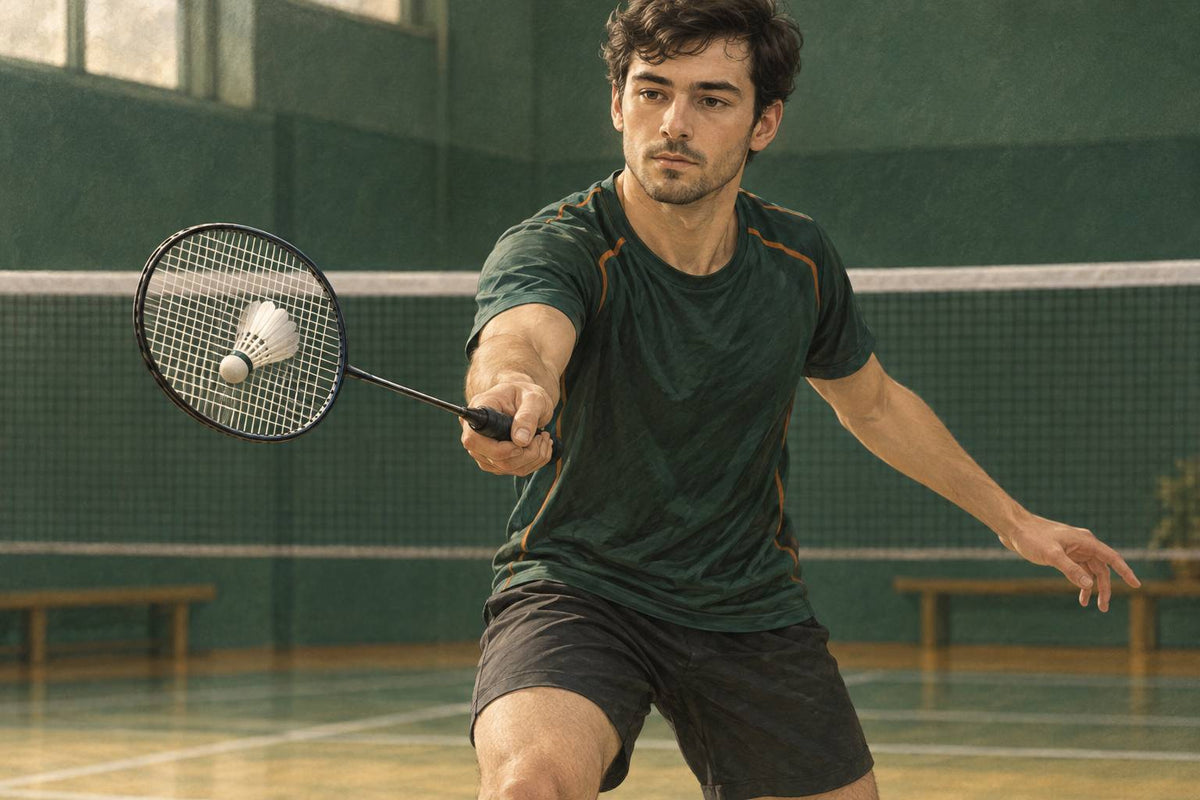
If your clears thud off the rim, drives spray sideways, or an easy net kill dies on the frame, the fix usually starts before the shuttle reaches you. Badminton racket frame hits are not just “bad aim.” They often come from arriving late, standing a half-step too close or too far, losing sight of the shuttle near impact, squeezing the handle too early, or letting the racket face tilt as you swing.
This guide separates those causes so you can diagnose the contact point instead of guessing. We’ll keep the sweet spot simple here: your goal is cleaner string-bed contact more often, then use setup choices only as extra margin.
In This Guide
What a Badminton Racket Frame Hit Really Means

A badminton racket frame hit is simply off-centre contact: the shuttle catches the rim or the outer edge of the string bed instead of the clean hitting zone. When that happens, the racket may twist in your hand, the shuttle leaves with less power, and the shot often loses both distance and accuracy. It feels harsh because more vibration travels back through the frame.
Aim for clean contact on the central string bed, away from the rim. Players use sweet spot to describe a responsive contact area, but its exact location and feel vary with the racket and string setup; it is not one fixed upper-third target on every frame.
Timing, Spacing, and Visual Tracking: The Most Common Causes
Most badminton racket frame hits start before the swing. If your racket is low, your feet are late, or your preparation changes at the last second, you are guessing at contact instead of meeting the shuttle in front of you.
- Late preparation: keep a racket-up ready position and prepare steadily, not with a last-second lift or wave.
- Poor spacing: move so the shuttle is beside or slightly in front of your hitting shoulder, not jammed into your body.
- Mistimed swings: fast incoming shuttles leave little preparation time, so begin with a controlled feed and stable spacing before adding pace.
- Losing sight near impact: the shuttle slows sharply after contact, which makes the final contact point tricky to judge. Follow it to the strings and avoid swinging with excess force.
Grip Pressure and Racket-Face Control Mistakes

Frame hits are not only a swing-path problem. Your hand can turn a good contact point into a mishit if the grip is wrong, the fingers are clenched from start to finish, or the racket face changes angle just before impact. An unintended face-angle change can alter the contact, but an open or closed face does not by itself cause a rim hit: spacing and swing path matter too. The goal is not a loose, floppy racket — it is controlled relaxation.
Hold the grip securely without clenching continuously. Stay loose through preparation, grip changes, and follow-through, then squeeze briefly at the moment of contact. That short squeeze helps square the face without slowing your hand early. For a deeper breakdown, see Badminton Grip Pressure: Relax, Then Squeeze at Impact.
Also check your handle feel. If your grip wrap is overly thick, it can hide the bevels, making forehand-backhand changes less stable and racket-face awareness less precise.
Drills and Gear Margin: Fix the Contact, Then Check the Setup
Build contact feel before adding speed. Cushion the shuttle on the strings, then lightly juggle it with small wrist and finger adjustments; the goal is quiet, centred contact, not height. Next, try controlled wall rallies from about 2 m away, keeping the racket up and the swing compact. This trains touch, reaction, and face control over time; for a fuller solo progression, use these badminton wall rally drills.
After the contact work, check whether your setup gives enough margin. Imperfect contact is part of badminton: rushed blocks, late drives, and awkward interceptions happen at every level. An isometric head gives a larger effective hitting area than an oval frame, but it still depends on timing, footwork, grip, and preparation; compare the shapes in this isometric vs conventional racket head guide. String tension matters too: lower tension can enlarge the usable hitting area, while higher tension punishes off-centre hits more. See the badminton string tension guide before changing tension.
Which Fix Should You Choose?
| If frame hits happen when... | Choose this focus | Why it fits |
|---|---|---|
| You arrive late, crowd the shuttle, or reach from a low racket. | Preparation/spacing | A racket-up ready position and better distance help you meet the shuttle set instead of catching the frame. |
| Your swing starts on time, but contact shifts from shot to shot. | Timing | Shuttle speed and sharp deceleration leave little judgement margin, so use a calmer, smaller swing before adding power. |
| You lose the shuttle just before impact. | Visual tracking | Keep watching the shuttle into the strings; excess force raises the risk of frame hits or air shots. |
| The racket twists, the shuttle sprays, or the face feels unstable. | Grip/racket face | Stay loose during preparation, tighten at impact, and square the racket face through contact. |
| Clean contact is improving, but off-centre hits still feel harsh. | Setup margin | An isometric head or looser tension can enlarge the usable hitting area, but neither replaces timing, footwork, grip, and preparation. |
Get 10% off your first order
Join the Badminton House list and we’ll email you a 10% welcome code — plus training guides, technique advice, and badminton updates.
By subscribing, you agree to receive Badminton House emails and can unsubscribe anytime.
Frame hits are frustrating, but they are also useful feedback: contact quality usually improves when your preparation, spacing, timing, visual tracking, grip pressure, and racket face start working together. We play badminton too, and if you want a second opinion on your setup, contact us.
Some racket head shapes give a little more contact margin, but the cleaner swing you build is what makes the change last.
Browse Badminton RacketsCompare racket head shapes and find a frame that fits your game.

Leave a comment
This site is protected by hCaptcha and the hCaptcha Privacy Policy and Terms of Service apply.