
Last updated: July 2026 · Written by the team at Badminton House
Quick Answer: Badminton Slice Drop Shot
Use a full overhead preparation like a clear or smash, then cut across the shuttle at contact so the pace dies without giving away the drop early.
In-cut
Best choice: the reverse-slice wrap is usually the safer learning option because it helps the shuttle clear the net cleanly while still falling short and steep.
Out-cut
Use this when you want the shuttle to travel on the opposite angle from your apparent preparation, especially for forehand cross-court disguise from the rear court.
Flat hit
Choose a normal drop first if your sliced drops are clipping the tape, floating long, or turning into accidental sliced clears.
A badminton slice drop shot is frustrating because it feels like it should be a “soft touch” shot — but the more you baby it, the easier it is for your opponent to read. The real skill is almost the opposite: prepare like you are about to hit a clear or smash, keep the overhead action convincing, then cut across the shuttle so it loses distance and drops sooner.
That is why many improving players in Canada struggle with slice and reverse cut drops. They slow down too early, poke the shuttle, or flick the wrist at the last second. Instead of deception, they get a loose drop that sits up, a sliced clear that drifts out, or a shuttle that does not clear the tape cleanly.
Working on cleaner overhead drops? Browse our badminton racket collection for current CAD availability, with free shipping within Canada on orders over $200.
In This Guide
- What Does a Badminton Slice Drop Shot Actually Do?
- Why Does the Slice Need the Same Overhead Preparation?
- Slice vs Reverse Slice: Out-Cut and In-Cut Directions
- Racket-Face Angle and Contact Cues
- Common Mistakes: Touching, Wristing, and Slicing Clears
- Where Slice Fits Into Rear-Court Deception
- Rackets, Control, and Canadian Buying Notes
- Which Slice Drop Should You Choose?
What Does a Badminton Slice Drop Shot Actually Do?
A badminton slice drop shot is an overhead stroke where the racket face cuts across the shuttle at an angle instead of striking it flat, so the shuttle loses pace and falls shorter and steeper than the swing suggests. It is not just a softer version of a normal drop: the cutting action can also add spin and send the shuttle in a direction your opponent was not expecting.
Think of it as the next step after learning a clean basic drop shot. If your regular drop is still inconsistent, start with the foundation first: use the same overhead preparation as your clear or smash, contact the shuttle high, and send it down into the front court with control. Our badminton drop shot technique guide covers that base before you add slice.
Once the basic drop is reliable, slice gives you two extra tools:
- Sharper drop: because the racket cuts across the shuttle, less of your swing energy drives it deep, so the shuttle can fall shorter and steeper.
- Better disguise: your preparation can still look like a clear or smash, but the angled contact changes the shuttle’s pace and direction at the last moment.
- Direction change: slice and reverse slice let you swing one way while sending the shuttle on a different line.
Why Does the Slice Need the Same Overhead Preparation?
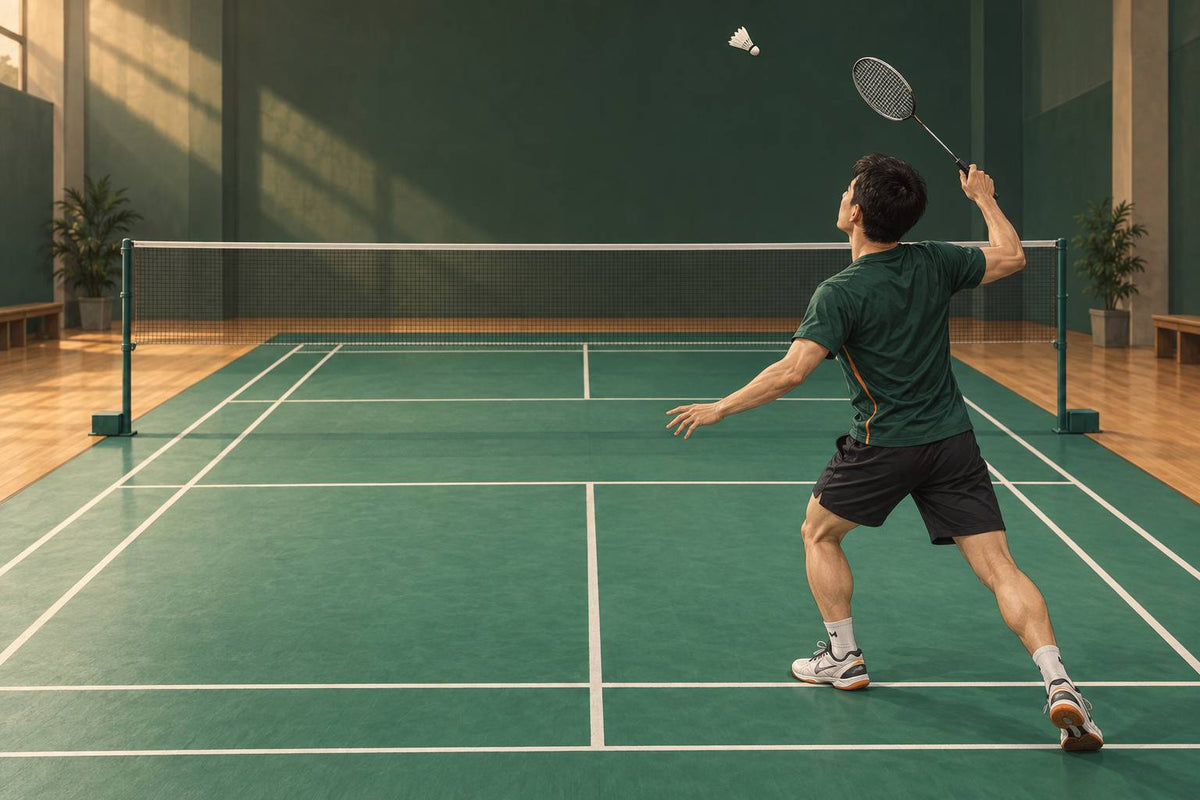
A badminton slice drop shot is deceptive only if your opponent first believes a full overhead shot is coming. The preparation should look like your clear or smash: turn side-on, raise both arms, show a strong overhead shape, and begin the arm action quickly enough to sell the idea of a powerful stroke.
The distance dies late. You do not start the shot with a soft, obvious “drop-shot” preparation. Instead, you keep the same overhead picture, then cut across the shuttle so less energy travels straight through it. That cut is what takes pace off the shuttle and makes it fall shorter than your opponent expects.
Key cue: show smash or clear first, slice second. If your preparation already looks soft, the opponent can move forward before the shuttle leaves your strings.
Build the same overhead “picture” every time
- Side-on body: turn your shoulders so your non-racket side points more toward the net, just as you would for an overhead clear or smash.
- Both arms up: use the non-racket arm to help line up the shuttle and make the preparation look like a real full-power overhead.
- Fast first move: start the hitting action with intent. The opponent reads your first movement before they read the final racket-face cut.
- Late change at contact: the slice happens at the end, by cutting across the shuttle instead of hitting flat through it.
This is why slice drops connect so closely with smash mechanics. A convincing disguise comes from a real overhead base, not from a separate “trick shot” swing. If your clear, smash, and slice drop all begin from the same shape, the opponent has to wait longer before committing.
For the power side of that shared overhead action, see our guides to badminton forearm pronation and improving your badminton smash. The slice drop borrows the same preparation, then changes what the racket face does at the shuttle.
A simple practice cue
During practice, hit a clear, then a smash, then a slice drop from the same rear-court preparation. Ask a partner to watch only your setup and first arm movement, not the shuttle. If they can identify the drop before contact, your disguise is showing too early.
Slice vs Reverse Slice: Out-Cut and In-Cut Directions

A badminton slice drop shot is not one single shot. It is a family of cuts where your overhead preparation stays convincing, but the racket face brushes across the shuttle instead of striking it flat. The two main versions are the regular slice and the reverse slice.
Think of them as two opposite cutting directions:
- Out-cut slice: the racket cuts across the shuttle one way, taking pace off and sending the shuttle on the slice angle.
- In-cut or reverse slice: the racket wraps across the shuttle the other way. This reverse wrap is generally the safer option when your priority is clearing the net cleanly.
Do not get stuck trying to memorize the label first. On court, the useful question is simpler: which way do I want the shuttle to leave my strings while my opponent reads a different swing? The answer depends on whether you are playing forehand or backhand, and whether you are sending the shuttle straight or cross-court.
| Side | Most common use | Practical cue |
|---|---|---|
| Forehand slice | Mainly used for cross-court drops from the forehand corner. | Show a strong overhead action, then cut the shuttle so it leaves on the cross-court angle. |
| Forehand reverse slice | Used for most other forehand drop-shot angles. | Let the swing suggest one direction, then use the reverse wrap to redirect the shuttle the other way. |
| Backhand slice | May be used for the cross-court backhand drop. | Keep the backhand overhead shape, then cut across the shuttle to change the angle. |
| Backhand reverse slice | Used for the straight backhand drop angle. | Use the reverse cut to keep the shuttle straighter while still taking pace off. |
Training shortcut. If you are still building the basic drop action, practise the regular overhead drop first, then add slice. The disguise only works if your clear, smash, and drop preparation already look similar. For the foundation, see our badminton drop shot technique guide and our badminton deception guide.
A good way to feel the difference is to practise from one rear corner and alternate the intended direction: one shuttle to the straight forecourt, one shuttle to the cross-court forecourt. Keep the same shoulder turn and overhead rhythm, but change the racket-face angle through contact. If your opponent can tell the angle before you hit, you are changing the swing too early.
For most club players, the reverse slice becomes more reliable sooner because the in-cut wrap gives you a safer margin over the tape. Once that version lands consistently, the out-cut slice becomes a stronger deception tool because it can make a forehand-corner preparation look like one angle while the shuttle travels cross-court.
Racket-Face Angle and Contact Cues

For a reliable badminton slice drop shot, do not rebuild your whole overhead action. The basic forehand stroke stays largely the same: turn side-on, prepare as if you could hit a clear or smash, and swing with a convincing overhead action. The change happens at the racket face. Instead of contacting the shuttle flat so it travels in the same direction as your swing, you angle the face and cut across the shuttle.
That angled contact is why the shuttle does not simply follow your arm. A normal straight drop travels mainly in the direction of the swing. A sliced or reverse-sliced drop uses the face angle and brushing contact to take pace off the shuttle, alter its direction, and make it fall more sharply.
Key cue: swing like an overhead, then let the racket face do the deception. If you slow the whole action down too early, the opponent reads the drop before the shuttle leaves your strings.
Think “cut through,” not “poke at”
Many improving players hear “slice” and start poking softly at the shuttle. That usually produces a loose, floaty drop because there is not enough racket-head speed to sell the clear-or-smash preparation. A better image is to swing through the shuttle with a controlled cut. You are still completing an overhead action, but the strings brush across the shuttle instead of driving straight through it.
The slice needs a committed swing because some of your stroke energy is lost into the cutting action rather than transferred directly forward. In practice, that means the shot often feels faster in the arm than a beginner expects, even though the shuttle dies short. Keep the swing smooth and controlled rather than snatching with the wrist.
| Cue | What it should feel like | Why it matters |
|---|---|---|
| Same preparation | Your body turn, raised racket, and initial overhead motion still look like a clear or smash. | The disguise comes from the opponent seeing a full overhead threat before the shuttle is cut short. |
| Angled face | The strings meet the shuttle at a slant instead of square-on. | The shuttle is cut through the air, so it can drop steeper or travel away from the apparent swing line. |
| Brush, then finish | You feel a brushing contact, but your arm still continues through the stroke. | A complete action gives control and disguise; a tap often sits up for an easy net kill. |
| Quiet wrist | The wrist stays relaxed but does not flick wildly to steer the shuttle. | Excess wrist action makes direction harder to control, especially under match pressure. |
The reverse-action idea
Reverse slice is where this becomes especially deceptive. In a reverse action, the racket can swing toward one direction while the shuttle is sent another. For example, your arm swing may suggest a cross-court drop, but the racket face wraps across the shuttle so it travels straighter and lands shorter. To the defender, the first visual clue says one direction; the final contact sends the shuttle somewhere else.
"The arm swing sells one story; the angled racket face tells the shuttle the truth."
Simple contact checkpoints
- Reach the shuttle early enough. Slice is much easier when you contact high and in front rather than letting the shuttle fall behind your shoulder.
- Keep your grip relaxed before contact. A relaxed grip helps you maintain racket-head speed without locking the face too early. If grip timing is a struggle, review relax-and-squeeze grip pressure.
- Use overhead mechanics first. The slice is built on a real overhead stroke, not a separate tapping motion. If you want more power and cleaner preparation, the forearm pronation guide is a useful companion.
- Watch the first bounce point in practice. If the shuttle keeps travelling too deep, you are probably hitting too flat. If it dies into the tape, your face may be too open or your cut may be too thin.
Your racket can help you feel the shuttle, but it will not create the slice for you. A control-friendly setup, fresh grip, and appropriate string tension can make the contact feedback cleaner. Current racket availability and CAD pricing are on the badminton rackets collection.
Common Mistakes: Touching, Wristing, and Slicing Clears
The most common improver mistake with a badminton slice drop shot is treating it like a tiny touch shot. A good sliced drop is still an overhead stroke: you prepare like a clear or smash, swing through gently, and complete the arm action while the racket face cuts across the shuttle.
That matters because slice takes some energy away from the direct hit. Instead of all your swing power going straight through the shuttle, part of it is spent on the cut. So the answer is not to poke the shuttle softly; it is to use a slightly stronger, controlled overhead swing that still kills distance through the slicing contact.
| Mistake | What happens | Better correction |
|---|---|---|
| Only touching the shuttle | You lose the overhead disguise because the stroke no longer looks like your clear or smash. | Keep the full overhead preparation and use a gentle but complete arm swing. For the base drop-shot motion, review the badminton drop shot technique guide. |
| Trying to steer with extra wrist | Direction becomes harder to control, especially when you are learning the in-cut or reverse cut. | Let the swing path and racket-face angle do the work. If your overhead action feels forced, build the foundation with the forearm pronation guide. |
| Swinging too softly because it is a drop | The slice may not carry cleanly over the net, or it may become an obvious slow drop with no deception. | Use a controlled overhead swing with enough racket speed to sell the clear or smash preparation, then let the cut reduce the shuttle’s distance. |
| Slicing clears for disguise | It is not an especially useful deception and can make your clears inaccurate. | Keep slice mainly for drops, and use clearer tactical change-of-pace patterns instead. See the badminton change of pace tactics guide. |
A useful boundary is this: slice drops can be excellent, and sliced smashes can sometimes change angle or pace, but sliced clears are usually not worth building into your game. Clears need length and accuracy. Adding a cut often removes both.
If your sliced drops feel inconsistent even when the technique is improving, also check the basics around grip pressure, string feel, and racket control. Canadian players can browse badminton rackets in CAD.
Where Slice Fits Into Rear-Court Deception
A badminton slice drop shot is most dangerous when it looks like something bigger first. Your opponent should see the same rear-court preparation they would expect for a clear or smash, then discover late that the shuttle has been cut, slowed, and redirected into the forecourt.
Think of deception in two layers: body-angle deception and arm-swing deception. Your body position can suggest one direction, while the racket-face cut sends the shuttle somewhere else.
| Situation | What the Opponent Reads | How the Slice Changes It |
|---|---|---|
| Forehand cross-court drop | Your straight, side-on overhead shape can look like a straight clear, straight smash, or straight drop. | A slice cuts the shuttle away cross-court while the body shape still sells the straight overhead. |
| Forehand straight drop | A cross-court arm swing can make the opponent lean toward the diagonal reply. | A reverse slice redirects the shuttle straight, so the arm swing and shuttle direction no longer match. |
The key is not to make the slice look “soft.” Use a convincing overhead action, then let the angled racket face take pace off the shuttle.
Practical rally cue. Use slice when your opponent is respecting your clear or smash. If they are already standing too far forward, the sliced drop loses its deception value unless you first re-establish rear-court pressure.
Slice is not limited to drop shots. It can also be applied to smashes to change the angle and take pace off the shuttle, making the shot land shorter than the defender expects and disturbing their defensive rhythm. If you are comparing deceptive drops with a full overhead attack, read the Badminton Jump Smash Technique guide next.
Rackets, Control, and Canadian Buying Notes
A racket will not create a clean badminton slice drop shot for you. The disguise still comes from your overhead preparation, racket-face angle, and a controlled cut across the shuttle. Gear only helps when it lets you repeat that action comfortably: stable contact, manageable swing speed, and a string setup you can trust under pressure.
If you are building this shot into your game, browse the current badminton rackets collection with one question in mind: can you keep your clear, smash, and sliced drop preparation looking the same? A racket that feels too demanding may make you slow down or steer the shuttle, which gives away the deception before the cut even happens.
Technique-first buying note. For touch, placement, and overhead disguise, compare racket traits in our control-focused badminton racket guide for Canada, then check live stock in the rackets collection before choosing a specific model.
What to prioritize for slice-drop practice
| Gear factor | Why it matters for slice drops |
|---|---|
| Comfortable swing speed | You need enough racket-head speed to preserve the smash-or-clear disguise, while still controlling the final cut across the shuttle. |
| Predictable contact feel | Slice depends on racket-face angle. If the racket feels inconsistent in your hand, you are more likely to over-open the face, float the drop, or clip the tape. |
| String setup you can repeat | When you are training touch, the goal is repeatable feedback. Badminton House has on-site stringing service available if you want help matching your strings to your control goals. |
| Live availability | Racket stock changes, so verify the current collection before planning around a specific SKU you saw in an older guide or product page. |
For Canadian players, the practical shopping details matter too: Badminton House shows racket prices in CAD, offers free shipping within Canada on orders over $200, and keeps the live collection as the best place to confirm what is currently available.
Which Slice Drop Should You Choose?
Choose the version that gives you deception without forcing the shot. A badminton slice drop shot works best when the overhead preparation still looks like a clear or smash, then the racket face cuts across the shuttle to reduce distance and change the angle.
| Choose this | Best when | Key cue |
|---|---|---|
| Basic straight drop | You are still building the full overhead drop motion. The priority is not to “touch” the shuttle, but to use a gentle, complete arm swing. | Same ready position as your clear and smash, then a controlled full swing. |
| Forehand slice / out-cut | You want a forehand cross-court drop from your forehand corner. This is the main forehand angle where slice is used. | Keep the body shape side-on and let the angled racket face send the shuttle cross-court. |
| Reverse slice / in-cut | You want to swing as if the shuttle is going one way, then send it another. On the forehand, reverse slice is used for most angles outside the forehand-corner cross-court slice. | Use the racket-face angle, not extra wrist action. The in-cut wrap is generally the safer slice option for clearing the net cleanly. |
| Backhand slice choice | You are playing backhand rear-court deception: slice may be used for the cross-court angle, while reverse slice may be used for the straight angle. | Prioritize direction control first; backhand slice is not useful if the contact becomes rushed or wristy. |
| Sliced smash | You are not trying for the most powerful smash; you want to change the angle and slow the smash so it lands farther in front of the defender than expected. | Sell the attacking preparation, then use slice to disturb the defender’s rhythm. |
| Do not choose slice clears | You are trying to disguise a clear angle. Slicing clears is not especially useful and tends to make clears inaccurate. | Use proper clear mechanics instead of cutting across the shuttle. |
Practical gear note. Slice control comes more from preparation, contact, and racket-face angle than from buying a “slice racket.” If you are also reviewing your setup, start with the Badminton House badminton rackets collection, then compare control-oriented traits in our control racket guide.
If you are still developing the base overhead motion, build the ordinary drop first with the Badminton Drop Shot Technique guide. Once your preparation matches your clear and smash, add the deception layer from our Badminton Deception Technique guide.
Get 10% off your first order
Join the Badminton House list and we’ll email you a 10% welcome code — plus subscriber-only restock alerts, giveaways, and honest gear advice from players.
By subscribing, you agree to receive Badminton House emails and can unsubscribe anytime.
The badminton slice drop shot gets much easier when your preparation, grip pressure, and racket-face control all work together. If you want help choosing gear that supports that touch game — or you just want a second opinion from people who play badminton too — contact Badminton House and we’ll help you narrow it down.
Player-run advice · Canadian badminton specialty shop · Gear help for your overhead control game

Leave a comment
This site is protected by hCaptcha and the hCaptcha Privacy Policy and Terms of Service apply.