Last updated: July 2026 · Written by the team at Badminton House
Quick Answer: Badminton Equipment for Beginners
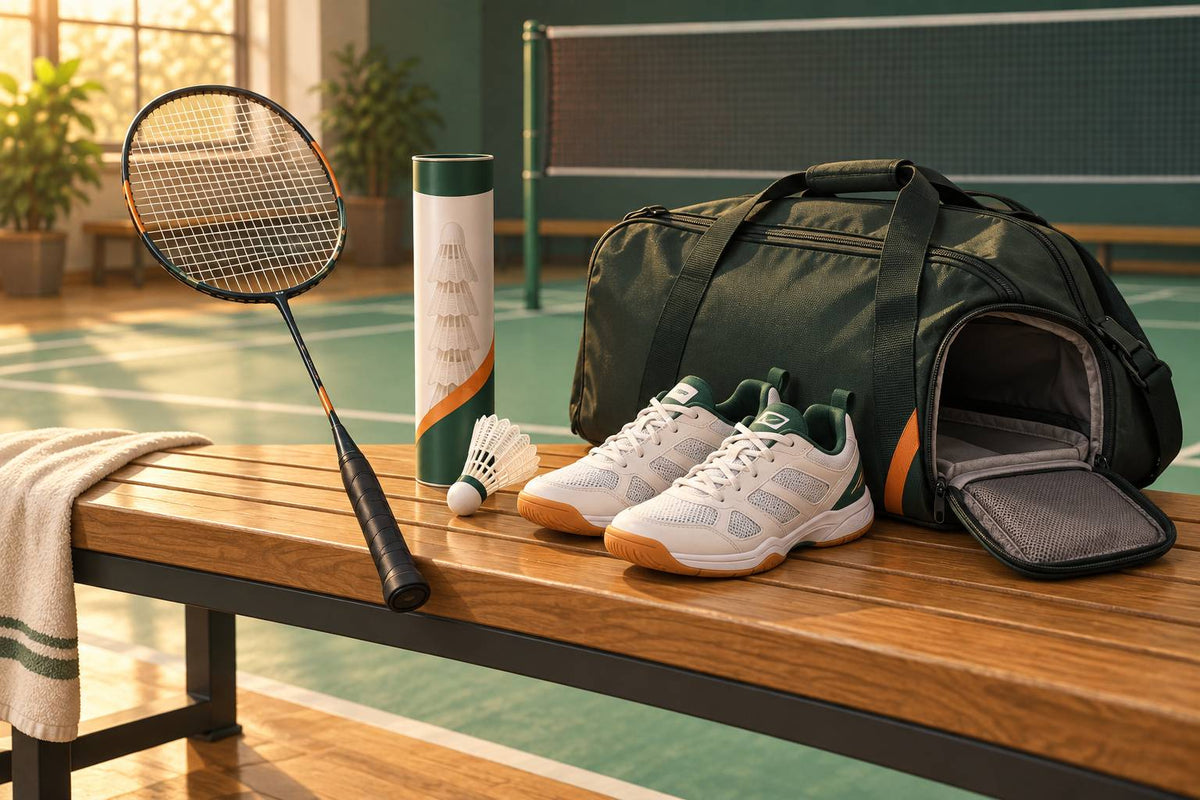
Start with the four true essentials: a beginner-friendly racket, nylon shuttlecocks, non-marking indoor court shoes, and a simple bag; add comfort accessories once you are playing regularly.
Buy First
Best choice: choose an all-round 4U-style racket around 80–85g with an even or head-light balance and a flexible shaft, pair it with nylon shuttles, wear non-marking indoor court shoes, and carry everything in a basic bag.
Shoes First
If you can borrow a racket and shuttles at drop-in, prioritize non-marking indoor court shoes because indoor courts commonly require non-marking soles, and badminton footwork needs lateral support that running shoes do not provide.
Add Later
Overgrips, a wristband or headband, towel, better socks, and optional knee or ankle support are useful comfort items, but they can wait until you know how often you will play.
Starting badminton is fun until you realize the gear aisle is full of choices that all sound important: 3U vs 4U rackets, nylon vs feather shuttles, court shoes vs running shoes, grips, bags, towels, supports, and more. If you are buying badminton equipment for beginners in Canada, the goal is not to buy everything at once — it is to buy the few pieces that let you play safely, learn faster, and avoid wasting money on gear meant for advanced players.
A practical starter checklist is simple: a beginner-friendly racket, a tube of nylon shuttlecocks, non-marking indoor court shoes, and a bag to carry everything. After that, comfort items like an overgrip, wristband or headband, small towel, quality socks, and optional knee or ankle support can be added as you play more often.
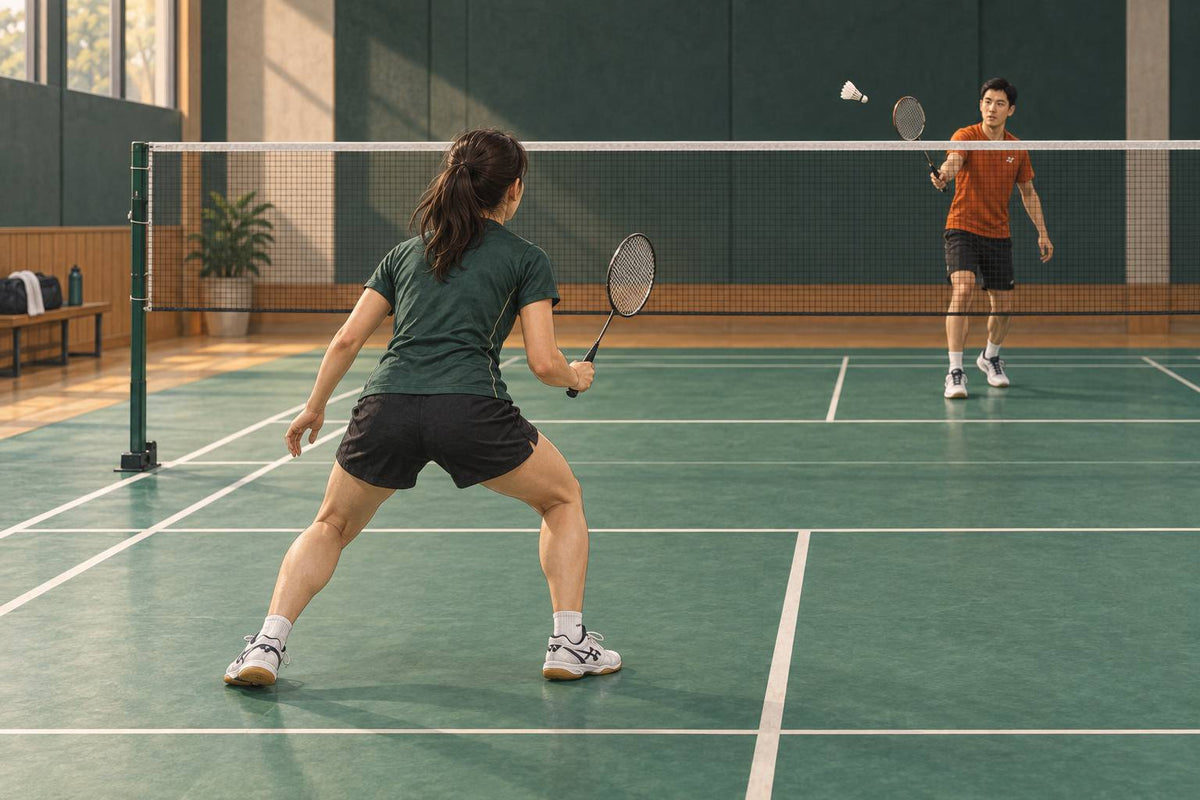
The one item beginners often underestimate is footwear. Many indoor badminton facilities require non-marking soles, and badminton movement depends on quick side steps, lunges, jumps, and direction changes. Running shoes may feel cushioned, but they are not built for the same lateral support demands as indoor court shoes.
Start with the gear that protects your movement. Browse badminton footwear for non-marking indoor court shoes, shipped within Canada.
In This Guide
- What Should You Buy First? The 4 Core Pieces Every Beginner Needs
- 1. Beginner-Friendly Badminton Racket
- 2. Nylon Shuttlecocks for Practice
- 3. Non-Marking Indoor Court Shoes
- 4. Bag, Grip, Towel, Socks, and Support Items
- Where Should Your Beginner Budget Go First?
- Which Beginner Badminton Equipment Should You Choose?
What Should You Buy First? The 4 Core Pieces Every Beginner Needs
If you are building your first beginner badminton kit, keep it simple: buy the pieces that let you safely step on court, rally consistently, and carry your gear without damaging it. The core starter setup is a beginner-friendly racket, a tube of shuttles, non-marking indoor court shoes, and a bag.
Beginner-specific availability can change, so the safest shopping links below go to Badminton House collection pages rather than individual product pages. Badminton House ships within Canada.
Start with the essentials, not every accessory. Build your kit from rackets, shuttlecocks, footwear, and accessories, then add comfort items once you know how often you play.
| Starter piece | What to look for | Where to start |
|---|---|---|
| Beginner-friendly racket | A lighter all-round racket is easier to handle while you learn timing, grip changes, and clean contact. | Shop badminton rackets |
| Tube of nylon shuttles | Nylon shuttles are a practical starter choice because they are more durable than feather shuttles and suit repeated practice rallies. | Shop shuttlecocks |
| Non-marking indoor court shoes | Indoor badminton courts typically require non-marking soles, and proper court shoes add the lateral support and cushioning that running shoes are not built to provide. | Shop badminton footwear |
| Bag to carry everything | A bag keeps your racket, shuttles, shoes, towel, and small accessories together so you are not scrambling before drop-in or lessons. | Shop badminton accessories |
The only item on this list that is truly hard to substitute is footwear. A beginner can borrow a racket for a first session and share shuttles with a group, but many indoor facilities will not allow shoes that mark the court. If you are playing at a Canadian community centre, school gym, club, or rented court, check the shoe rule before you go.
After those four pieces, add comfort items as needed: an overgrip if the handle feels slippery, a wristband or headband if you sweat heavily, a small towel for changeovers, and knee or ankle support only if you already know you need extra support. For a full pack list beyond the first purchase, see our badminton club night checklist and badminton bag guide.
1. Beginner-Friendly Badminton Racket

Your first racket should make clean contact easier and reduce the effort needed to send the shuttle deep. A good starting point is a lighter 4U racket, roughly 80–85g, with an even or head-light balance, a flexible shaft, and an isometric head shape.
That combination is forgiving without being overly specialized. The lighter weight is easier to move, an even or head-light balance feels quicker in the hand, and a flexible shaft helps new players who cannot yet generate enough swing speed. An isometric head shape is also beginner-friendly because it gives a larger sweet spot, so slightly off-centre hits are less punishing.
Beginner racket checklist
- Weight: look for 4U, roughly 80–85g, instead of jumping straight into a heavier frame.
- Balance: choose even balance or head-light if you want easy handling and faster recovery between shots.
- Shaft: choose flexible rather than stiff while your timing and swing speed are still developing.
- Head shape: choose isometric for the larger sweet spot.
- Grip fit: grip sizes use “G” numbers, where the smaller number means the larger handle; when holding the racket, aim for about a finger-width gap between your fingers and palm.
Do not overbuy your first racket. High-end, expert-level rackets can be demanding because they often reward advanced timing, faster swing speed, and more precise contact. Beginners usually improve faster with a forgiving all-round frame they can swing comfortably for a full session.
Start by browsing badminton rackets, then use the specs above as your filter. If you want the deeper version before buying, read How to Choose a Badminton Racket for weight, balance, and flex basics, or compare beginner-focused options in Best Badminton Rackets for Beginners in Canada 2026.
2. Nylon Shuttlecocks for Practice

For most beginners, nylon shuttlecocks are the practical starter choice. They fly a little slower and do not travel as far as feather shuttles, which gives new players more time to react, build timing, and keep rallies going.
They also last much longer than feather shuttles. That matters when you are learning clears, serves, drives, and net shots, because beginners usually hit the skirt, frame, and feathers more often than advanced players. A durable tube of nylon shuttles keeps practice cost-friendly while you are still developing clean contact.
Beginner pick: start with nylon practice shuttles from the shuttlecocks collection. The Yonex Mavis 350 Nylon Shuttlecocks are a durable option worth checking on the collection page.
| Shuttle type | Best for beginners because... | Trade-off |
|---|---|---|
| Nylon | Slower speed, shorter flight distance, strong durability, and better value for repeated practice. | Less natural feel and flight than feather. |
| Feather | Better flight trajectory, control, and touch once your contact is more consistent. | More fragile and often more expensive over time. |
Feather shuttles are worth learning about, especially if you plan to join a club night, league, or tournament environment where feather play is common. But for your first few months, nylon is usually the smarter buy: you get more rallies per tube, fewer broken shuttles, and a more forgiving pace while your technique catches up.
For a deeper breakdown of feel, durability, cost, and when to switch, read Feather vs Nylon Shuttlecocks — What's the Difference?
3. Non-Marking Indoor Court Shoes

Court shoes are not a “nice later upgrade” for beginners. They belong in the buy-first category with your racket and shuttles, because indoor badminton courts require non-marking soles for floor protection and reliable grip. Some facilities may also stop players from stepping onto the court if their shoes are not appropriate for indoor court use.
The key words to look for are non-marking indoor court shoes. Badminton is played with fast side-to-side lunges, split steps, jumps, recovery steps, and sudden changes of direction, so the shoe has to do more than feel comfortable when you walk around the gym.
Beginner rule: buy proper court shoes before spending extra on a higher-end racket. Browse badminton footwear, or read the full comparison of badminton shoes vs running shoes if you are tempted to use your regular trainers.
Why running shoes are the wrong shortcut
Running shoes are built mainly for forward motion. Badminton asks for lateral and reverse movements: push off, brake, lunge, recover, turn, and jump again. If the shoe does not support those movements, your foot can slide inside the shoe or roll over the edge during quick changes of direction.
A good beginner badminton shoe should give you:
- Non-marking rubber or gum sole: protects indoor floors and gives court grip.
- Lateral support: helps control side-to-side movement, not just straight-line running.
- Cushioning: absorbs impact from jumping, lunging, and hard landings.
- Arch support and stable fit: helps balance and reduces unnecessary foot movement inside the shoe.
- Low, stable court feel: helps you change direction quickly without feeling perched too high off the floor.
Beginner shoe checklist
| Feature | Why it matters for beginners |
|---|---|
| Non-marking sole | Required for indoor court use at many facilities and helps protect the playing surface. |
| Side support | Badminton includes frequent lateral and reverse movements, so the shoe needs to hold your foot during quick direction changes. |
| Cushioning | Helps absorb impact from jumping, lunging, and repeated hard stops. |
| Snug heel and midfoot | Keeps your foot from sliding inside the shoe when you brake or push off. |
| Indoor-only use | Keeping your court shoes off outdoor pavement helps preserve grip and keeps dirt off the court. |
Featured option at Badminton House
Babolat Shadow Tour Men's Badminton Shoes – Orange
Non-marking Michelin premium rubber outsole · Kompressor dual-density EVA with KPRS-X cushioning · Approx. 295g in size 9 · Listed size range 7–11.5
This is a performance-oriented indoor badminton shoe and is a strong footwear pick for players who want proper non-marking court grip rather than trying to get by with running shoes. It is marketed for intermediate and advanced players, but the fundamentals beginners need are here: indoor non-marking grip, cushioning, and badminton-specific support.
Shop Babolat Shadow TourIf your size is not available, start with the broader footwear collection and choose a shoe clearly made for indoor court sports with a non-marking sole. For a deeper beginner-focused shortlist, see Best Badminton Shoes for Beginners in Canada.
Ships across Canada · 14-day returns
Bottom line: shoes are where you protect both the court and your body. A beginner-friendly racket helps you hit the shuttle; proper non-marking indoor court shoes help you reach it safely.
4. Bag, Grip, Towel, Socks, and Support Items
Once you have the first three essentials covered, the comfort layer is simple: a bag to carry everything, an overgrip, a wristband or headband, a small towel, badminton-friendly socks, and optional knee or ankle support. These items are useful, but most beginners do not need to buy every accessory before their first session.
Think of this part of your beginner badminton equipment checklist as the “add-later” layer. Start with what solves an immediate problem: carrying your gear, keeping the racket handle comfortable, managing sweat, and making your feet feel better inside court shoes.
Beginner comfort checklist
- Bag: helpful once you are carrying a racket, tube of shuttles, shoes, water bottle, towel, and spare clothing. For more detail, read the badminton bag guide.
- Overgrip: useful when you want a fresher handle feel or a slightly different grip thickness. Compare options in the badminton overgrip guide.
- Wristband or headband: a low-cost comfort item for players who want help managing sweat during play.
- Small towel: useful for breaks between games, especially at longer drop-in sessions or club nights.
- Socks: worth upgrading once you have proper court shoes and want a better fit inside them. See the badminton socks guide.
- Knee or ankle support: optional, and best treated as a support item rather than a required beginner purchase. For knees, start with the badminton knee support guide.
| Item | Buy now or later? | Beginner note |
|---|---|---|
| Bag | Soon after the basics | A bag becomes more useful once you are bringing shoes, shuttles, a towel, and extra clothing to the court. |
| Overgrip | Add early | A simple upgrade when the handle no longer feels right in your hand. |
| Wristband, headband, towel | Add as needed | Useful comfort items for longer sessions, warm gyms, and players who sweat more. |
| Socks | Add with shoes | Once you buy indoor court shoes, socks become part of the overall fit and comfort setup. |
| Knee or ankle support | Optional | Not every beginner needs support items. Add them only if they make sense for your body and playing situation. |
If you are still deciding what to wear with your starter kit, the simplest path is to choose comfortable badminton clothing for indoor court movement and then add small accessories as you learn what bothers you during play. The what to wear for badminton in Canada guide covers that apparel side in more detail.
Shop the add-later layer. Browse badminton accessories and apparel when you are ready to round out your beginner kit.
Where Should Your Beginner Budget Go First?
Do not build your first cart like a sponsored player. Spend first on the items that affect safety, learning, and whether you can actually play: a beginner-friendly racket, nylon shuttles, and non-marking indoor court shoes. Bags, apparel, extra grips, towels, and support items are useful, but most beginners can add them after a few sessions.
A realistic first-racket target is an entry-level starter around $60–$90 CAD, not a $250+ pro racket. New players usually benefit more from a forgiving 4U-style, even-balanced or head-light racket with a flexible shaft than from a stiff, demanding high-end frame built for advanced timing and swing speed.
| Priority | Buy now or later? | Beginner budget logic |
|---|---|---|
| Racket | Buy first | Look for a beginner-friendly frame before chasing advanced pro models. Check the badminton rackets collection for current availability. |
| Shuttles | Buy first | Nylon shuttles are the practical starter choice because they are durable for practice. Check the shuttlecocks collection, including the Yonex Mavis 350. |
| Court shoes | Buy first | This is not the place to improvise with running shoes. Indoor badminton calls for non-marking soles, grip, cushioning, and lateral support. The Babolat Shadow Tour Men’s Badminton Shoes is a non-marking option to consider; see the full footwear collection for current sizes and options. |
| Bag and accessories | Add later | A bag, overgrip, towel, wristband, socks, and optional knee or ankle support make play more comfortable, but they should not take budget away from your racket, shuttles, or shoes. Browse accessories and apparel as availability changes. |
For most Canadian beginners, the smartest order is simple: get a forgiving racket, a tube of nylon shuttles, and proper non-marking court shoes before upgrading the rest of your kit. Badminton House ships within Canada, which can make it worth combining essentials when you order.
Once you have played a few club nights, you will know what to add next: a better bag if you carry shoes and clothes, extra overgrips if your handle gets slippery, thicker socks if your feet slide, or support items if you need more confidence during lunges and direction changes. Start with the equipment that helps you learn safely, then personalize your kit around how you actually play.
Which Beginner Badminton Equipment Should You Choose?
If you are building your first badminton kit in Canada, choose gear that makes learning easier and keeps you allowed on indoor courts. Start with non-marking court shoes, a forgiving beginner racket, nylon shuttles, and only then add comfort accessories.
| If this sounds like you | Choose this first | Why it fits beginners | Shop path |
|---|---|---|---|
| You are joining indoor drop-in or club play | Non-marking indoor court shoes | Indoor badminton courts require non-marking soles, and badminton movement needs lateral support, cushioning, and grip for quick direction changes. | Browse badminton footwear |
| You are buying your first racket | A light 4U racket, around 80–85g, with even or head-light balance and a flexible shaft | A lighter, more flexible racket is easier to swing while you are still building timing and swing speed. An isometric head shape can also give beginners a larger sweet spot. | Check current racket availability |
| You mostly practise rallies, serves, and basics | Nylon shuttlecocks | Nylon shuttles are durable, beginner-friendly, and generally better for practice cost control than feather shuttles. Feather shuttles offer better feel and flight, but they are more fragile and are usually the later upgrade. | Check shuttlecock options |
| You already have a racket and shoes | Overgrip, towel, wristband or headband, and a bag | These do not replace the core gear, but they make club nights more comfortable and help you keep everything together. | Browse accessories |
| You are tempted by advanced pro gear right away | Beginner-friendly all-round gear instead | For a first racket, avoid overspending on $250 pro rackets. Starter-level rackets around $60–90 are a better first target where available. | Read the beginner racket guide |
Canadian product note. If footwear is your priority, see the Babolat Shadow Tour option mentioned in the court shoes section above. Badminton House ships within Canada.
For a deeper explanation of shoe rules, read Badminton Shoes vs Running Shoes. For racket specs like 3U, 4U, and 5U, see 3U vs 4U vs 5U Badminton Rackets.
Get 10% off your first order
Join the Badminton House list and we’ll email you a 10% welcome code — plus subscriber-only restock alerts, giveaways, and honest gear advice from players.
By subscribing, you agree to receive Badminton House emails and can unsubscribe anytime.
If you are still unsure what to buy first, ask us before you spend. We play badminton ourselves, so we can help you sort out beginner racket specs, non-marking shoe options, shuttles, grips, and what can wait until later. Send us a note through our contact page and tell us where you play, your level, and your budget.
Ready to build your beginner badminton kit?
Start with the essentials, choose in CAD, and add the comfort items only when they make sense for your game.
Shop Badminton FootwearShips across Canada · 14-day returns · Canadian badminton specialty shop

Leave a comment
This site is protected by hCaptcha and the hCaptcha Privacy Policy and Terms of Service apply.