fitness

How to Break the Intermediate Badminton Plateau

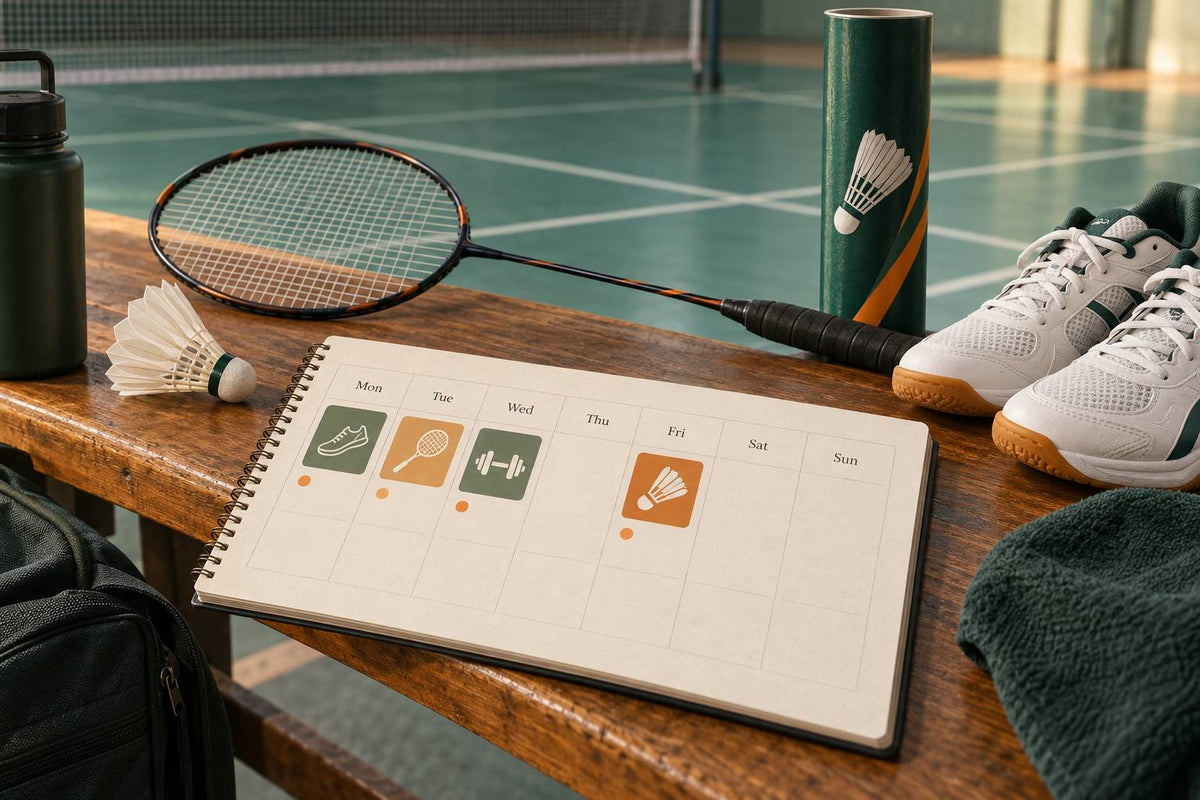
Illustration of an intermediate badminton player breaking a plateau with better movement, smash preparation and net touch practice.

Last updated: June 2026 · Written by the team at Badminton House

Quick Answer: Improve at Intermediate Badminton

To improve at intermediate badminton, stop chasing random tips and focus first on higher-quality warm-ups, a kinetic-chain smash, net touch, and a physical base that holds up when rallies get hard.

Default

Best choice: turn warm-ups into live movement practice, rebuild your smash from legs-to-trunk-to-pronation instead of a wrist snap, and add net touch so opponents cannot sit on your rear-court game.

Fitness

Choose this focus if your form looks good early but collapses late; badminton’s rally-rest pattern is intense, and a stronger base helps your lunges, recovery, and shot quality survive longer matches.

Gear

Consider a racket or shoe upgrade only after your timing and movement are improving; for Canadian players, Badminton House lists CAD pricing and offers free shipping within Canada on orders of $200+.

If you are trying to improve at intermediate badminton, the frustrating part is not that you are doing nothing. You play club nights, hit clears in warm-up, smash whenever you get a lift, and maybe even upgraded your racket — but your results still feel stuck.

That plateau is common because intermediate players often have enough skill to win rallies, but not enough structure to keep improving. Self-taught habits start to cap your ceiling: warm-ups become automatic, smash power leaks through the wrong body sequence, net shots get avoided, and footwork breaks down late in games.

This guide is a practical diagnosis-and-fix plan for Canadian club players. We will look at the habits that usually cause the plateau, then focus on the upgrades that actually move your game forward: sharper warm-ups, better smash mechanics, more confident net touch, a stronger physical base, and smarter gear decisions.

Build your game from the floor up. If your movement is slipping before your technique does, start with proper indoor court support in our badminton footwear collection.


Why Intermediate Badminton Players Plateau

If you are trying to improve at intermediate badminton and feel stuck, the problem is usually not effort. Most club players put in plenty of games. The issue is that the habits that got you from beginner to intermediate often stop working when rallies become faster, tighter, and more physical.

At the beginning, almost any court time helps: you learn to keep the shuttle in, serve legally, clear deeper, and survive faster rallies. Then the returns diminish. Self-taught footwork, late contact, a wristy smash, and casual warm-ups become a ceiling. You can still have good rallies, but under pressure your old patterns decide the point before your tactics do.

The plateau question is not just “what drill should I do?” It is “which habit keeps showing up when the rally gets hard?” Start by improving practice quality, then target the stroke or movement pattern that breaks first.

Badminton also exposes fitness gaps quickly. Match-play research describes the sport as short bursts with short rests: a typical pattern is about 7 seconds of rally time and 15 seconds of rest, with effective playing time around 31%, and average heart rate over 90% of a player’s maximum. In practical club terms, that means your technique has to survive repeated accelerations, stops, lunges, recoveries, and overhead swings, not just one clean shadow movement.

Plateau symptom What is probably happening Better next step
You warm up, but your first serious rally still feels rushed The warm-up is loosening your arm, but not training timing, split step, recovery, or moving contact. Turn routine hits into live movement practice. The badminton warm-up guide is a useful starting point for cold Canadian gyms.
Your smash is loud, but not finishing points You may be trying to create power with a wrist snap instead of a full kinetic chain. Forehand smash research identifies shoulder rotation and forearm pronation as principal contributors. Rebuild the smash around preparation, high contact, body rotation, and pronation. See how to improve your badminton smash for the deeper breakdown.
You are comfortable in the rear court, but passive at the net Your opponents can block, drop, or pull you forward because you do not threaten enough with touch near the tape. Add controlled net work so your attack is not only smash-based. The goal is to make opponents lift, not just to hit harder from the back.
Your technique looks fine early, then collapses late The physical base is not strong enough to keep your footwork, posture, and contact point stable through repeated rallies. Build legs, lungs, and recovery habits. Start with footwork basics, then layer in badminton-specific conditioning and injury-prevention habits.
You think a new racket will unlock the next level A racket can support your style, but it cannot fix late preparation, poor contact, or unstable movement. Upgrade only when you know what you need: more speed, more stability, more power, or better control. Use the intermediate racket guide when you are ready to compare by CAD budget and playing style.

So the fix is not one magic drill. It is a better practice structure: warm up with intent, choose one or two technical priorities, and build enough physical capacity that those priorities hold up when you are tired. For many intermediate players, the highest-return areas are the same: sharper warm-up habits, a more efficient smash, better net touch, cleaner footwork, and a physical base that keeps the racket work from falling apart.

Gear can matter later, especially shoes and rackets that match your movement and swing, but treat equipment as support rather than the main solution. For Canadian players budgeting an upgrade, Badminton House lists prices in CAD and offers free shipping within Canada on orders over $200, but the real breakthrough still comes from fixing the repeatable habits that show up every rally.


Stop Treating Warm-Ups Like a Formality

If you want to improve at intermediate badminton, stop using the first ten minutes as social hitting with a racket in your hand. The warm-up is often the easiest place to add quality without booking extra court time: every clear, drive, lift, drop, and net shot can include movement, recovery, and readiness.

The goal is not to turn warm-up into a full match. The goal is to make each easy rally look like badminton instead of two players standing upright and tapping shuttles back and forth. In cold Canadian gyms, that matters even more: your first hard lunges, jumps, and overheads should not happen after ten minutes of static hitting. Use the cold-gym warm-up guide first, then make your hitting warm-up active.

Simple rule: after every warm-up shot, recover as if the next shot matters. If your feet are still, your warm-up is teaching the wrong habit.

Turn Basic Strokes Into Moving Reps

Intermediate players often plateau because they can hit decent shots when the shuttle comes to them, but their quality drops once they have to move. Warm-up is where you can close that gap. Keep the rally cooperative, but add one movement cue to every pattern.

Warm-up pattern Make it real practice What it fixes
Clears Start near base, move back, hit high, then recover forward into a ready stance. Rear-court timing, scissor movement, and recovery instead of admiring the shot.
Drops and lifts One player drops, the other lunges, lifts, and pushes back to base before the next shuttle. Front-court balance, lunge control, and getting out of the net corner.
Drives Stay low, split lightly before contact, and reset the racket in front after every drive. Defensive readiness, compact swings, and faster transitions in doubles.
Net shots Move in from a step behind the service line, play the net shot, recover, then repeat. Touch under movement pressure, not just when standing still at the tape.

Use Three Cues: Move, Hit, Recover

A useful warm-up rep has three parts. First, move into the shot with small adjustment steps instead of reaching. Second, hit with relaxed control rather than maximum power. Third, recover to a balanced ready position. That final step is where many intermediate players leak points: they hit a good shot, pause, and then arrive late to the reply.

  • Move: begin each rep from a realistic starting point, not from the exact hitting spot.
  • Hit: aim for clean contact and repeatable shape before speed.
  • Recover: return to a ready stance with your racket up and weight active.

If footwork is the piece that keeps breaking down, pair this section with the badminton footwork basics guide. It covers base position, split step, chasse, lunge, scissor kick, recovery, drills, and shoe tips, which are exactly the building blocks your warm-up should reinforce.

Do Not Let Bad Shoes Ruin Good Movement Habits

Once warm-ups become more movement-based, your shoes matter more. Badminton footwork asks for quick stops, lunges, side steps, and recoveries on indoor courts; you want footwear that helps you grip, cushion, and change direction without fighting the floor. If you are upgrading your movement work, browse the badminton footwear collection before adding more intense drills. Badminton House offers free shipping within Canada on orders $200+, which can help when you are building a full club-night setup in CAD.

The warm-up should leave you looser, sharper, and more connected to the court. If it leaves you standing taller, swinging lazier, and reacting later, it is not a warm-up problem; it is a practice-quality problem hiding in plain sight.


Fix the Smash: Power Comes From the Chain, Not a Wrist Snap

Side-view illustration of a single badminton player mid-smash with a small-headed badminton racket, arrows showing power moving from loaded legs through trunk rotation, shoulder rotation, elbow extension and forearm pronation up to a high contact point, with a callout noting shoulder rotation and forearm pronation supply about 53 percent of the output.
The smash kinetic chain: power flows from the legs up through the body to forearm pronation at contact.

A lot of intermediate players try to break through the plateau by snapping the wrist harder. That usually makes the stroke tighter, later, and less consistent. A better cue is to build the smash from the ground up: legs load, trunk rotates, shoulder turns, elbow extends, then the forearm pronates through contact.

That 53% shoulder-rotation/pronation figure matters because it gives you a practical priority: stop hunting for a last-second wrist flick and start training a cleaner throwing action. Think “reach high and turn the forearm,” almost like turning a doorknob through the shuttle, rather than slapping down with a stiff hand.

Smash checkpoint for your next session

  • Contact high: if the shuttle drops too low, the shot turns into a flatter defensive drive instead of a true downward smash.
  • Stay loose before impact: relaxed grip and shoulder let the chain move; tension early in the swing kills racket speed.
  • Pronate through the shuttle: the forearm rotation should feel like part of the full throwing motion, not an isolated wrist trick.
  • Recover after the hit: a powerful smash that leaves you falling sideways is not match-ready power.

If you want the full breakdown, use our badminton smash technique guide for grip, timing, contact point, and placement. If the “turn the forearm” cue still feels confusing, the deeper explanation is in Badminton Forearm Pronation: Smash Power Guide Canada.

A racket can help once your timing is already good, especially if you know you want an attacking profile, but it should be the secondary path. First fix the contact point and kinetic chain; then compare options in the badminton rackets collection. For Canadian orders, Badminton House offers free shipping within Canada on orders $200+, but the best “upgrade” for most stalled intermediate players is still a cleaner swing before a new frame.


Add Net Touch So You Are Not Only a Rear-Court Player

Top-down badminton front-court illustration showing a high net and three labelled shuttlecock paths from near the tape: a tight straight net shot dropping just over the net, a net hold then lift going deep, and a steep downward net kill.
Three front-court tools: a tight net shot, a net hold-and-lift, and a net kill.

A common intermediate plateau is becoming the player everyone can read: clear, lift, smash, repeat. That pattern can win points against newer players, but it becomes predictable once opponents defend better, block softer, and make you hit one more shot.

That is why net touch belongs beside smash work, not after it. A better smash helps you pressure from the rear court; better net play helps you control what happens after the defender survives. If your only plan is to hit harder, you are asking your body to solve every rally with maximum effort. Shot choice matters because a jump smash carries greater energetic demand than a simple net shot. You still need attacking power, but you also need lower-effort ways to create pressure, force lifts, and shorten rallies.

Plateau fix: spend part of every practice making your opponent lift from the front court. Start with net shot technique, then learn when to play tight net, push, lift, or kill in our net play shot selection guide.

Why net touch unlocks the next level

Intermediate players often think of net shots as “soft” shots, but good net play is aggressive in a different way. A tight net shot does not look as dramatic as a smash, yet it can force a weak lift, pull your opponent forward, open the rear court, or make them hesitate on the next exchange.

The key is that the net shot changes the rally’s rhythm. Instead of always playing fast and hard, you make the opponent judge distance, height, spin, and your next option. That is uncomfortable for many club players, especially in Canadian drop-in settings where rallies often become rear-court power contests.

"If your only attacking idea is a harder smash, better defenders already know what is coming."

Three net skills to build first

Skill What it fixes Practice cue
Tight straight net shot Stops you from lifting every time you reach the front court. Keep the racket face stable and guide the shuttle close to the tape instead of poking at it.
Net hold and lift Makes your opponent wait instead of rushing your obvious reply. Show the same preparation, then choose tight net or lift late based on their movement.
Net kill readiness Turns loose replies into points instead of letting the rally reset. Move in with the racket up, contact the shuttle early, and keep the action compact.

A simple net-touch block for your next practice

You do not need to turn every session into a technical lesson. Add a focused front-court block before full games, while your legs are fresh enough to lunge well and your hands are not rushed.

  • Feed and catch: one player feeds gentle shuttles over the tape; the hitter plays only tight straight net shots. The goal is control, not speed.
  • Net or lift choice: the feeder moves forward after feeding. If they crowd the tape, lift over them; if they stay back, play tight net. This builds decision-making instead of automatic replies.
  • Smash-block-net pattern: start with a rear-court attack, have the defender block to the net, then play a controlled net shot rather than automatically trying to kill everything.
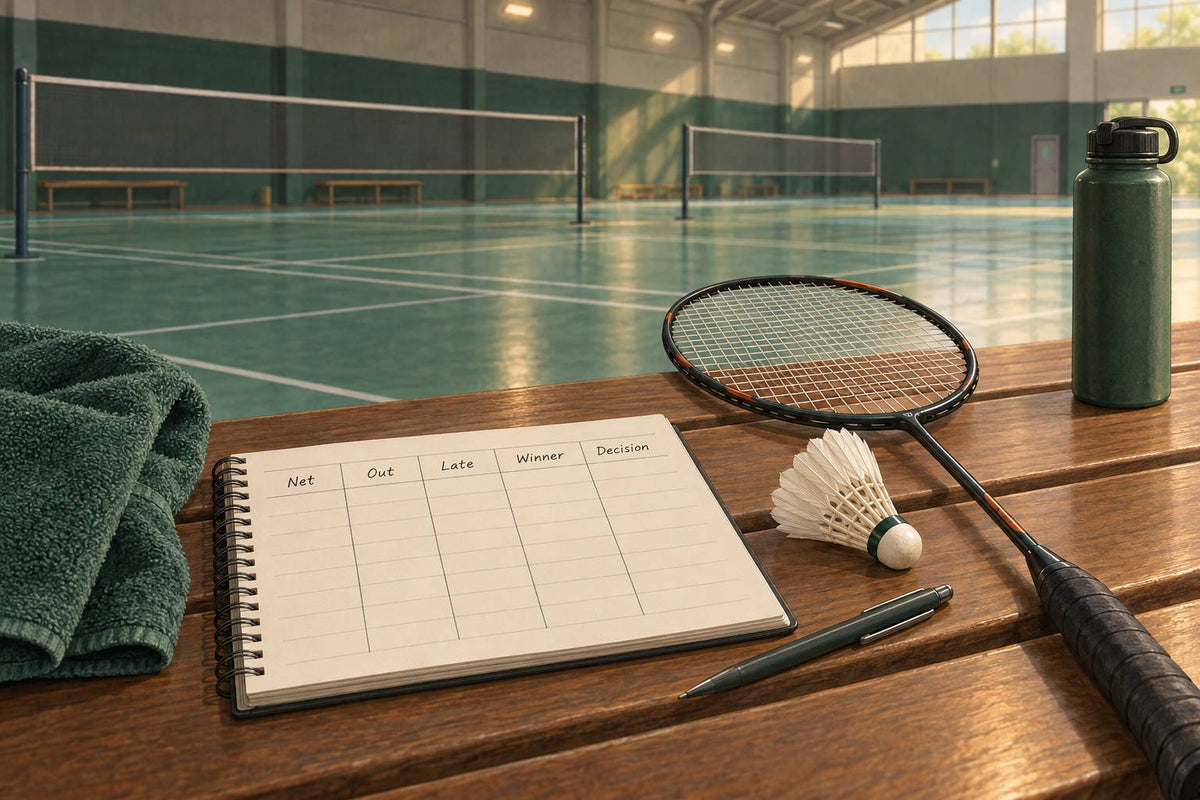
  • Game constraint: play half-court rallies where a point only counts if the winner was created by a net shot, forced lift, or net kill. This stops the old habit of solving every rally from the back.

The last drill is especially useful for intermediate players because it connects the front and back court. Your smash becomes more dangerous when opponents know a soft block may not save them. Your net shot becomes more dangerous when opponents know a weak lift may get punished.


Use net play to manage effort, not just win pretty points

One reason intermediate players fade late in matches is that every attacking rally becomes expensive: big rear-court movement, hard swing, recovery, repeat. Net touch gives you another way to apply pressure without spending the same energy on every exchange.

This does not mean avoiding the smash. It means earning better smashes. A tight net shot can draw a lift that sits higher and shorter. A good hold can freeze the front-court defender in doubles. A calm block after your opponent attacks can reset the rally without giving away a free kill.

As you work through this plateau, track one simple question during games: when I reach the front court, am I choosing a shot or just escaping? If the answer is “escaping,” your next improvement is not a more expensive racket or a harder swing. It is better touch, better preparation, and smarter front-court decisions.

For a deeper technical breakdown, use the badminton net shot technique guide. For the tactical side, especially deciding between net, lift, push, and kill, read Badminton Net Play Strategy: Shot Selection for Canada.


Build the Physical Base That Keeps Technique From Breaking Down

If you are trying to improve at intermediate badminton, fitness is not just “extra conditioning.” It is what keeps your footwork, racket preparation, split step, lunge control, and shot quality from disappearing in the third game.

As noted earlier, badminton’s rally-rest pattern is intense enough that tired legs and rushed recovery show up quickly. The important training takeaway is that badminton is not purely aerobic jogging and not purely all-out sprinting either: match demands are roughly 60–70% aerobic and about 30% anaerobic. That means you need an engine for repeated rallies and the ability to explode, stop, lunge, jump, and recover again.

The plateau fix: stop thinking of fitness as separate from technique. Stronger legs and better stamina help you arrive earlier, hit cleaner, and recover before the next shot. For a deeper plan, read our badminton leg strength training guide and badminton stamina guide.

Train the qualities that actually hold your technique together

Intermediate players often do more rallies but not enough structured physical work. The result is familiar: the first few points feel sharp, then the base gets wider, the split step gets late, lunges get heavy, and clears or smashes start coming from the shoulder instead of the whole body.

Build your physical base around four simple priorities:

  • Leg strength: so lunges, pushes, scissor recoveries, and rear-court exits stay controlled instead of collapsing under fatigue.
  • Repeat-effort stamina: so you can play several high-quality rallies in a row, not just one explosive point.
  • Deceleration: so you can stop safely at the net, hold balance, and recover without drifting into the next shot.
  • Joint tolerance: especially around the knees, ankles, hips, and calves, because badminton asks for repeated lunges and changes of direction.

A practical weekly base for club players

You do not need a complicated gym program to start. The goal is to support your court sessions, not make your legs so sore that you move worse. A useful weekly rhythm for many intermediate players is:

Physical focus What it should improve on court
Lower-body strength Cleaner lunges, stronger first push, more stable recovery after rear-court shots.
Footwork conditioning Better repeat movement to the front, rear, and sides without losing posture.
Core and trunk control More efficient rotation and less reaching when you are late or stretched.
Mobility and recovery work Less stiffness between sessions and better control in deep lunges.

If your knees complain after long club nights, do not just push harder. Review your lunge mechanics, shoe cushioning, volume, and recovery habits in our knee pain badminton prevention guide. Pain changes movement; once you start protecting one side, your footwork and timing usually get worse.

Use conditioning to protect shot quality, not just to feel fitter

A stronger base shows up in small ways: you split step instead of standing flat, you reach the shuttle before it drops too low, you can hold the net after lunging, and you recover after a hard rear-court movement instead of watching the reply. That is why conditioning is a technical upgrade for intermediate players.

On court, make your fitness work look like badminton. Shadow footwork, multi-shuttle movement, controlled lunges, rear-court recovery patterns, and short repeated movement bursts transfer better than slow, unrelated work alone. Off court, build the strength and tissue capacity that lets you repeat those movements safely.

Gear note: your shoes are part of your physical base

Good footwork needs shoes that support badminton movement: lunges, side steps, braking, and quick recovery. Our badminton footwear collection includes the in-stock Babolat Shadow Tour Men’s Badminton Shoes at $119.99 CAD, a supportive court-shoe option for players building a more stable base.

Canadian note: free shipping within Canada starts at $200+, so shoes alone may sit below the threshold depending on your cart.

The goal is not to become a gym athlete who happens to play badminton. The goal is to stay technically honest when the rallies get hard: balanced lunge, early preparation, clean recovery, and enough repeat power to keep making good decisions late in the match.


When a Racket Upgrade Helps — and When It Does Not

Use gear as a decision, not an excuse. At intermediate level, the useful question is not “Do I deserve a better racket?” It is “Is my current racket limiting the style I am already building?”

Upgrade, Wait, or Adjust?

Choose based on the problem you are trying to solve, not on the idea that a new frame will create technique for you.

Upgrade

Best timing: you have a clear playing style and want a frame that supports it — for example, more rear-court power, faster doubles defence, or steadier control.

Wait

If your contact point is low, preparation is late, footwork is rushed, or your technique fades when tired, fix those first. A new racket will not remove those limits.

Adjust

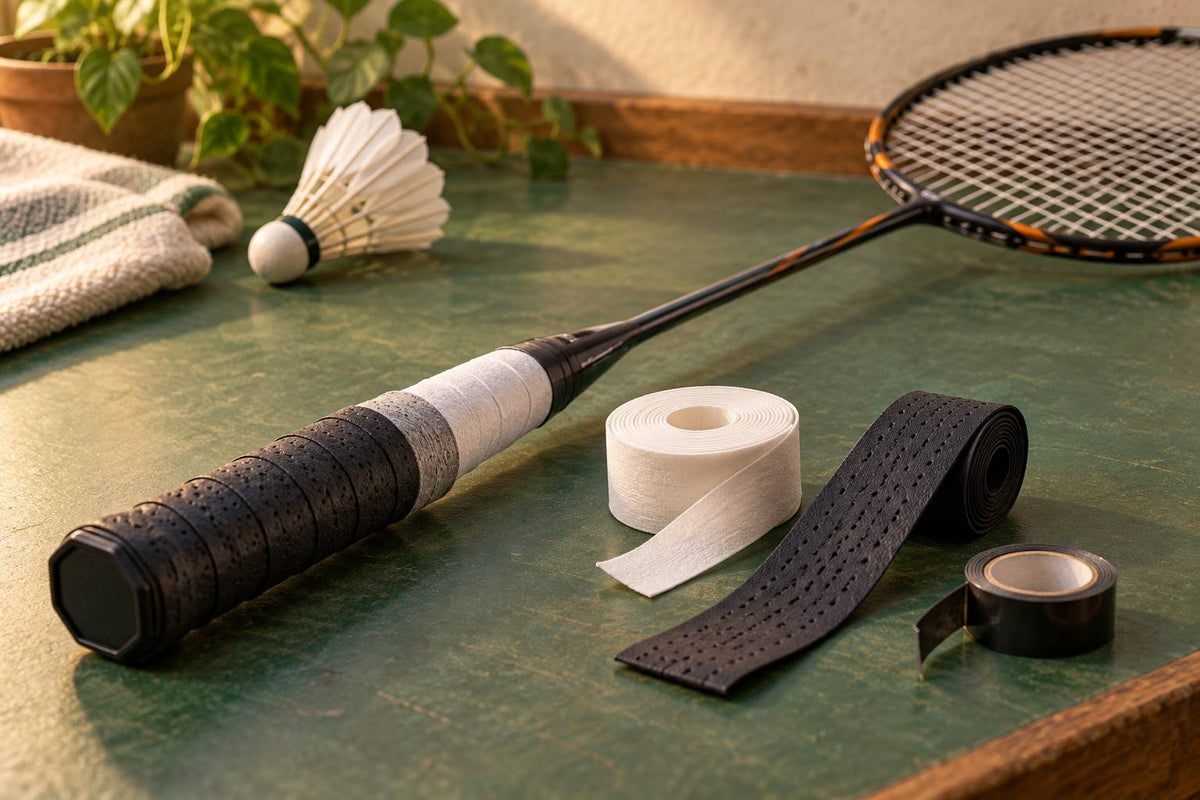
Before changing rackets, consider whether string tension, grip size, or a fresh overgrip would solve the feel problem more simply.

A racket upgrade helps most when it matches a pattern you can already repeat. If you are becoming a stronger attacking player, a head-heavy profile can support power. If you play fast doubles and live in flat exchanges, a head-light setup can support speed and manoeuvrability. If you are still deciding, a balanced intermediate frame is usually easier to grow with than jumping straight into an extreme setup.

For a more detailed buying path, use our intermediate badminton racket guide for Canada, which frames upgrades around playing style, club or league use, and CAD budget. You can also check the current badminton racket collection for availability.

Stock note for attacking players. The Yonex Astrox 100 ZZ Kurenai, Dark Navy was listed at $299.99 CAD and the Yonex Astrox 100VA Game Grayish Beige was listed at $349.99 CAD, but both attacking-racket examples were sold out at the time checked. Racket availability changes, so use the collection page for the current status.

If you do upgrade, be honest about what you are buying: support, not a shortcut. The new frame can make your preferred shots feel cleaner, but your biggest intermediate gains still come from earlier preparation, higher contact, better recovery, net touch, and a physical base that holds up late in games.

Canadian players should also factor in total checkout cost. Badminton House offers free shipping within Canada on orders over $200, while smaller gear fixes such as grips or strings may make more sense when you are not ready for a full racket upgrade.


Which Plateau Fix Should You Choose First?

If you are trying to improve at intermediate badminton, do not try to rebuild everything at once. Pick the bottleneck that appears most often in real games, work on it for a few weeks, then reassess.

If you are unsure, start with the physical base. Badminton is intermittent and intense, with short rallies, short rests, and high heart-rate demands. Better movement and conditioning make every technical fix easier to keep under pressure.

Choose this if... Focus first Why this is the right fix Next step
Your first few rallies feel stiff, slow, or casual. Warm-up quality Treat basic-stroke warm-ups as moving practice, not a formality. This is especially useful in cold Canadian gyms where players often need more time to feel sharp. Use the 10-minute warm-up routine.
Your smash is loud but flat, inconsistent, or easy to defend. Smash chain Smash power comes from the chain, not a wrist snap. Shoulder rotation and forearm pronation are key contributors, and a low contact point turns the shot into a flatter, more defensive drive. Fix your smash technique and review forearm pronation.
Opponents sit deep because they know you want to win from the rear court. Net touch A jump smash is more energetically demanding than a simple net shot, and better net touch stops opponents from preparing only for your rear-court attack. Build front-court decisions with net play shot selection.
Your technique looks good early but breaks down late in games. Physical base and footwork Badminton rallies and rests are short, effective playing time is limited, and match heart-rate demands can be very high. Singles also places heavier movement demands than doubles, including more jumps and lunges. Work through footwork basics, leg strength, and badminton stamina.
Your technique is stable, but the racket no longer matches your style or level. Racket fit A racket upgrade can help after the movement and stroke issues are under control. It will not fix a low smash contact point, poor recovery, or a wrist-snap habit by itself. Compare CAD upgrade budgets in the intermediate racket guide.

Product context: If your answer points to movement or late-match breakdown, browse badminton footwear before chasing more racket power. For a premium stability reference point, the Yonex SHB65Z4M Men's Badminton Shoes – White is listed at $184.99 CAD; check the footwear collection for current availability. Free domestic shipping starts at $200+ within Canada.

Get Canadian badminton gear advice + restock alerts

Join the Badminton House list for buying checklists, restock alerts, and practical gear advice for Canadian players.

By subscribing, you agree to receive Badminton House emails and can unsubscribe anytime.

If you are stuck at the intermediate level, do not assume you need one magic fix. Tighten the habits that show up every rally: warm-up with intent, move before you swing, build power through the full chain, add softer front-court options, and keep your legs strong enough that your technique survives the third game. We play badminton and are happy to help you think through the next step for your game — contact us for gear or training advice.

Ready to support the footwork, stability, and repeat-effort side of your game?

Shop Badminton Footwear

10% off first order · Free shipping on $200+ in Canada · 14-day returns · Canadian badminton specialty shop

Reading next

Illustration of a badminton player planning a balanced weekly training schedule on an indoor court
Two badminton racket handles showing a thin grip and a built-up layered grip on a Canadian-style indoor court

Leave a comment

This site is protected by hCaptcha and the hCaptcha Privacy Policy and Terms of Service apply.