
Last updated: July 2026 · Written by the team at Badminton House
Quick Answer: Badminton Push Shot Technique
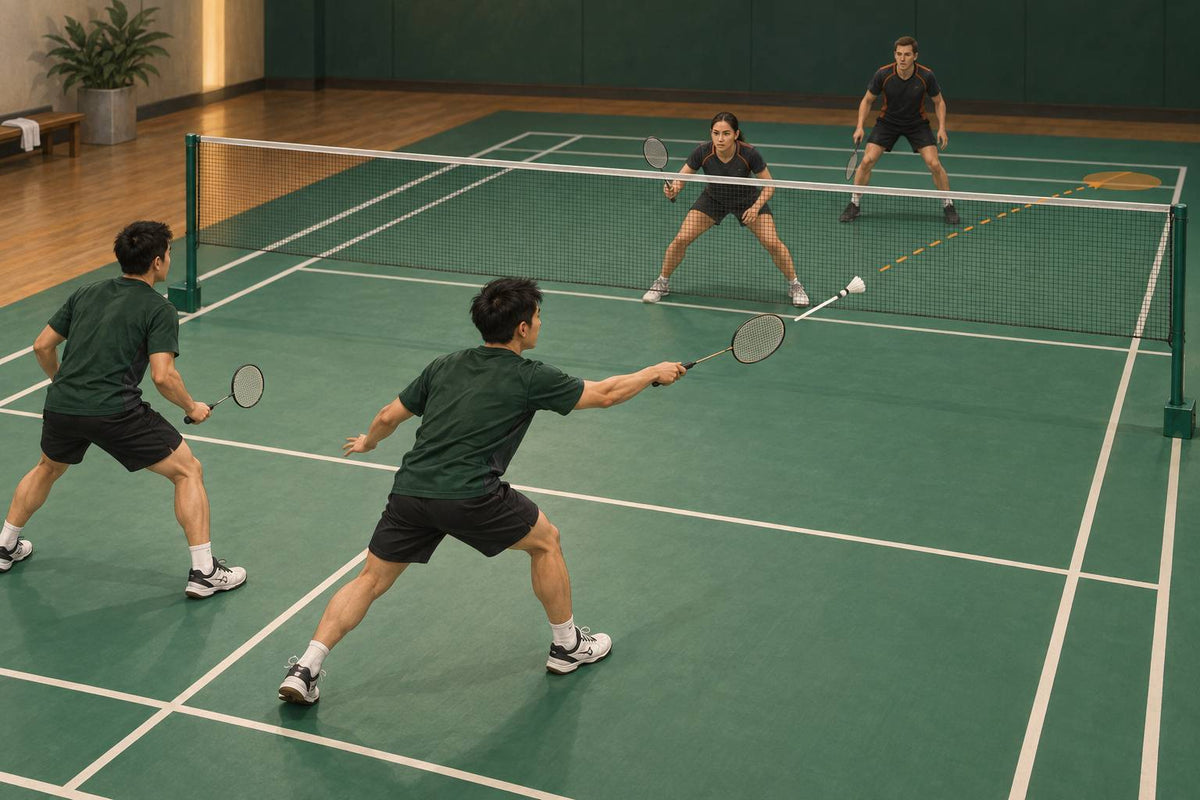
In doubles, use the push when you need a low, controlled shot with just enough pace to pass the front player and land into a gap, tramline, or body target.
Push
Best default in doubles pressure: guide the shuttle with fingers and a firm wrist, keeping it flat and low so it gets past the front opponent without becoming an easy lift or smash chance.
Net
Choose a softer net shot when your opponents are not challenging the net; it keeps the attack set up instead of forcing a flat exchange too early.
Drive
Use a harder drive when contact is slightly above net height and you can attack flat; from below net height, a drive is usually too risky.
In doubles, the awkward shots are often not the smashes. They are the shuttles you take around the net or mid-court when a full drive is too risky, but a soft net shot gives your opponents time to step in. That is where the badminton push shot technique matters: a controlled, medium-pace shot that sends the shuttle flat and downward into a gap, sitting between a net shot and a hard drive.
Used well, the push gets the shuttle past the front player without overhitting. It can go into the tramlines, into the open mid-court, or directly at the body to force a rushed reply. In Canadian club doubles, where many rallies are decided by who keeps the shuttle low first, a reliable push helps you keep the attack without trying to win every front-court touch outright.
This guide breaks down when to push, how to use your grip, fingers, and wrist for control, and where to aim so your push creates pressure instead of sitting up for a counter-attack.
Drilling push shots? Durable nylon shuttles are useful for repeating flat push and drive exchanges. Browse our shuttlecocks collection. Badminton House ships across Canada.
In This Guide
- What Is a Badminton Push Shot?
- Why Is the Push So Useful in Doubles?
- Push vs Net Shot vs Drive: When to Use Each
- Badminton Push Shot Technique: Grip, Fingers, and Wrist
- Best Push Shot Targets: Tramlines, Gaps, and the Body
- Using the Push on Return of Serve and in the Front Court
- Practice Setup and Gear Notes for Better Push Control
- Which Shot Should You Choose?
What Is a Badminton Push Shot?
A badminton push shot is a controlled, mid-pace shot played from around the net or mid-court. It sends the shuttle flat and slightly downward into space, sitting between a soft net shot and a hard drive.
The key idea is simple: the push has enough pace to get past the front opponent, but it is slower than a drive. Because of that, it can drop below net height before the back opponent can attack it cleanly. In doubles, that often forces a lift, a late block, or a risky counter-shot instead of letting the other pair take the attack.
Think of the push as a softened drive. You are not trying to blast through the opponent. You are guiding the shuttle with control, enough speed, and smart placement so it passes the front player and dips before the rear player can punish it.
Technically, a good push uses a compact action: fingers, a firm wrist, and a short guiding movement rather than a full swing. That is what keeps the shuttle low, flat, and accurate. If the shot floats too high, it becomes easy for the opponent to intercept or attack.
For Canadian doubles players at club nights, leagues, and tournaments, the push is one of the most useful front-court skills because it helps you keep pressure without overhitting. Good touch and placement matter more than raw power: aim into a gap, toward the tramlines, or at the opponent’s body, and make them play the next shot upward.
Why Is the Push So Useful in Doubles?
In doubles, the push is valuable because it lets you stay aggressive without overcommitting. You are not trying to blast through your opponents like a full drive, and you are not simply playing soft to the tape like a net shot. You are guiding the shuttle into space with enough pace to pass the front player, while keeping it low enough that the rear player is often forced into a lift or a risky counter-attack.
That makes the push a pressure shot. A good push asks a very uncomfortable question: can the opponents take this early, below net height, without lifting? If the answer is no, your side keeps the attack. If they gamble on a counter, they often have to contact the shuttle low, late, or cramped. This is also why a solid defensive ready position is what you are trying to break down: the push works best when the opponent has not set a balanced, compact base to react from.
The doubles goal: use the push to find gaps, keep the shuttle low, and protect your attacking shape. It works best when both partners understand who covers the front, who covers the rear, and how to rotate after pressure shots. For that bigger tactical picture, see our badminton doubles positioning and rotation guide.
The main reason this shot hurts opponents is placement. You can push into the mid-court tramlines, into the open space beside the front player, or directly at the body when there is no clean gap. Each target creates a different kind of pressure: the sideline push tests footwork and reach, while the body push takes away swing space and forces a fast reaction.
- It beats an over-eager front player. When the front opponent creeps in to steal the net, a flat push past them can turn their positioning against them.
- It keeps the shuttle below attack height. The whole value of the shot is lost if it floats; once the shuttle sits up, the other side can attack it.
- It supports your rear-court partner. If your push produces a lift, your partner can continue the attack instead of resetting to defence.
- It creates rushed decisions. Flat, controlled pushes leave opponents little time to decide whether to block, lift, counter-drive, or reach across their body.
Push vs Net Shot vs Drive: When to Use Each

The push sits in the middle of your forecourt choices: faster than a net shot, but softer and more controlled than a full drive. In doubles, that middle speed matters. A good push has enough pace to pass the front player, then drops below net height before the rear player can take it cleanly, often forcing a lift or a risky counter.
Use this simple rule: net shot when you are not being challenged, push when you need to pass the front player, drive when the shuttle is high enough to attack flat. If the shuttle is below net height, avoid trying to blast a drive; the angle usually gives your opponents an easy counter. If it is slightly above net height, a drive becomes a stronger option. For the full flat-game comparison, see our badminton drive shot guide.
| Shot | Best time to use it | What you are trying to create |
|---|---|---|
| Net shot | When your opponents are not challenging the net and you have time to play tight. | A controlled reply that keeps the shuttle close to the tape and makes the opponent lift. |
| Push | When the front opponent is closing in and you need to guide the shuttle through a gap, into the tramlines, or at the body. | A quick reaction shot from the opponent, ideally a weak lift or awkward block that lets your pair keep attacking. |
| Drive | When the shuttle is slightly above net height and you can hit flat with confidence. | A powerful, quick counter-attack that keeps the shuttle low and pressures the opponent into an upward return. |
The key decision is contact height
From below net height, a hard drive is usually the wrong idea in doubles because you are hitting upward into the opponent’s hitting zone. If your partner is attacking from the rear court and you take the shuttle low at the front, a tighter net shot may set them up to keep smashing. But if the opposing front player is creeping forward to intercept, the push becomes the better answer: send it with just enough pace past them, often straight into the side tramlines just beyond the short service line.
When the shuttle is slightly above net height, you can be more direct. That is when a drive can replace the net shot or push, especially if you can keep it flat and low. In practical doubles terms, the push is your controlled gap-finder; the drive is your faster counter-attack.
Front-court rule of thumb. If the opponent gives you space at the tape, play the net shot. If they crowd the tape, push past them. If the shuttle sits up above the tape, drive or kill it.
Do not make every forecourt shot the same speed
Many club doubles rallies in Canada break down because the front player only has two gears: a very soft net shot or an overhit flat drive. The push gives you the missing middle gear. It is a softened drive with less power, more placement, and enough flatness to make the opponent react quickly.
For broader forecourt shot selection, including when to choose net shots, pushes, drives, and net kills, read our badminton net play strategy guide.
Badminton Push Shot Technique: Grip, Fingers, and Wrist
The push is a softened drive, so the mechanics are built for control rather than raw speed.

That is why good badminton push shot technique feels compact. The power comes from forearm rotation, a small wrist action, and finger pressure — not a big backswing. If that compact rotation feels weak or inconsistent, work on it separately with our forearm pronation power guide. If your racket travels too far back or follows through too much, the shot usually becomes either a drive that sits up or a loose push that gives the opponent time to intercept.
1. Start with a short, relaxed grip
Use a neutral forehand or backhand grip depending on which side the shuttle is on, but keep the hand relaxed before contact. A tense grip tends to make the racket head jumpy, which is the opposite of what you want for a flat, controlled push.
For extra touch, hold slightly higher up the handle. You give up a little power, but you gain more control, a tradeoff that suits net and push situations because placement matters more than hitting through the opponent. If grip pressure is the part that feels inconsistent, revisit the relax-then-squeeze idea in our badminton grip pressure guide.
2. Keep the preparation small
Your racket face should be ready in front of the body, not dropped beside your hip. From the front court or mid-court, the shuttle arrives quickly, and doubles opponents are watching for any obvious swing. A small preparation helps the push look similar to your other flat options, which makes it harder to read.
- Racket head: slightly above or around net height when possible, with the face prepared early.
- Elbow: comfortably in front of the body, not pinned to your ribs.
- Backswing: minimal. If the opponent can see a big swing, the push loses its disguise.
3. Use forearm rotation, wrist movement, and fingers together
The cleanest push is a short chain: set the racket face, rotate the forearm, stabilize the wrist, then squeeze with the fingers through contact. The finger squeeze is what gives the shuttle that crisp, controlled pace without turning the shot into a full drive.
| Mechanic | What it does | Common mistake |
|---|---|---|
| Forearm rotation | Sets the racket face and sends the shuttle forward on a compact path. | Swinging from the shoulder and losing control of the angle. |
| Wrist movement | Adds a small, sharp guide to the shot without a long follow-through. | Flicking too hard and making the shuttle rise. |
| Finger power | Creates the final controlled squeeze at impact for accuracy and pace. | Holding the grip tight from the start, which makes touch less precise. |
If you already practise flat exchanges, the feeling is close to a drive with less power and more placement. For the harder version of the same flat-game family, see our badminton drive shot guide.
4. Keep the shuttle low, but not in the tape
The push only works if the shuttle stays as low as possible while still clearing the net. Too high, and the opponent can attack it. Too tight, and you hit the tape. The ideal feeling is a flat shot that passes the front player, then drops below net height before the rear player can step in comfortably.
A useful cue is: clear the net first, then make it dip. Do not try to brush it like a spinning net shot, and do not punch it like a full drive. For comparison, a true net shot is better when the opponent is not challenging you at the tape; you can review that touch in our badminton net shot technique guide.
5. Finish short and recover immediately
After contact, the racket should stop in front of you rather than wrapping across the body. That short finish keeps you ready for the next shuttle: a block back to the net, a counter-drive, or a weak lift for your partner to attack.
Best Push Shot Targets: Tramlines, Gaps, and the Body

A push target usually does one of two things: it finds open mid-court space that challenges footwork, or it goes directly at an opponent to force a fast reaction.
Think of the push as a placement shot first. Good touch matters more than raw power: the shuttle should stay low, pass the racket of the front player, and start dropping before the back player can attack it cleanly.
| Target | Best Use | What You Want |
|---|---|---|
| Open mid-court gap | Use when the front opponent is covering the tape or middle, leaving space around the side channel or mid-court. | Make the opponent move, reach, and lift so your pair keeps the attack. |
| Doubles tramlines | When the opponent encroaches at the net to steal the attack, aim straight into the tramlines just beyond the short service line. | Get the shuttle past the front player without lifting, forcing a late contact or weak upward reply. |
| Opponent's body | Use when there is no obvious open gap, or when the opponent is square and has little time to adjust. | Jam the opponent and force a reaction shot instead of giving them time to choose a clean counter. |
1. Push into open mid-court space
This is the classic doubles push: you guide the shuttle into the gap in the opponents' formation. The target is not deep like a clear and not tight like a spinning net shot. It is the awkward space around the mid-court where the front player cannot intercept comfortably and the rear player may have to move forward or sideways to take the shuttle below attacking height.
Use this target when the front opponent is leaning toward the net, guarding the middle, or waiting to pounce on a loose net shot. If you simply play soft to the tape, they may kill it. If you drive too hard from a low contact point, you may feed them a counter-drive. The push gives you the in-between option: flat, controlled, and low enough to keep pressure on.
Target cue: if the front player is crowding the net, do not aim through their racket. Aim beside or just behind them, especially into the doubles tramline space just past the short service line.
2. Push straight into the doubles tramlines
The tramline push is one of the most useful doubles targets because it punishes an opponent who is over-committing at the net. When they encroach forward to steal the attack, your cleanest target is often straight into the tramlines just beyond the short service line. You are not trying to blast the shuttle past them; you are trying to make their interception point awkward.
For right-handed and left-handed opponents, the same principle applies: read where the front player is taking space away, then send the shuttle to the side channel they have left exposed. The shot should pass low and early. If it floats, it stops being a push and becomes a gift.
This is also why grip pressure and racket preparation matter. A short finger squeeze with a firm wrist is easier to control than a long swing. For more on making your flat shots look similar, see our guide to badminton deception technique.
3. Push at the body when space is limited
The second main strategy is more direct: push at the opponent. This is less about finding a clean open court winner and more about forcing a rushed reaction. Flat shots give the opponent very little time to think, and a body push can make their reply late, cramped, or upward.
Use the body target when the opponents are well positioned and there is no obvious gap. It is especially useful against a front player who is ready to move left or right but is not ready for the shuttle to come straight at them. Keep the pace controlled: too soft, and they can redirect it; too hard, and it becomes a drive battle.
If the shuttle is clearly above net height, you may be able to play a more aggressive flat drive instead. If you want to compare the pace and contact point, read our badminton drive shot guide.
A simple target rule for doubles
Use this three-step decision in rallies:
- If the net is unchallenged: play the net shot instead of forcing a push.
- If the front player is hunting: push past them into the side gap or tramline space.
- If the formation is tight: push at the body and look for the weak reply.
The common mistake is trying to win the rally with the first push. In good doubles, the better goal is to keep the shuttle low, deny the lift-to-attack exchange to your opponents, and set up the next shot for you or your partner. That mindset fits with broader doubles positioning and rotation: the push is often the shot that keeps your pair moving forward rather than resetting into defence.
Gear note for cleaner push targets
For drilling flat pushes and drive exchanges, durable nylon shuttles such as the Yonex Mavis 350 Nylon Shuttlecocks hold up well through repeated flat exchanges without shredding like feather shuttles. Fast front-court stepping also matters, so browse badminton footwear if your current shoes slide or feel slow on indoor courts.
A control-friendly racket can help with touch. Our badminton rackets collection leans toward power-oriented Astrox models, so browse the collection or ask for help choosing a control profile that suits push and drive exchanges. Badminton House ships across Canada.
Using the Push on Return of Serve and in the Front Court
The cleanest match use for the push is often the return of a low serve. Instead of lifting, or trying to blast a drive from a tight contact, guide the shuttle into the empty mid-court tramlines at the side of the court. The goal is not a spectacular winner; it is a low, controlled return that gets past the server and makes the next opponent contact awkward.
Think of it as a serve-return shot with a very specific job: take the low serve early, keep the racket face stable, and send the shuttle flat enough to pass the front player but soft enough that it starts dropping before the rear player can attack it. For a full return-of-serve framework, see our badminton doubles return of serve guide.
Return of Serve: Push to Space, Not Through the Opponent
On the low serve, many doubles players make one of two mistakes: they either play too soft and invite the server to pounce, or they swing too hard and turn the return into a loose drive. The push sits between those choices. You are guiding the shuttle into the side space with just enough pace to make the server move sideways or let it pass.
- Contact early: meet the shuttle in front of your body so you can guide it rather than chase it.
- Keep the swing short: use a compact finger squeeze and firm wrist instead of a big arm swing.
- Keep it low: the push should travel just over the tape and stay difficult to attack.
- Choose the side gap: aim into the empty mid-court tramline space rather than simply hitting at the nearest player.
If the serve sits high, you may have a more direct option such as a drive or net kill. If the net is not being challenged, a tight net shot can be the better choice. But when the server is waiting to intercept and there is space beside them, the push is a smart way to keep the rally moving downward.
Front Court: Use the Push to Keep the Attack Alive
The push is also useful when you are already at the front court after your partner has attacked. If you cannot kill the shuttle cleanly, you do not always need to block it softly to the net or lift out of trouble. A controlled push can help you stay in the front-court role, keep the shuttle low, and force a weak lift for your partner.
From a net position, play this shot a little harder than a usual mid-court push. It feels closer to a flatter kill or a softer drive: still controlled, still short, but with enough speed to get past the racket that is waiting near the tape.
Front-court cue: if the shuttle is too low to kill but high enough to guide forward, push it through the gap and recover with your racket up. Your job is to make the opponents lift, not to win the point with one huge swing.
The danger is predictability. Push too often from the same position and opponents can start waiting on it. Mix it with tight net shots, holds, and the occasional flatter drive so the same preparation does not always produce the same reply.
Canadian gear note for push practice
For repeated serve-return and flat-exchange drills, Yonex Mavis 350 Nylon Shuttlecocks are a durable nylon option built to survive practice volume. Quick first steps also matter: the Babolat Shadow Tour Men’s Badminton Shoes and the Yonex SHB65Z4M Men’s Badminton Shoes both offer non-marking indoor grip for quick first steps. You can browse more options in shuttlecocks, footwear, and badminton rackets; the Astrox rackets in that collection are power-oriented head-heavy models, so if you want a control profile instead, ask for help choosing one. Badminton House ships across Canada.
Practice Setup and Gear Notes for Better Push Control
The push shot improves fastest when you practise it as a live flat exchange, not as a big-swing feeding drill. You are trying to feel the difference between a soft net shot, a controlled push, and a harder drive: enough pace to pass the front player, but not so much that the shuttle stays attackable for the rear player.
Simple doubles push drill
- Start flat: one player feeds or drives gently from mid-court; the front player guides a push into the tramline or open mid-court gap.
- Keep the racket quiet: use fingers, a firm wrist, and a compact forearm action instead of a full swing.
- Alternate targets: play one push into space, then one at the opponent’s body, so you learn both placement styles.
- Add pressure: after every push, recover forward and look for the next interception, because the goal is to keep the attack.
For volume practice, use durable shuttles so you can repeat the same flat push and drive exchanges without burning through feathers. Browse our shuttlecocks, or start with the Yonex Mavis 350 Nylon Shuttlecocks, a white/yellow nylon shuttle that is a practical choice for repeated push-control drills.
Footwork matters more than a bigger swing
A good push often comes from arriving early enough to take the shuttle in front of your body. If your first step is late, you will tend to poke upward or overhit. Quick front-court footwork lets you stay balanced, keep the shuttle low, and guide it into the sideline gap instead of lifting under pressure.
If your shoes slide, feel unstable, or slow down your split-step recovery, look at proper indoor badminton footwear. Our footwear collection includes court shoes such as the Babolat Shadow Tour Men’s Badminton Shoes and Yonex SHB65Z4M Men’s Badminton Shoes, both built for the quick lateral steps front-court play demands. For more on why shoe choice affects movement, see our guide to badminton shoes vs running shoes.
Racket notes: choose control before raw power
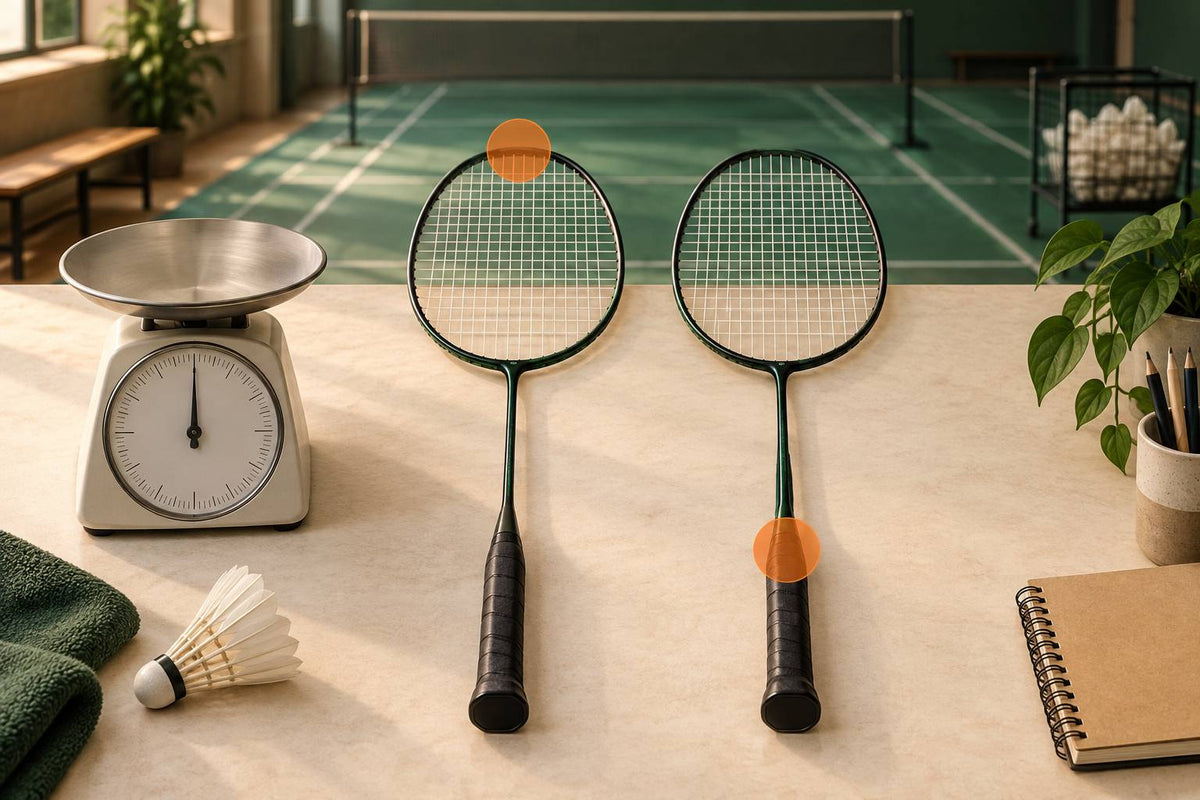
For the push, you do not need the most powerful racket in the bag. The shot rewards touch, a stable face, quick handling, and clean finger squeeze. A control-friendly doubles racket generally makes it easier to guide the shuttle flat into gaps without sending it too high.
You can check the current badminton rackets collection, but note that the Yonex Astrox 100 ZZ Kurenai and Yonex Astrox 100VA Game are power-oriented Astrox models rather than the control profile this shot most favours. If you want a lighter, more control-oriented racket, ask for advice on what suits your swing.
Canada gear note. Badminton House ships across Canada. For push-shot practice, prioritize shuttles, shoes, and touch before chasing extra racket power.
Which Shot Should You Choose?
Use the push when you need something between a soft net shot and a hard drive: enough pace to pass the front player, but controlled enough to dip before the rear player can attack it. In doubles, the decision is usually about contact height, opponent pressure, and where the gap is.
| Choose this | Best situation | Why it works |
|---|---|---|
| Push to the tramline gap | The front opponent is creeping in to steal the attack, especially around the short service line or on a low serve return. | Guide the shuttle into the mid-court side space with just enough pace to pass the front player. This is the default doubles push when you want to keep the attack without overhitting. |
| Body push | There is no clear open court, or the opponent is set but cramped in the mid-court. | A flat push at the body gives the opponent very little time to think and often produces a reaction shot instead of a clean counter-attack. |
| Net shot | Your opponents are not challenging you at the net, or you are taking the shuttle from below net height and a flat drive would be risky. | A tight net shot can set up your partner to keep smashing, rather than giving the opponents a flat shuttle to intercept. For touch details, see our badminton net shot technique guide. |
| Drive | The shuttle is slightly above net height and you can play a direct, flat counter-attack. | A drive is faster and more forceful than a push, so use it when the contact height lets you keep the shuttle low without feeding an interception. Compare the mechanics in our badminton drive shot guide. |
Quick rule for doubles: if you are early and see space, push through the gap; if the net is unchallenged, play the net shot; if the shuttle sits above tape height, consider the drive. For low-serve patterns, pair this with our doubles return of serve guide.
Gear should support the decision, not replace it. For push-heavy front-court play, quick steps into the shuttle matter; Badminton House’s footwear collection includes indoor court-shoe options such as the Babolat Shadow Tour Men’s and Yonex SHB65Z4M Men’s. Check current size availability. If you are comparing racket feel for touch and placement, browse the badminton rackets collection and check current availability before choosing a control-friendly setup.
Get 10% off your first order
Join the Badminton House list and we’ll email you a 10% welcome code — plus subscriber-only restock alerts, giveaways, and honest gear advice from players.
By subscribing, you agree to receive Badminton House emails and can unsubscribe anytime.
The badminton push shot technique rewards touch, timing, and the confidence to take the shuttle early. We play badminton too, so if you are trying to match your gear to a faster doubles game (shoes for front-court movement, shuttles for drilling, or a racket profile for control), contact us and we will help you choose honestly based on your level and playing style.
Fast front-court movement starts from the floor up · CAD pricing · Ships across Canada


Leave a comment
This site is protected by hCaptcha and the hCaptcha Privacy Policy and Terms of Service apply.