
Last updated: July 2026 · Written by the team at Badminton House
Quick Answer: Badminton Lob Shot
Use the defensive lob as your default from the forecourt: lift high and deep toward the baseline to escape pressure, then recover to base.
Defensive
Best choice: hit the shuttle high and deep from below waist height when you are late, stretched, or countering a drop shot; the extra height buys recovery time.
Attacking
Use a lower, flatter lift when the opponent is creeping forward; send it quickly toward the rear court, ideally down the sideline to reduce interceptions.
Backhand
Use the thumb grip on your non-racket side: stay relaxed, then press the thumb firmly into the handle at contact for power and control.
If your badminton lob shot keeps landing around mid-court, you are not just giving up pressure — you are giving your opponent an easy chance to attack. The lob, also called a lift, is an underarm shot from the net or forecourt that sends the shuttle over your opponent toward the rear court. Done well, it turns a tight net exchange into a reset, a tactical push to the back, or a surprise attacking lift down the sideline.
Most Canadian club players struggle with the same pattern: they reach late, swing mostly with the arm, grip too tightly, and forget to recover after contact. A better lob starts before the racket moves — split-step, lunge with balance, contact below waist height, then recover before the next shot. This guide breaks down the attacking lob, defensive lob, forehand scoop, backhand thumb-powered lift, and the placement mistakes that make lobs easy to punish.
Build the lunge before the lift. A stable indoor court shoe helps with the split-step, low lunge, and recovery that good lobs demand — browse our badminton footwear collection. Badminton House ships across Canada.
In This Guide
What Does the Badminton Lob Shot Do?
A badminton lob shot, also called a lift, is an underarm shot played from below waist height in the net or forecourt area. The goal is simple: send the shuttle high over your opponent and deep toward the rear baseline.
Think of the lob as the natural partner to the badminton net shot. A net shot keeps the shuttle short and pulls your opponent forward; a lob sends the shuttle away from the net and forces them back. It is also the underarm counterpart to the overhead clear: both shots move the shuttle toward the back court, but the clear is hit overhead, while the lob is lifted from the front of the court.
Quick picture: lob vs nearby shots
| Shot | Where it starts | Main idea |
|---|---|---|
| Lob / lift | Below waist height in the net or forecourt | Send the shuttle over the opponent and deep toward the rear baseline |
| Net shot | Net or forecourt | Keep the shuttle short and close to the net |
| Overhead clear | Hit overhead, usually from the back court | Move the shuttle high and deep from above the body |
The lob is especially useful when you are drawn forward by a drop shot or tight net exchange and need to move the rally back into the rear court. When it reaches close to the baseline, it makes your opponent travel backward before they can attack. When it falls short into mid-court, it gives them a much easier attacking opportunity.
For a broader map of where the lob fits beside clears, drops, drives, smashes, and net shots, see our badminton shot types guide. For Canadian club players, the key takeaway is that the lob is not just a “get out of trouble” shot — it is one of the main ways you control court depth from the front court.
Attacking Lob vs Defensive Lob

The defensive lob is the safer, higher version. You hit the shuttle high and deep from the forecourt so it stays in the air longer and lands near the opponent’s rear court. That extra hang time matters: it gives you a chance to recover from a low lunge, reorganize your footwork, and get back toward base instead of being stuck at the net.
Use the defensive lob when you are late, stretched, or forced to take the shuttle below waist height after a drop shot or tight net shot. Your priority is not to win the point immediately. Your priority is to make the opponent hit from the back court while you regain balance.
| Lob type | Flight path | Best use | Main risk |
|---|---|---|---|
| Defensive lob | High and deep, with more time in the air | Resetting the rally when you are under pressure | If it lands short, the opponent gets an easy attacking chance |
| Attacking lob | Lower, flatter, and faster toward the baseline | Surprising an opponent or forcing a weaker rear-court reply | Because it travels lower, it is easier to intercept |
The attacking lob is different. Instead of buying time, you are trying to rush the opponent. The shuttle travels lower and flatter to the baseline, ideally getting over the opponent’s head before they can step in and cut it off. When it works, it pushes them out of position and can force a low, defensive return from the back.
Because the attacking lob has a lower flight path, placement becomes more important. Aim it down the sidelines rather than through the middle. A straight or wide sideline target gives the opponent less room to intercept cleanly, while a low lob through the centre can sit right in their hitting zone.
Simple club-night rule: if you are off-balance, lift high and deep; if you are balanced and the opponent is leaning forward, use the flatter attacking lob down the line.
This is where the lob connects with broader shot selection. A defensive lob protects you. An attacking lob changes the pace and tests the opponent’s recovery. If you want to build that idea into your rallies, the same principle shows up in badminton change of pace tactics and net play shot selection: do not hit every shuttle at the same height, speed, and direction.
Forehand Lob Technique: Scoop, Lunge, and Recover
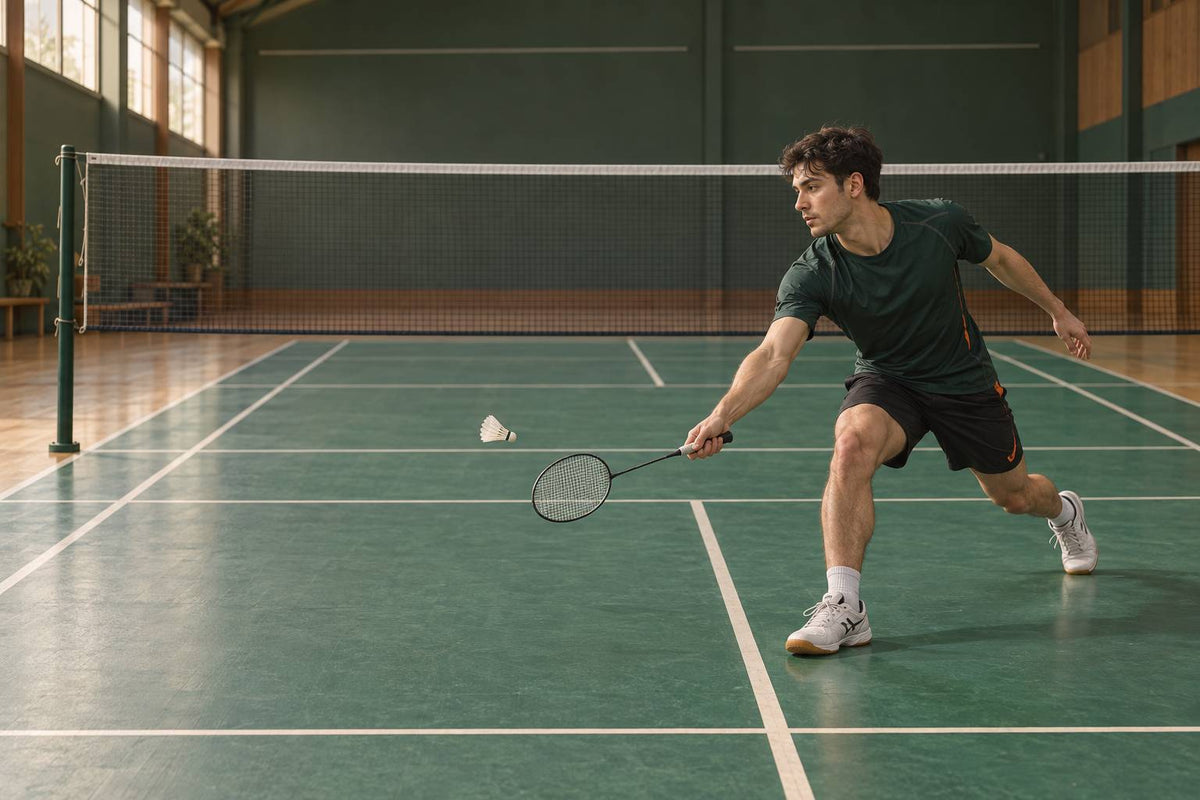
A good forehand badminton lob shot is not a big arm swing. It is a timed movement pattern: split-step, move in, lunge, scoop from underneath, and recover before your opponent can use the next shot. The power comes from your legs and body moving through the shuttle, with the racket finishing the lift.

Think of the shot as a smooth scoop from below waist height. You are not slapping sideways at the shuttle. You are getting the racket head under it, lifting upward, and sending it deep enough that your opponent has to move back rather than attack from mid-court.
The movement sequence
| Step | What to do | Why it matters |
|---|---|---|
| 1. Split-step | Start from a ready stance and make a small split-step as your opponent strikes. | This prepares you to push toward the shuttle instead of reaching late. |
| 2. Chassé forward | Use a quick chassé step toward the forecourt, keeping your chest balanced and racket hand in front. | Efficient footwork lets you arrive early enough to choose height and placement. |
| 3. Lunge with racket foot | Step in with your racket foot toward the shuttle, bending the front knee and staying stable. | The lunge gives you reach, balance, and a platform to drive upward. |
| 4. Racket forward, wrist cocked | Move the racket forward with the wrist cocked, then bring the racket head under the shuttle. | This creates the short, controlled underarm action needed for a clean lift. |
| 5. Scoop upward | Swing underarm upward and straighten the wrist through contact. | The upward scoop lifts the shuttle high and deep instead of popping it short. |
| 6. Follow through and recover | Let the racket follow through above the non-racket shoulder, then push back to base. | You finish the shot without getting stuck at the net. |
Time contact with the lunge
The best timing cue is simple: contact should happen as your lunge foot lands, or very close to it. When the racket rises as the front foot hits the court, your body weight, knee bend, and racket action combine into one lift. If your foot lands first and your arm swings late, the shot often feels weak. If you swing before you are planted, control becomes harder and recovery slows down.
Use your front knee like a spring. As you lunge, let the knee bend so your centre of gravity lowers toward the shuttle. Then drive gently upward through the leg as the racket scoops. This is why a forehand lob should feel like a whole-body action: legs create the base, the trunk stays balanced, the shoulder guides the path, and the wrist adds the final upward acceleration.
Footwork makes the lob easier. If you are arriving late or lunging off-balance, review the basic movement patterns in our badminton footwork basics guide.
Keep the swing compact, not dramatic
Many Canadian club players miss forehand lobs because they take too much backswing. From the front court, you usually do not have time for a large wind-up. Instead, keep the racket in front, cock the wrist, and make a compact underarm lift. The racket path should travel from low to high, finishing naturally above the opposite shoulder.
Grip pressure matters here. Stay relaxed as you move in so the racket head can drop under the shuttle. Tighten briefly at contact as the wrist straightens, then relax again during recovery. A constant tight grip makes the swing stiff and reduces feel, especially when you are trying to lift close to the baseline instead of the middle of the court.
Practice pattern: drop, lift, recover
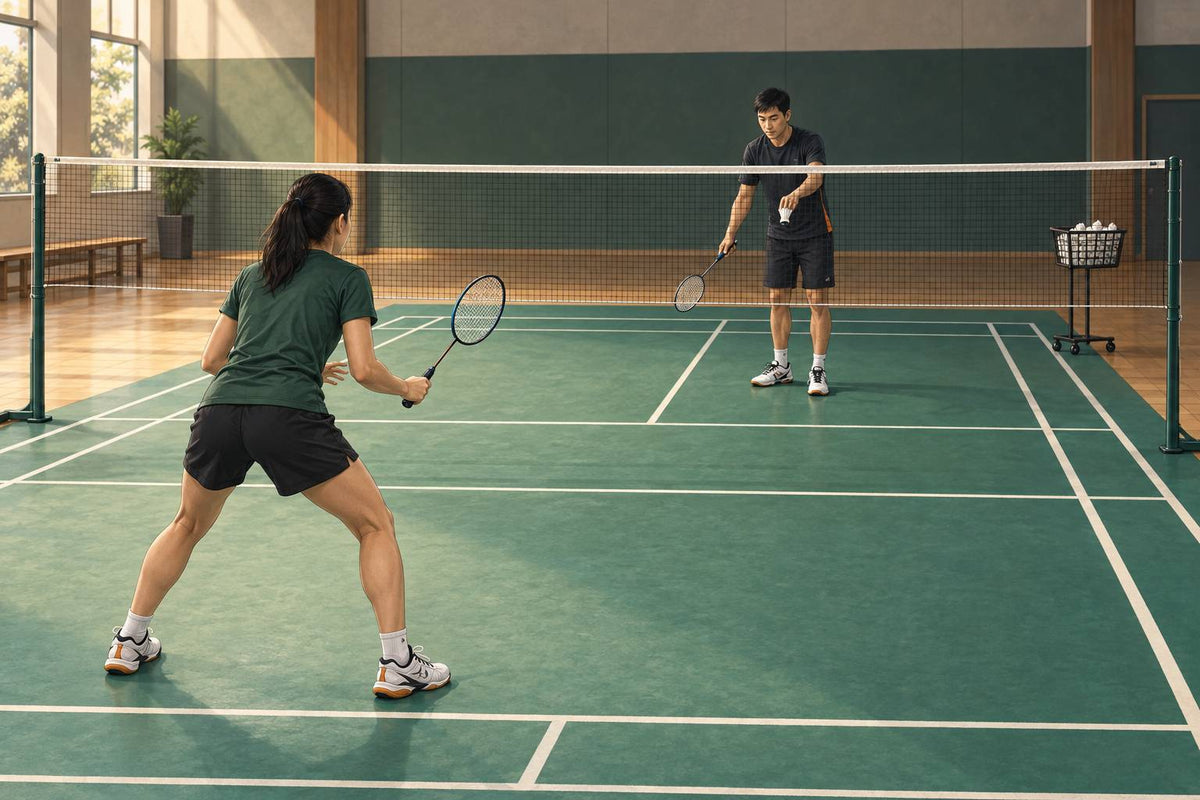
A simple drill is to have a partner feed soft drops to your forehand front corner. Start at base, split-step, chassé forward, lunge with your racket foot, and lift the shuttle high and deep. After each lob, push back to base before the next feed. Do not admire the shot at the net; recovery is part of the technique.
For court movement, stable badminton footwear helps you trust the split-step, lunge, and push-back. Examples at Badminton House include the Yonex SHB65Z4M Men's Badminton Shoes – White and the Babolat Shadow Tour Men's Badminton Shoes - Orange, both built for stable lunge-and-recover footwork. You can also browse the full badminton footwear collection for current options.
Backhand Lob Mechanics on the Non-Racket Side

The backhand lob is the underarm lift you need when the shuttle drops on your non-racket side in the front court and you still have to send it toward the opponent’s rear court. In match terms, it often appears when you are stretched for a tight drop, late to the net, or unable to take the shuttle comfortably with a forehand.
The important difference is that the power source changes. On the forehand side, many players can scoop naturally with the palm side of the hand. On the backhand side, the thumb becomes the main driver. That is why the grip has to change before contact, not after you are already reaching for the shuttle.
Set the Thumb Grip Before You Swing
For a clean backhand lob, turn into a thumb grip. The thumb presses against the wider flat surface of the handle so it can push through the shot. More specifically, the bottom of the thumb contacts the third bevel, and the index finger drops below the thumb rather than sitting level with it. If you are still learning the grip shapes, review our badminton grip guide before drilling this shot.
Backhand lob grip checklist
- Thumb rests on the wider flat surface, ready to press forward.
- Bottom of the thumb contacts the third bevel.
- Index finger drops below the thumb to make room for the thumb push.
- Grip stays relaxed during preparation, then firms up at contact.
That last point matters. A tight grip from the start makes the racket head feel heavy and slows the grip change. Stay loose as you move in, then press firmly with the thumb at the moment you strike the shuttle. The feel is more like a short thumb push through the shuttle than a big arm swing.
Use a Short Lift, Not a Wild Swipe
When the shuttle is low on the non-racket side, keep the racket face open enough to lift the shuttle upward and forward. The swing should be compact: prepare with the racket in front of the body, let the thumb guide the face, then push through contact so the shuttle rises toward the back court. If the racket face closes too early, the shuttle will drive flat into the net. If the face opens too much, the lift may float short and sit up in mid-court.
Your body still helps the shot. Reach the shuttle with a stable lunge, keep your upper body balanced, and avoid collapsing your shoulder across the body. The thumb supplies the clean hitting action, but the legs and posture give you the platform to control height and length.
Connect It to Your Backhand Clear Feel
The backhand lob is not the same shot as a backhand clear, because the lob is hit from below waist height in the forecourt while the clear is an overhead or rear-court action. Still, the grip principle is related: both reward a relaxed setup and a firm thumb-driven squeeze at the hitting moment. If your backhand side feels weak in general, pair this section with our backhand clear technique guide so the grip, timing, and contact feel start to match across different backhand shots.
A useful cue for Canadian club players: if you can hear yourself scraping the shuttle upward but the lift still lands short, check the grip before blaming strength. Most short backhand lobs come from a loose racket face, late grip change, or no thumb press at contact—not from a lack of arm muscle.
Placement and Control Mistakes to Avoid
The simplest placement goal for a badminton lob shot is also the most important: make the shuttle land as close to the opponent’s baseline as possible. A lob that drops into mid-court usually gives your opponent time, balance, and an easy attacking contact.
Think of the lob as a pressure-release shot only if it actually moves the opponent back. If it sits short, you have done the hard part at the net but handed the rally back to them.
Baseline first. Whether you are lifting from a forehand lunge or the non-racket side, judge success by depth: deep enough to push the opponent behind you, not just high enough to clear the net.
Mistake 1: Lifting to the Middle of the Court
A mid-court lob is the classic beginner error. It feels safe because the shuttle clears the front player, but it often lands in the opponent’s strike zone instead of forcing them to retreat.
- Aim past the rear service line area: your intention should be a deep lift that threatens the baseline.
- Use the full lunge: if you stop short of the shuttle, you tend to scoop upward with only the arm, which costs length and control.
- Recover immediately: once the shuttle leaves the strings, push back toward base so you are not stuck at the net watching the reply.
Mistake 2: Forgetting the Placement Purpose
Do not choose height automatically. If you are under pressure, your lob needs enough height and depth to buy recovery time. If you are using a faster attacking lift, keep the placement more ambitious: down the sideline and deep, so it is harder to intercept.
Mistake 3: A Death Grip on the Handle
Grip pressure is a major control issue on lobs. A relaxed grip helps you turn quickly between forehand and backhand grips and gives better tactile feedback through the handle. A death grip does the opposite: it locks the wrist, makes the swing stiff, and reduces touch.
Use a relaxed hand as you move in, then squeeze at contact. That small tightening gives the shuttle a cleaner lift without turning the shot into a tense arm swing. For a deeper breakdown, read our guide to badminton grip pressure: relax, then squeeze at impact.
Mistake 4: Hitting Without a Target Window
Do not just “lift it up.” Pick a target window before contact. In singles, a deep straight lob can reset the rally and force a long movement pattern. In doubles, a careless central lift often feeds the rear-court attacker, so straight depth and sideline discipline matter even more.
| Control mistake | What usually happens | Better cue |
|---|---|---|
| Short lift | Opponent attacks from mid-court. | Finish the shuttle deep toward the baseline. |
| Tight hand | Swing feels stiff and the face angle is hard to adjust. | Stay loose, then squeeze at contact. |
| No sideline discipline | A flatter lob can be intercepted more easily. | Use the sideline when lifting with attacking intent. |
| Late recovery | You lift well but remain stuck near the net. | Push back to base as soon as the shot is away. |
A Simple Baseline Drill
Place a visual target near the back of the court and feed shuttles into the forecourt. Your goal is not maximum height; it is repeatable depth. Count only the lobs that land deep enough to make the opponent move back.
- Start with straight forehand lobs from the net.
- Repeat on the backhand side with the thumb grip.
- Add recovery: after every lift, return to base before the next feed.
If your lobs are consistently short, check three things before blaming your racket: your contact timing, whether your racket foot is landing with the shot, and whether your grip is too tense.
Gear note for Canadian players
Clean lob placement depends on getting to the shuttle balanced. If your shoes slide or feel unstable in the forecourt, your lift control will suffer before the racket even matters.
- Yonex SHB65Z4M Men’s Badminton Shoes – White is a stable, supportive option for lunge-and-recover footwork.
- Babolat Shadow Tour Men’s Badminton Shoes – Orange is a lighter court-shoe option for split-step and lunge movement.
- For racket and handle-feel options, check our badminton rackets and accessories collections.
Badminton House ships across Canada.
Gear Notes for Faster Underarm Lifts
A clean badminton lob shot is mostly technique: split-step, arrive balanced, relax the grip, then squeeze through contact. Gear can help, but it should support the movement rather than replace it.
For quick underarm lifts, many players prefer a racket that feels fast in the hand: lighter, control-oriented, or easier to turn quickly during forehand-to-backhand grip changes. Yonex's Astrox series, for example, is head-heavy and power-oriented — well suited to rear-court power, but not the profile built for the fastest net-court lift action.
Compare before you commit. Browse current badminton rackets, then compare the Yonex Astrox Series if you want a power-oriented frame. For lob speed, pay attention to how quickly the racket changes direction in your hand.
Shoes matter more than most players think
The lob starts before the swing. If your split-step is late or your lunge is unstable, you will end up scooping from a stretched, off-balance position. Proper indoor court footwear helps you plant, lunge, and recover without fighting the floor.
| Footwear example | Build | Why it fits lob footwork |
|---|---|---|
| Yonex SHB65Z4M Men's Badminton Shoes – White | Stable, supportive build | A stable, supportive option for the lunge-and-recover footwork that underarm lifts demand. |
| Babolat Shadow Tour Men's Badminton Shoes - Orange | Lighter, budget-friendly build | A budget court-shoe option for split-step timing and lunging into the net for lobs. |
Badminton House ships across Canada. For shoe sizing or racket questions, customer service runs Monday to Friday, 9am–5pm Atlantic Time.
Handle feel: keep the grip relaxed, not slippery
A lob needs a relaxed grip so you can change from forehand to thumb grip quickly, then tighten at contact. If the handle feels too slick, too bulky, or too thin, that relaxed-to-squeeze timing gets harder.
Check the accessories collection for current grip availability, and use our badminton overgrip wrapping guide if you are adjusting handle feel at home. The goal is simple: enough tack and shape to feel the bevels, without building the handle so large that thumb-grip changes become slow.
Which Lob Should You Choose?
Choose the lob based on rally pressure, contact height, and how much recovery time you need. The defensive lob is the safer default when you are stretched at the net; the attacking lob is the higher-risk option when you are balanced enough to send the shuttle flatter and faster toward the back court.
| Choose this | Best when | Target and cue | Main risk |
|---|---|---|---|
| Defensive lob | You are under pressure after a drop shot and need time to recover your base position. | Hit high and deep, aiming to land the shuttle close to the rear baseline. | Leaving it short into mid-court gives the opponent an easy attack. |
| Attacking lob | You are balanced at the forecourt and want to surprise the opponent by pushing them quickly to the back. | Hit flatter and faster toward the baseline; direct it down the sidelines to make interception harder. | Because it travels low, it is easier for the opponent to intercept if your placement is loose. |
| Forehand lob | The shuttle is on your racket side and you can lunge with your racket foot toward the landing point. | Coordinate the foot landing with racket-up contact, then follow through above the non-racket shoulder and recover. | Mistiming the lunge and contact costs power, control, and recovery time. |
| Backhand lob | The shuttle is on your non-racket side and you need a quick grip change under the shuttle. | Use the thumb grip: stay relaxed, then press firmly with the thumb at contact for power and control. | A tight grip too early makes the swing stiff and reduces touch. |
Gear note: For the badminton lob shot, footwork and stable court shoes matter more than chasing a new racket. If you need a court-shoe upgrade for split-step, lunge, and recovery work, the Babolat Shadow Tour Men’s Badminton Shoes is a lighter option built for that kind of footwork.
If your lobs feel late rather than weak, start with movement timing: the split-step, chassé, lunge, and recovery sequence usually solves more problems than changing equipment. For more detail, see our guides to badminton split-step timing and relaxing then squeezing the grip at impact.
Get 10% off your first order
Join the Badminton House list and we’ll email you a 10% welcome code — plus subscriber-only restock alerts, giveaways, and honest gear advice from players.
By subscribing, you agree to receive Badminton House emails and can unsubscribe anytime.
A reliable badminton lob shot comes from the same habits we work on in our own games: relaxed grip, clean timing, a balanced lunge, and a fast recovery back to base. If you are unsure whether your shoes, racket setup, or grip feel is helping or hurting your underarm lifts, contact Badminton House and we will help you choose gear that fits your level and playing style.
Ships across Canada · 14-day returns · Canadian badminton specialty shop

Leave a comment
This site is protected by hCaptcha and the hCaptcha Privacy Policy and Terms of Service apply.