
Last updated: July 2026 · Written by the team at Badminton House
Quick Answer: How to Beat a Defensive Player in Badminton
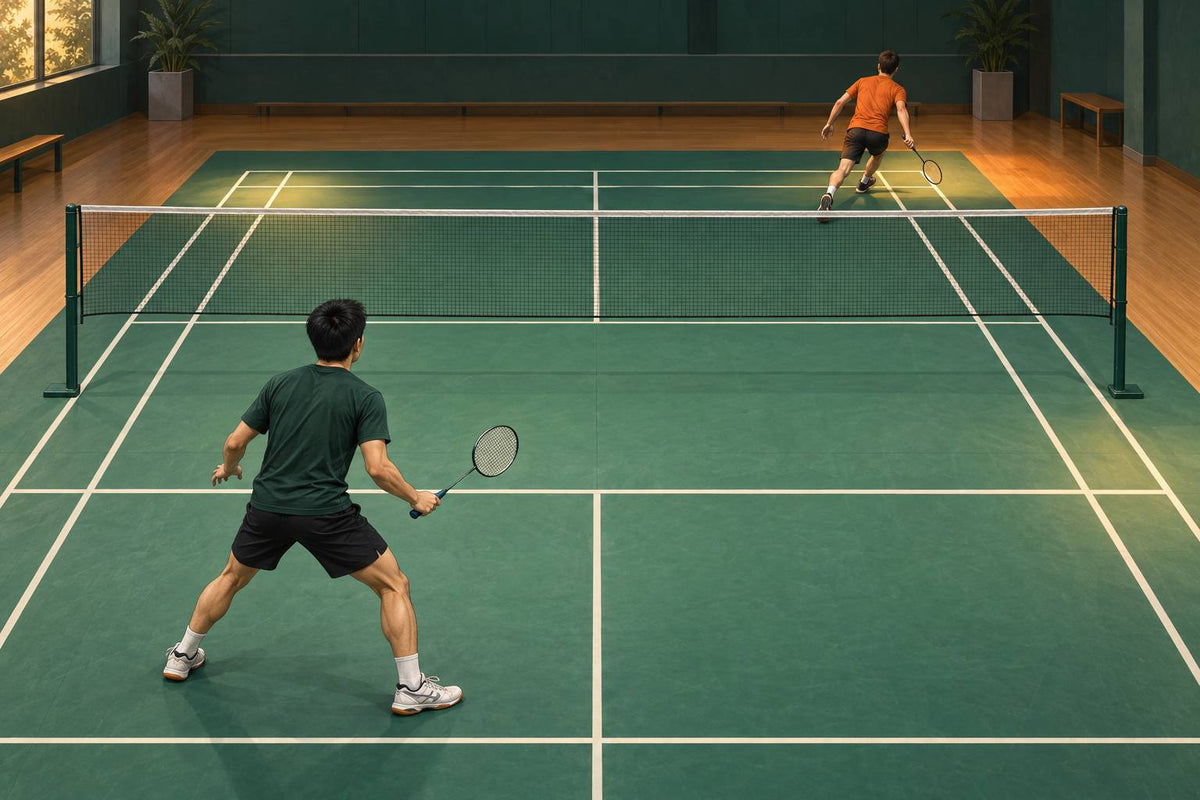
Do not try to blast through a retriever right away: build the rally with patient placement, make them move to all four corners, then finish only when their return is short or late.
Default
Build first: use deep clears, tight net shots, and diagonal pressure so the defender cannot settle, then attack the weak reply instead of forcing a low-percentage winner.
Attack
When the defender lifts short or arrives late, smash with purpose and move forward immediately because many defensive returns come back as a block or net drop.
Doubles
Keep the attack steep and well placed so the defender cannot drive past the front player; expect lifts, blocks, drives, and midcourt pushes as their main replies.
You know the match: you smash, they block. You clear, they get there. You try a sharper winner, miss by five centimetres, and suddenly the “defensive” player is dictating the rally without hitting anything spectacular.
Long rallies start from the floor up. If your shoes are slipping or unstable, it is hard to recover to base and keep pressure on a retriever. Browse Canadian court options in our badminton footwear collection, which ships across Canada.
In This Guide
- Diagnose the Retriever Before You Attack
- Build the Rally With Four-Corner Pressure
- Change Pace So They Cannot Settle
- Target the Weak Side, Then Wait for the Put-Away
- Singles vs Doubles: How the Plan Changes
- Footwork, Stamina, and Gear That Support the Plan
- Which Plan Should You Choose Against a Defensive Player?
Diagnose the Retriever Before You Attack

A defensive player — often called a retriever — is one who wins points by returning your attacks rather than hitting winners: they absorb smashes, lift deep, and wait for your errors. The first rule for beating that style is simple: do not let their patience make you impatient. A strong retriever is happy when you swing for a low-percentage winner too early, because your rushed smash, sliced drop, or half-court clear gives them the mistake they were waiting for.
Instead of trying to end the rally immediately, use the opening exchanges to learn how they recover. Defensive players often look unbreakable because they are comfortable repeating the same recovery pattern: lift deep, return to base, absorb the smash, block, reset. Your job is to interrupt that rhythm without over-hitting.
What to watch in the first rallies
Before you attack fully, ask yourself these questions while the rally is still neutral:
- Do they recover too far back? If they are protecting against your smash, the front court may open for a softer drop or tight net shot.
- Do they recover too far forward? If they are eager to pounce on drops, high deep clears and lifts to the back corners become more valuable.
- Which rear corner makes them late? Many defenders look solid until you make them clear from the weaker backhand corner.
- Do they read your preparation early? If your smash and drop look different, they can start moving before you hit. If your arm position looks similar, they have to wait longer.
This is why the best plan is not “smash harder.” It is “make them move, see what breaks, then attack the weakness.” For singles structure, the same idea connects closely with four-corner control: stretch the defender across the full court so they cannot camp in one safe recovery spot.
Key adjustment: treat the first part of the rally like a test, not a finishing chance. Pin the defender deep, move them diagonally, and only go for the put-away when their return is actually weak.
Use the deep-corner-to-cross-drop pattern
A practical pattern against a retriever is to push them deep into one rear corner, then open the opposite front court with a soft cross-drop. The deep shot makes them travel backward and defend their rear corner. The soft cross-drop then asks a different question: can they stop, change direction, and lunge forward without giving you a loose net reply?
For example, in singles:
- Clear or push deep to their backhand rear corner.
- Recover calmly instead of rushing the next shot.
- If they lift short or arrive late, attack the open court.
- If they recover well, play the soft cross-drop to the opposite front court and make them sprint forward.
The cross-drop does not need to be a miracle winner. It only needs to be controlled enough to make the defender lunge, hit up, or give you a net chance. If you want to sharpen that front-court finish, pair this tactic with better drop shot technique and cross-court net control.
Do not attack until the rally gives you permission
Against a defensive player, a smash is most useful after you have created stress. If the defender is balanced, waiting, and already set in their base, your full-power smash may simply feed their favourite pattern: block, lift, reset. But if you have made them reach late into a rear corner, forced a weak backhand clear, or dragged them forward with a soft drop, the same smash becomes a finishing shot instead of a gamble.
A good rule is: build with placement, finish with power. Use clears, lifts, pushes, drops, and net shots to make the retriever cover distance. Then attack when their reply is short, flat, late, or predictable. If the reply is still high and deep, reset the rally and keep building.
Build the Rally With Four-Corner Pressure
Once you know where the retriever prefers to recover, the next job is execution: move the shuttle through all four corners without forcing the winner too early. In singles, that usually starts with high-quality depth. Strong clears to the back corners make the defender turn, travel, and hit from behind the body instead of calmly blocking from a balanced base.
The key rule is simple: if your clear does not produce a pressured reply, do not gamble on a low-percentage smash just because you feel you “should” attack. Clear again, preferably to the other rear corner, and keep the rally shape in your favour. You are not trying to win with one perfect shot; you are trying to make every recovery slightly later than the last.
Think in patterns, not single shots. For a broader framework on controlling the full court, read our badminton singles four-corner tactics guide.
The basic rear-court pressure loop
Use this as your default against a strong retriever:
- Clear deep to one back corner. Aim for length first. A clear that lands short gives the defender time to step in and control the next shot.
- Recover to base immediately. Your pattern only works if you are ready for the next corner. If you admire the shot, the retriever gets the tempo back.
- If the return is neutral, clear again. Send the shuttle deep to the other rear corner or back into the same corner if the defender is slow to recover.
- Only change direction when you can keep quality. A loose drop or flat push is not variety; it is an invitation for the defender to counter.
This is where many club players in Canada lose the rally even when they have the right idea. They hit one good clear, receive a decent-length reply, then rush a smash from a poor position. Against a retriever, the better choice is often boring but effective: clear again, recover again, and make them cover one more corner.
Use diagonals to stretch recovery time
The four-corner pattern becomes much harder to defend when you use diagonals. A practical example is a deep clear to the defender’s backhand corner, followed by a fast push into the forecourt. That diagonal change forces them to travel from deep rear court to front court instead of simply shuffling along one side.
The important detail is that the second shot must still be controlled. A fast push should travel into open space with purpose; it should not sit up high enough for the defender to intercept. If you need help with the mechanics, see our badminton push shot technique guide and net play shot selection guide.
| Pattern | What it does | Common mistake |
|---|---|---|
| Deep clear to backhand → fast push to forecourt | Stretches the defender diagonally and prevents them from camping in one recovery spot. | Pushing too high, which gives the defender time to counter. |
| Deep clear to forehand → tight net reply to the opposite front corner | Forces front-to-back movement and makes the defender lunge instead of hitting from balance. | Playing the net shot from too low or too late, which turns control into a lift for the opponent. |
| Rear corner clear → rear corner clear again | Maintains pressure when the defender’s reply is not loose enough to attack. | Smashing from a rushed position instead of rebuilding the rally. |
| High lift from the front → deep rear recovery test | Resets the rally while still making the defender travel the full length of the court. | Lifting short, which hands over the attack. |
Train the pattern before you need it in a match
A simple practice sequence is: clear, recover, clear, recover, push, recover, lift, recover. Keep the rally controlled rather than explosive. The goal is to make deep length and base recovery automatic, so you can stay calm when the defender keeps returning the shuttle.
If your clears break down late in rallies, review your rear-court movement in our rear-court footwork guide and your stroke quality in the backhand clear technique guide. Four-corner pressure only works when your movement and shot length hold up after several exchanges, not just on the first two shots.
Change Pace So They Cannot Settle
A defensive player wants rhythm. If every attack comes at the same speed, height, and angle, they can prepare early, absorb the shot, and keep sending the shuttle back. To beat that style, you need to make the rally feel uneven: tight net shot, high deep lift, controlled drop, sudden push, then another deep clear. The goal is not to be flashy. The goal is to stop the defender from reading the next shot comfortably.
Think front to back first. A tight net shot forces the retriever to lunge forward. If they lift, send the shuttle high and deep again so they have to turn, retreat, and reset. When you repeat that pattern with control, their legs do more work than yours, especially if you recover to base after every shot instead of admiring your attack.
Simple pace-change pattern
- Start deep: clear or lift high to a back corner so the defender cannot stand too far forward.
- Bring them in: play a controlled drop or tight net shot when they are recovering from the rear court.
- Reset instead of forcing: if the net reply is not loose, lift deep again and restart the pressure.
- Finish only when it appears: attack the short lift or weak half-court return, then move forward for the likely block.
Disguise is especially useful against a player who reads your preparation well. A practical example is to prepare with the same arm position you use for a smash, then play a slower drop instead. The defender prepares for a hard downward shot, but the shuttle barely crosses the net; the later they recognize it, the more they have to lunge forward. That kind of deception works best when your preparation looks calm and repeatable, not rushed.
Use disguise occasionally, not on every rally. If you try to trick the defender every shot, you may start making loose errors yourself. A better plan is to establish a reliable attacking shape first: deep shots to the corners, controlled drops, and patient resets. Then add the disguised drop when the defender begins leaning back for the smash.
For more detail on the mechanics of hiding your shot choice, read our badminton deception technique guide. If you want broader rally patterns for changing speed without losing control, see Badminton Change of Pace Tactics for Canadian Players.
"Against a retriever, the best pace change is the one that makes them move one extra step before they realize where the shuttle is going."
Target the Weak Side, Then Wait for the Put-Away
Against a defensive player, placement beats power. The goal is not to prove you can hit through them on the first attack; it is to make them play the shot they least want to play, then punish the weaker reply.
A common place to test first is the backhand rear corner. Many defenders are comfortable lifting and blocking on the forehand side, but if their backhand clear does not travel deep enough, you can build the rally around that weakness. Push or clear them deep to that side, watch the quality of the return, and only commit to the smash when the shuttle is genuinely loose.
"Do not smash because you are impatient; smash because the defender has finally given you a ball you can finish."
How to expose the weak side without rushing
Think in two phases: pressure first, finish second. If the opponent struggles on the backhand, your first job is to keep asking that side a difficult question. A high, deep clear to the backhand corner can force a late contact. A fast push into the same corner can make them reach while moving backward. A tight net shot after that can pull them forward when their recovery is already stretched.
- Start with depth: make the defender hit from the rear court, not from a comfortable midcourt contact point.
- Repeat the question: if their backhand clear lands short once, test it again before changing direction.
- Do not overhit: a controlled clear or push that lands deep is usually more useful than a full-power shot that drifts out.
- Change only when they lean: once they start protecting the weak corner early, use the open front court or opposite side.
If your own backhand is the weakness in this matchup, fix that too: a defender will notice it quickly. Our badminton backhand clear technique guide explains the shot that often decides whether you can escape pressure or get trapped in the rear corner.
What counts as a real smash chance?
A retriever wants you to smash from positions where they are already balanced. If the lift is high and deep, they have time. If you are hitting from behind your body, you are probably giving them the flat or loose smash they are waiting for. Be selective.
| Return you receive | Best response | Why it works |
|---|---|---|
| High, deep lift | Reset with another deep clear, drop, or controlled angle | The defender has time to set, so a full-power smash may feed their preferred rhythm. |
| Short lift from the backhand corner | Attack steeply into space or toward the body | The weak side has produced the opening; now the defender has less time and less court behind them. |
| Loose net block after your attack | Move in and finish with a net kill | Defensive players often survive the smash by blocking or dropping to the net, so your forward movement converts the attack. |
| Flat defensive drive | Recover quickly and keep the next shot controlled | A flat reply is a warning that your attack was not steep or well-placed enough to finish yet. |
After the smash, go forward
The biggest mistake is admiring the smash. Against a defender, the smash is often only the first half of the point-winning pattern. Their safest reply is frequently a block or soft drop toward the net, so you need to land, recover forward, and be ready to take the shuttle early.
This is where net skill matters as much as power. If your first attack creates a loose block, a calm net kill ends the rally. If the block is tighter, a controlled net shot can keep them under pressure instead of giving away the point. For the decision-making side, see Badminton Net Play Strategy: Shot Selection for Canada. For the finishing movement, use badminton net kill technique: Rush Loose Net Shots in Canada.
Simple rally rule for Canadian club play: test the weak side, wait for the short lift, smash steep, then move forward for the block. If the return is not weak, stay patient and build again.
Singles vs Doubles: How the Plan Changes

The same principle applies in both formats: do not let a defensive player win points with your impatience. The difference is what you are trying to create. In singles, you are building attrition. In doubles, you are converting pressure before the defence can counter-attack.
Singles: make the retriever pay for every recovery
Against a singles retriever, longer rallies are not a failure. They are the plan. Your job is to keep the shuttle deep enough, tight enough, and varied enough that the defender has to cover all four corners again and again. Every high clear to a back corner, every controlled drop, and every reset to base is part of the same goal: make their legs work before you ask your smash to finish the point.
This is why placement matters more than swinging harder. If you attack from a poor position or smash before the defender is stretched, you often give them the exact rally they want: one comfortable block, one easy lift, then you are forced to attack again from a worse base. In singles, wait until the defender’s clear is short, their recovery is late, or their backhand corner opens up. Then attack decisively.
Doubles: expect the four defensive replies
In doubles, a defender under smash pressure is not just trying to survive. They are looking for a way to regain the attack. After your smash, expect four common replies: a lift, a drive, a block to the net, or a push to midcourt.
| Defensive reply | What it means for the attacking pair |
|---|---|
| Lift | Keep the attack, but do not rush. Reset your rear-court position and hit another steep, well-placed attack rather than a flatter desperation smash. |
| Drive | This is the danger reply, especially against flat smashes. If the shuttle can be driven past the front player, your attack can collapse into a defensive scramble. |
| Block to the net | The front player must be ready to pounce or play a tight net shot. The rear player’s smash sets it up; the front player often converts it. |
| Push to midcourt | Both players need clean rotation and spacing. If the push lands between you, the defender has successfully turned pressure into hesitation. |
The big doubles adjustment is smash quality. A defensive pair is waiting for a smash that is slower, less steep, or less well placed. If you give them a flat smash, the drive becomes an excellent counter because it can travel beyond the front player before your pair can react. Aim to keep the shuttle steep, directed into awkward body or hip areas when appropriate, and linked to your partner’s front-court coverage.
Simple doubles rule
Do not smash just because the shuttle is high. Smash when your pair can stay connected: rear player balanced, front player alert, and both players ready for the lift, drive, block, or push.
If your front player is getting passed by drives, the answer is not always “smash harder.” Often it is to make the smash steeper, improve placement, and adjust the front player’s starting position so they can intercept instead of watching the shuttle fly by. For a deeper breakdown of how the attacking pair should move together, see our badminton doubles positioning and rotation guide.
The mindset shift
In singles, be comfortable winning through patient rally construction. In doubles, be patient in a different way: keep the attack high quality until the defence gives you a reply your pair is ready to finish. A good defensive player wants you to force the winner too early. Whether you are alone or with a partner, the winning plan is to make the defender run out of comfortable options first.
Footwork, Stamina, and Gear That Support the Plan
Against a defensive player, your legs decide whether your tactics survive past the first few rallies. You do not need to sprint wildly; you need a repeatable movement rhythm: split step, move deliberately, hit from balance when possible, then recover to a sensible base before the next shot.
Base-position fundamentals that keep pressure on
- Split step before they hit. Time a small bounce as your opponent contacts the shuttle so you can push off in either direction instead of reacting from flat feet.
- Move quickly, but not blindly. Defensive players want you lunging off balance. Take sharp first steps, then control the last step so your shot quality stays high.
- Use shadow drills. Practise rear-court, forecourt, and side-court patterns without a shuttle so your recovery becomes automatic under match stress.
- Reset after every shot. Do not admire a smash or a tight drop. Your next advantage usually comes from being ready for the block, lift, push, or drive that follows.
If your base movement feels inconsistent, start with Badminton Footwork Basics and rebuild the pattern before adding more tactical complexity.
Train decisions under fatigue
The danger in long rallies is not just tired legs. Once you are breathing hard, your shot selection gets worse: clears drift short, drops sit up, and smashes lose steepness. That is exactly when a retriever starts winning cheap points.
Multi-shuttle drills are useful here because they force repeated movement and decision-making under pressure. Instead of feeding only smash chances, mix rear-court clears, front-court recoveries, flat pushes, and half-court interceptions so you practise choosing the right shot while tired.
Simple fatigue drill
- Feeder sends 6–10 shuttles to random corners.
- Player must recover to base after each shot.
- Player alternates between clear, drop, push, and controlled attack instead of smashing every feed.
- Rest briefly, then repeat with the goal of keeping shot quality stable.
For a fuller conditioning plan, use Badminton Fitness Training: Stamina Guide for Canadians.
Gear should support the plan, not replace it
Better gear will not solve impatient tactics, but the right court setup can help you keep your movement quality deeper into the match. Shoes matter most because long retriever rallies involve repeated stopping, lateral recovery, and front-court lunges.
Canadian gear note. The Babolat Shadow Tour Men’s Badminton Shoes – Orange is a grip-and-stability option for long recovery rallies; you can also browse all badminton footwear. Badminton House ships across Canada.
For rackets, do not choose only by smash power. Against a defender, you still need accurate clears, reliable drops, and enough forgiveness when you are tired. Browse badminton rackets, but check live stock before treating any specific racket or shuttle as buyable, especially if a product page shows sold out.
A forgiving string setup can also help in long exchanges. Many players prefer lower tension around 24–26 lbs for a larger sweet spot and easier clears, especially when consistency matters more than one-shot winners.
Which Plan Should You Choose Against a Defensive Player?
If you are wondering how to beat a defensive player without forcing errors, start with the patient four-corner plan. Then switch emphasis based on what the defender is giving you: a weak backhand clear, predictable net blocks, flat drives in doubles, or signs of fatigue.
| Choose this plan | Use it when... | What to do | Avoid this mistake |
|---|---|---|---|
| Default: four-corner pressure | They are retrieving everything and you are missing by trying to end rallies early. | Build with strong clears to the back corners, stretch them diagonally, then use drops or pushes to the forecourt so they cannot camp in one area. For a deeper singles pattern, see four-corner control. | Do not smash just because the rally feels long. If the return is not weak, reset and keep the shuttle quality high. |
| Backhand-side pressure | Their forehand retrieval looks stronger, or their backhand clear starts landing short. | Keep pushing the shuttle toward the backhand side until the clear becomes weak, then step in for the put-away. If your own backhand is the limiting factor, work through the backhand clear technique guide. | Do not change targets too soon if the backhand pressure is working. Make them prove they can clear consistently. |
| Disguise and pace change | They are reading your attack early and standing comfortably for your smash or clear. | Show the same preparation, then mix in a slower drop or unexpected shot so they have to lunge late. For more detail, use the change-of-pace tactics guide and the deception technique guide. | Do not make the disguised shot loose. The goal is to delay their read, not give them an easy net kill. |
| Smash, then move forward | You finally force a shorter lift or a weaker defensive reply. | Smash with placement, then move immediately toward the net because defensive players often block or drop the smash reply. Be ready to finish with a net kill. | Do not admire the smash from the rear court. Against a retriever, the first smash often creates the chance; the next shot wins it. |
| Doubles: steep attack control | The defender is lifting, blocking, pushing midcourt, or driving past the front player. | Keep smashes steep and well placed so the defender cannot counter-drive easily. The front player should expect blocks and pushes rather than assuming the smash is finished. For rotation details, read doubles positioning and rotation. | Do not hit flat smashes at a defender who is waiting to drive the shuttle beyond your front player. |
| Training and gear support | You can create the right rally pattern, but your legs fade or your recovery gets late. | Use multi-shuttle work for decision-making under fatigue, shadow drills for recovery, and consistent returns to base after each shot. Stable indoor court shoes help with grip and lateral recovery; the Babolat Shadow Tour is one current option in the badminton footwear collection. | Do not expect gear to replace patience, footwork, or shot quality. Training discipline matters more than price tags. |
The simplest rule: choose the plan that makes the defender move one more time while keeping you balanced for the next shot. If you are the one losing shape first, fix recovery and stamina before adding more power.
Get new badminton guides by email
Join the Badminton House list for occasional emails with new guides, technique tips and news from our club in Moncton.
By subscribing, you agree to receive Badminton House emails and can unsubscribe anytime.
If your next match is against a retriever, remember the main lesson: make them defend the whole court, keep your shot quality high, and wait for the shuttle you can actually finish. We play badminton ourselves, so if you want help matching your racket, string tension, shoes, or practice plan to this style of match, contact Badminton House and we’ll point you in the right direction.
Build a steadier, more patient attacking game with gear chosen for real badminton rallies.
Shop Badminton RacketsCanadian badminton specialty shop · Player-focused gear advice · 14-day returns

Leave a comment
This site is protected by hCaptcha and the hCaptcha Privacy Policy and Terms of Service apply.